Skip to content
  • Home
  • About me
  • Get Involved
  • Donate
Exposing Imperial Japan

Exposing Imperial Japan

Viewing the suffering of colonized people through the lens of the colonizer's propaganda

  • Home
  • About me
  • Get Involved
  • Donate
Educational supervisor declares that ‘old ways of...
Korean writers in the ‘Korean Literary Association’...
Propaganda story about a Japanese couple in...
Koreans faced up to 10 years in...
Book review of Anti-Japan Tribalism (반일종족주의, 反日種族主義),...
Korean kindergartners holding rising sun flags shouting...
Why did many Koreans “voluntarily” enlist in...
Japanese Keijo Nippo reporters interviewed Korean abductee...
Lim Jangsu (림장수, 林長守) was a Korean...
In January 1943, Hollywood films were banned...
Propaganda articles say Koreans men are cowards...
Governor-General Koiso blamed excessive chili peppers for...
Korean schoolgirls in 1943 mending military uniforms...
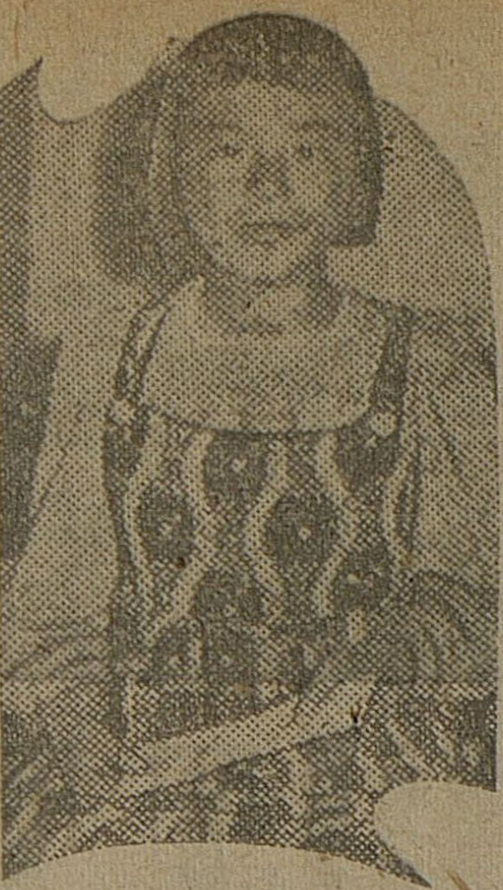
Shamseinoor Berikova, 19-year-old blue-eyed Russian Tatar refugee...
Korean forced laborers worked the Gyeongsan cobalt...

Category: Japanese Language

Uncategorized

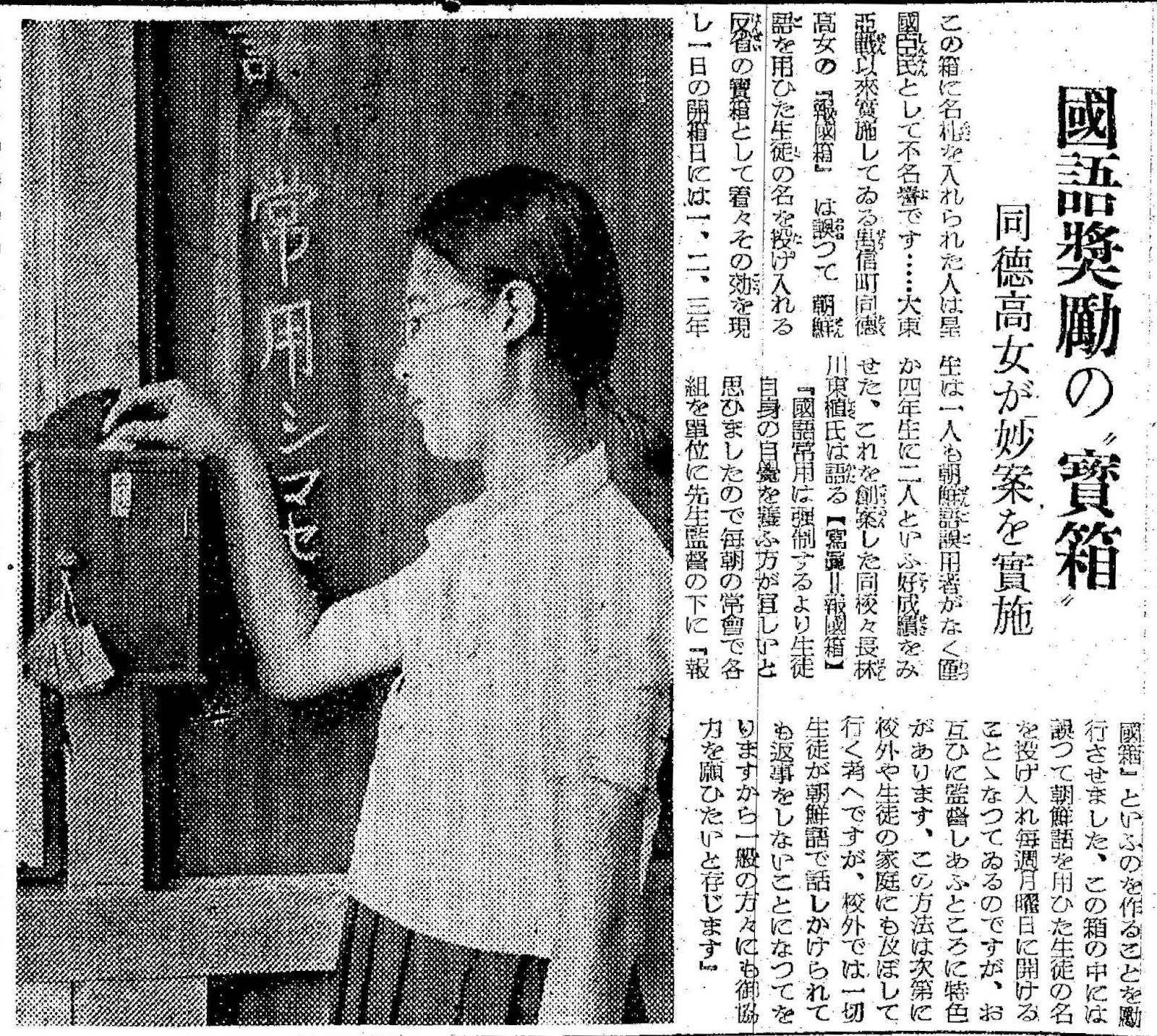
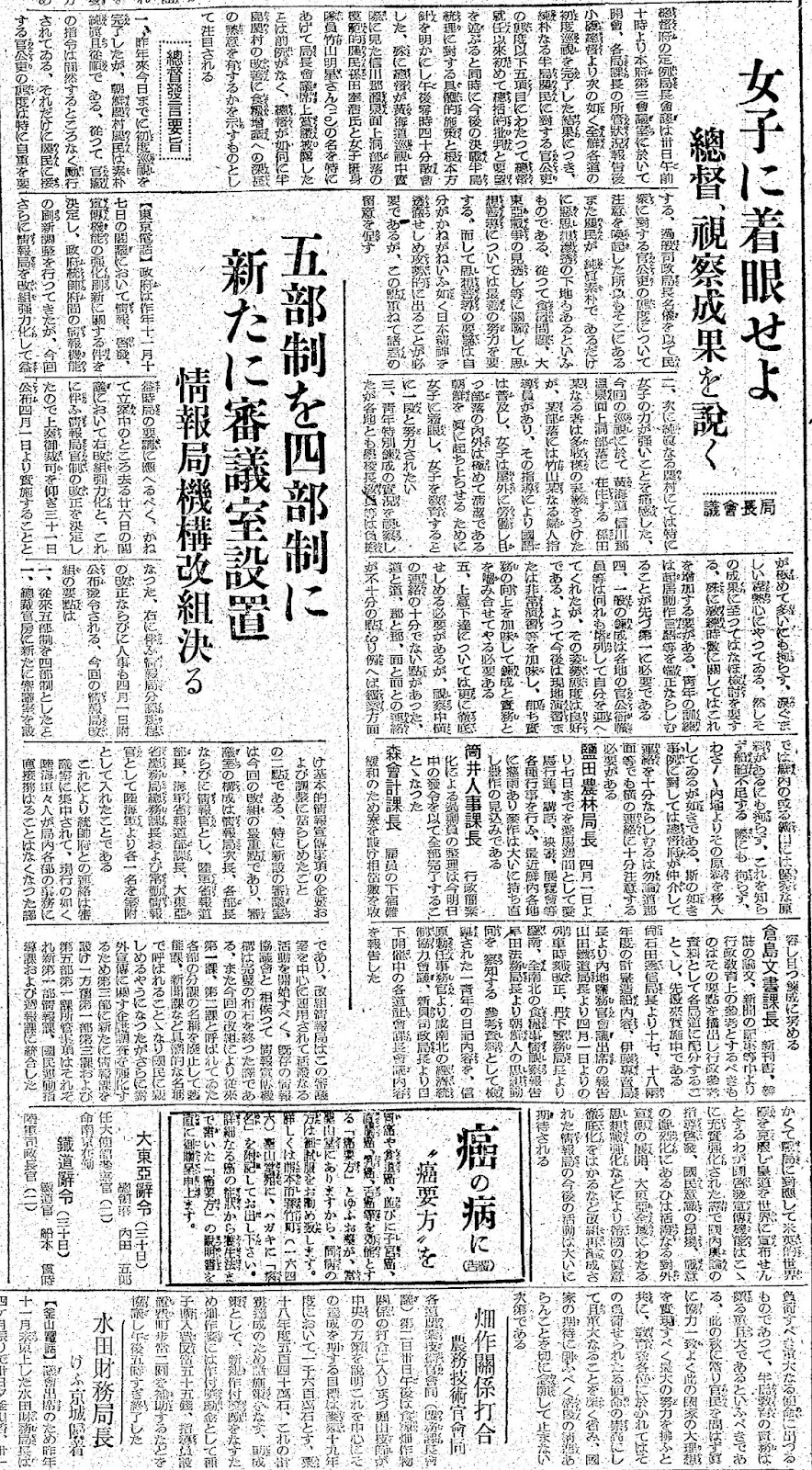
March 1943 edict of Governor Koiso of Japan-occupied Korea focusing on Korean girls in assimilation campaigns to “penetrate them with the Japanese spirit and be aggressive”

2021-11-28

647

1755

  (my translation) Keijo Nippo (Gyeongseong Ilbo) March 31, 1943 Focus on the girlsThe Governor explains the results of his

Read More
Japanese Language

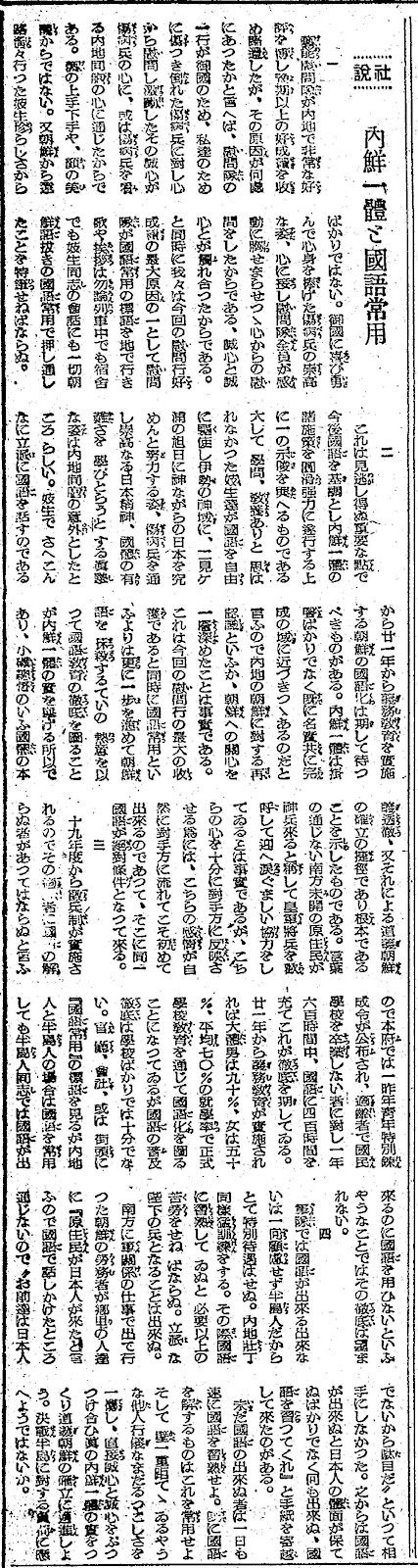
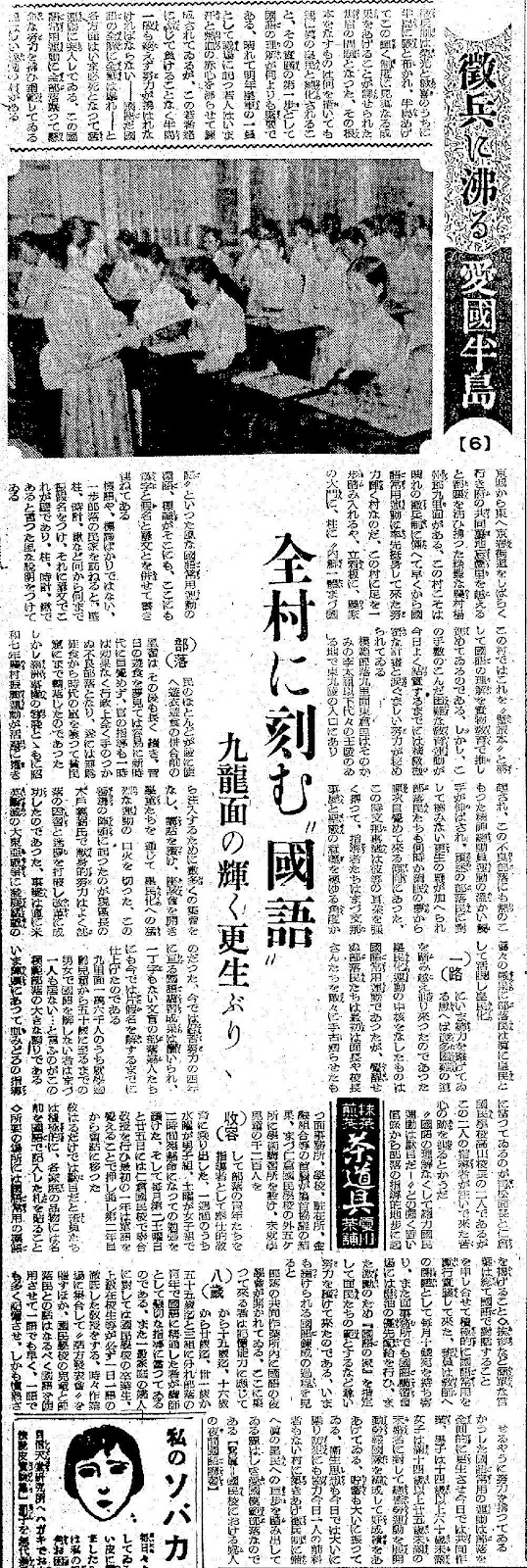
Imperial Japan waged an aggressive Japanese language campaign on Korean villages in the ’30s and ’40s, entering homes to attach Japanese labels on household objects, putting residents under 55 in mandatory classes, applying an “unyielding whip” to “break down their customs and stray dreams”

2021-11-22

698

1497

  This article from Japan-occupied Korea in 1943 describes an aggressive Japanese language campaign that was conducted in Korean villages

Read More
School

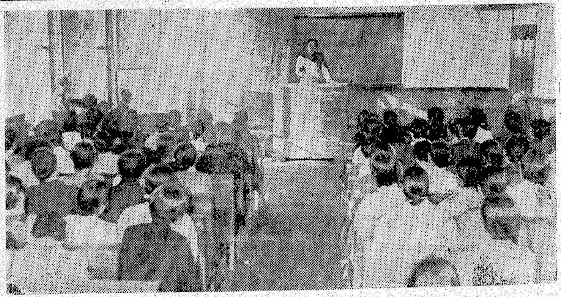
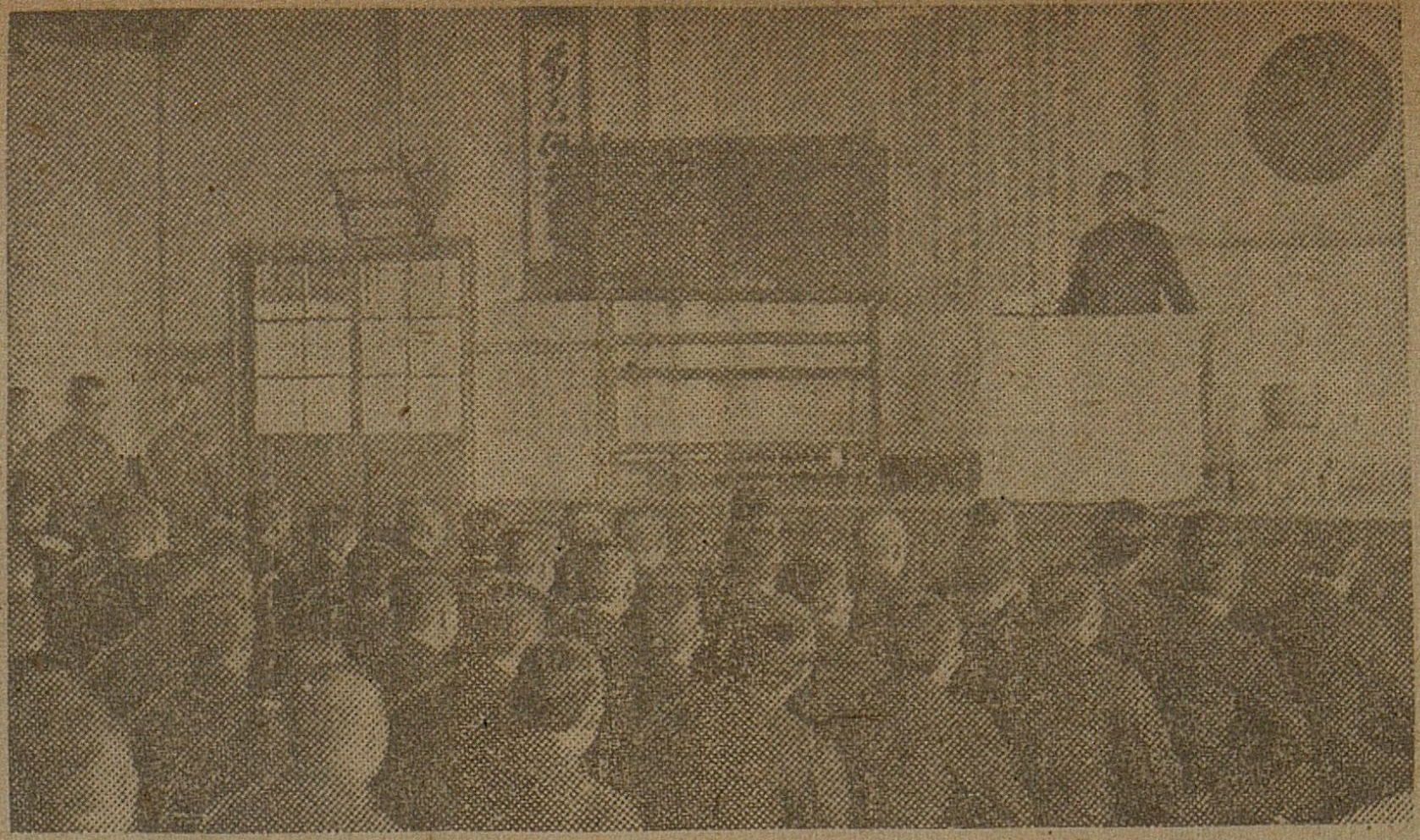
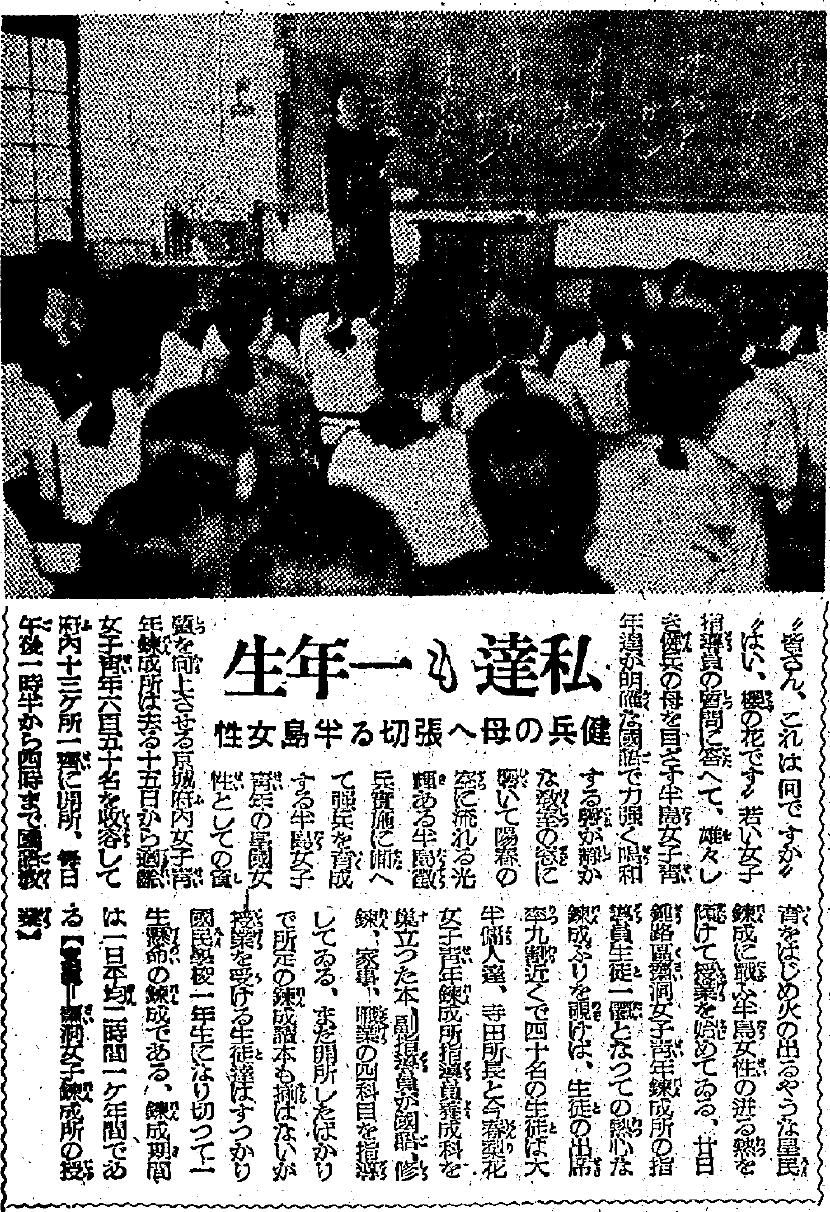
By April 1944, there were 13 internment camps in Seoul for Japanizing Korean girls into wives for Japanese soldiers, with most of the girls enlisted for military labor, and instructional time cut from all day to just the afternoons (photo: Japanese language class at a camp in Jongno-gu, Seoul)

2021-11-22

720

606

  This article from April 1944 shows that this system of internment camps had expanded to at least 13 in

Read More
Uncategorized

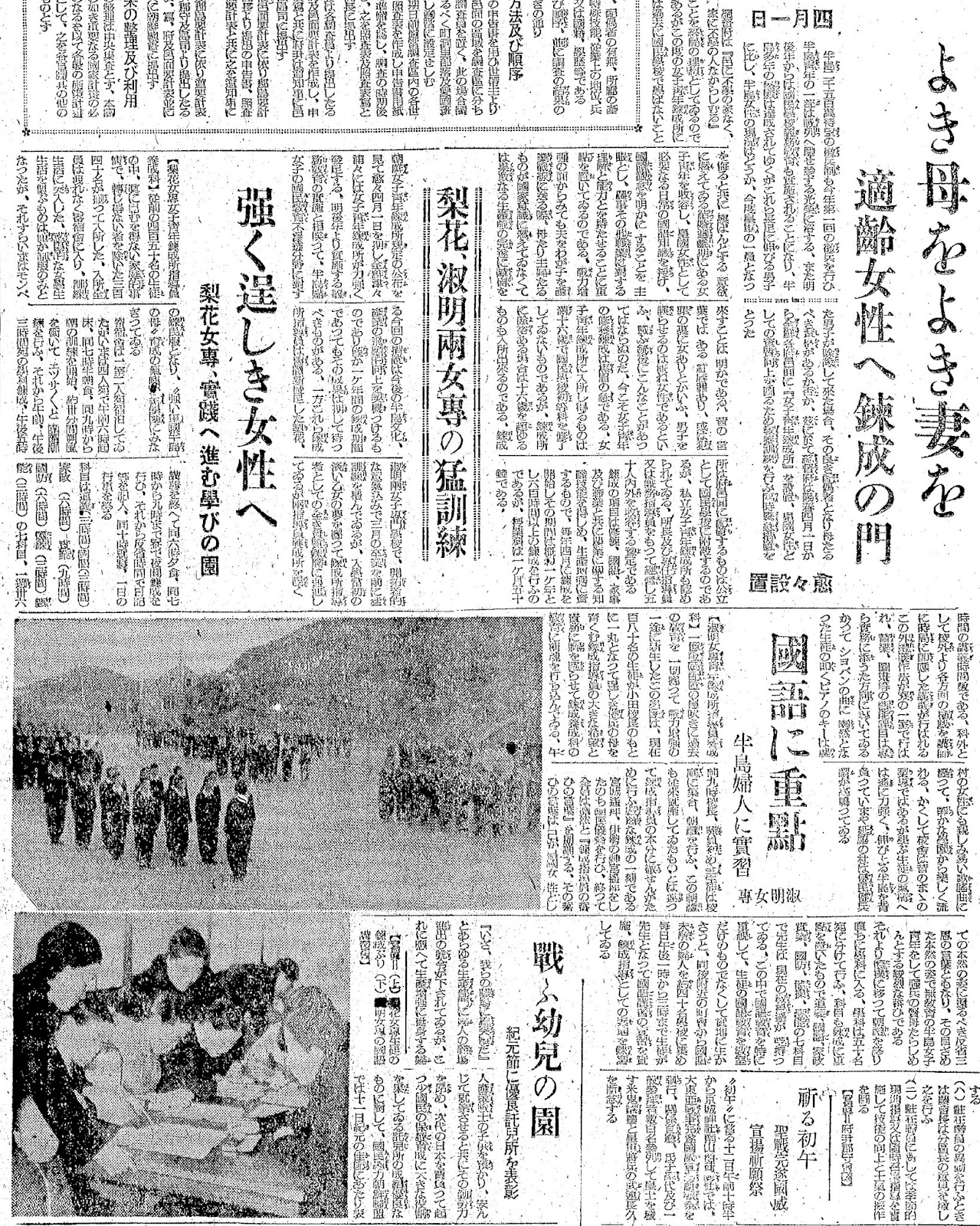
In 1944, the Japanese govt built internment camps in Korea to intensively train young Korean school girls in Japanese ways and turn them into assimilated mothers and wives of Japanese soldiers (top photo: Ewha students in training; bottom photo: Sookmyung students teaching Japanese to local women)

2021-11-22

801

1829

  TL;DR: In February 1944, the Japanese fascist government announced their plans to build internment camps all over Korea to

Read More

Posts pagination

Previous 1 … 3 4

Recent Posts

  • Nazi German community in Seoul December 1941 celebrating Imperial Japan’s declaration of war
  • Wartime rations often vanished amid corrupt neighborhood leadership, leading to so much public anger that Imperial officials pleaded, ‘let us avoid becoming emotional with one another’ (Feb. 1945)
  • Inside the 1943 Seoul Crackdown on ‘Demonic Music’: Imperial Japan’s Campaign to Purge American and British Records, From Hawaiian Jazz to Dvořák, but German music (Beethoven, Mozart, Bach) and Italian music (Verdi) were allowed
  • How Imperial Japan spun a dead Korean industrial accident victim into a wartime hero: ‘Follow in the spirit of Mr. Lim!’, ‘The flower of the workplace!’ at Tōyō Metal in Sinuiju (October 1, 1943)
  • Rule by Fear: How Imperial Japan Expanded the Death Penalty and Toughened Sentences in Wartime Korea – Crackdowns on Protesters After Just One Warning (February 1944)

Recent Comments

  • vong quay on Imperial officials fanned out across rural Korea visiting townships one by one to indoctrinate villagers in Imperialist ideology in ‘Grassroots Penetration’ Campaign (March 1944)
  • act-two on Koiso’s 1943 ‘Great Leader’ Strongman Tours: Surprise village inspections to intimidate local leaders and impose Japanese language and culture all over the Korean countryside
  • laser marking machine on Koiso’s 1943 ‘Great Leader’ Strongman Tours: Surprise village inspections to intimidate local leaders and impose Japanese language and culture all over the Korean countryside
  • zorse on April 1945 Seoul dining: the public endured price-gouging and scraps, while privileged Japanese and Korean collaborator elites drank and feasted behind closed doors

Archives

  • December 2025
  • November 2025
  • October 2025
  • September 2025
  • August 2025
  • July 2025
  • June 2025
  • May 2025
  • April 2025
  • March 2025
  • February 2025
  • January 2025
  • December 2024
  • November 2024
  • October 2024
  • September 2024
  • August 2024
  • June 2024
  • May 2024
  • April 2024
  • March 2024
  • February 2024
  • January 2024
  • December 2023
  • November 2023
  • October 2023
  • September 2023
  • August 2023
  • July 2023
  • June 2023
  • May 2023
  • April 2023
  • March 2023
  • February 2023
  • January 2023
  • December 2022
  • November 2022
  • October 2022
  • September 2022
  • August 2022
  • July 2022
  • June 2022
  • May 2022
  • April 2022
  • March 2022
  • February 2022
  • January 2022
  • December 2021
  • November 2021

Meta

  • Log in
  • Entries feed
  • Comments feed
  • WordPress.org

Categories

  • Agriculture
  • Business
  • Christianity
  • Clothing
  • Comfort Women
  • Currency
  • Daily Life
  • Education
  • Entertainment
  • Food
  • Food Shortages
  • Foreign Residents
  • Imperial Way
  • Internment Camp
  • Japanese Language
  • Korean Royal Family
  • Korean Workers
  • Medical
  • Military
  • Model Korean Family
  • Moment of Silence
  • Philosophy
  • Police
  • Post-Liberation
  • Press
  • Prisoners of War
  • School
  • Travel
  • Uncategorized
  • University

Pages

  • About me
  • Donate
  • Get Involved
  • Imperial Japanese penal official said Korean 'ideological criminals' (independence activists) were 'not well made as human beings', but 'if only their thoughts could be corrected, then they will get better' so they can be 'used' for wartime labor, but 'this is not the case with ordinary criminals'
  • Nostalgia for Imperial Japan and its undercurrents in Kishi Nobusuke's legacy in postwar Japan, in Park Chung-hee and Chun Doo-hwan's legacy in South Korea, and why access to wartime newspapers of Japan-occupied Korea is important to combat historical misinformation by the far-right in both countries
  • Simon Young Kim (김영근), a South Korean violin virtuoso and disciple of famous violinist Jascha Heifetz, Simon was once my teacher and mentor, and his son was my best friend in elementary school
Exposing Imperial Japan
Designed & Developed by WpTheme Space