Skip to content
  • Home
  • About me
  • Get Involved
  • Donate
Exposing Imperial Japan

Exposing Imperial Japan

Viewing the suffering of colonized people through the lens of the colonizer's propaganda

  • Home
  • About me
  • Get Involved
  • Donate
Hollywood movies and Western cosmetic brands were...
Lim Jangsu (림장수, 林長守) was a Korean...
Korean schoolgirls attend a five-day swimming camp...
This 1942 stuttering correction seminar for Korean...
April 1945 Seoul dining: the public endured...
Japanese teacher in Japan-colonized Korea punished her...
Part 2 – Thousands of young Korean...
Seoul police busted some British and American...
Converted Korean ‘ideological criminals’ (a.k.a. independence activists)...
Koiso’s 1943 ‘Great Leader’ Strongman Tours: Surprise...
Imperial Japanese and Korean collaborator elite partied...
Korean schoolgirls make improvised ‘tadon’ coal dumplings...
Korean father and sushi chef boasts that...
Onerous regulations prescribing long lists of permissible...
Imperial Japanese colonial regime instilled intense fear...

Month: January 2023

Daily Life

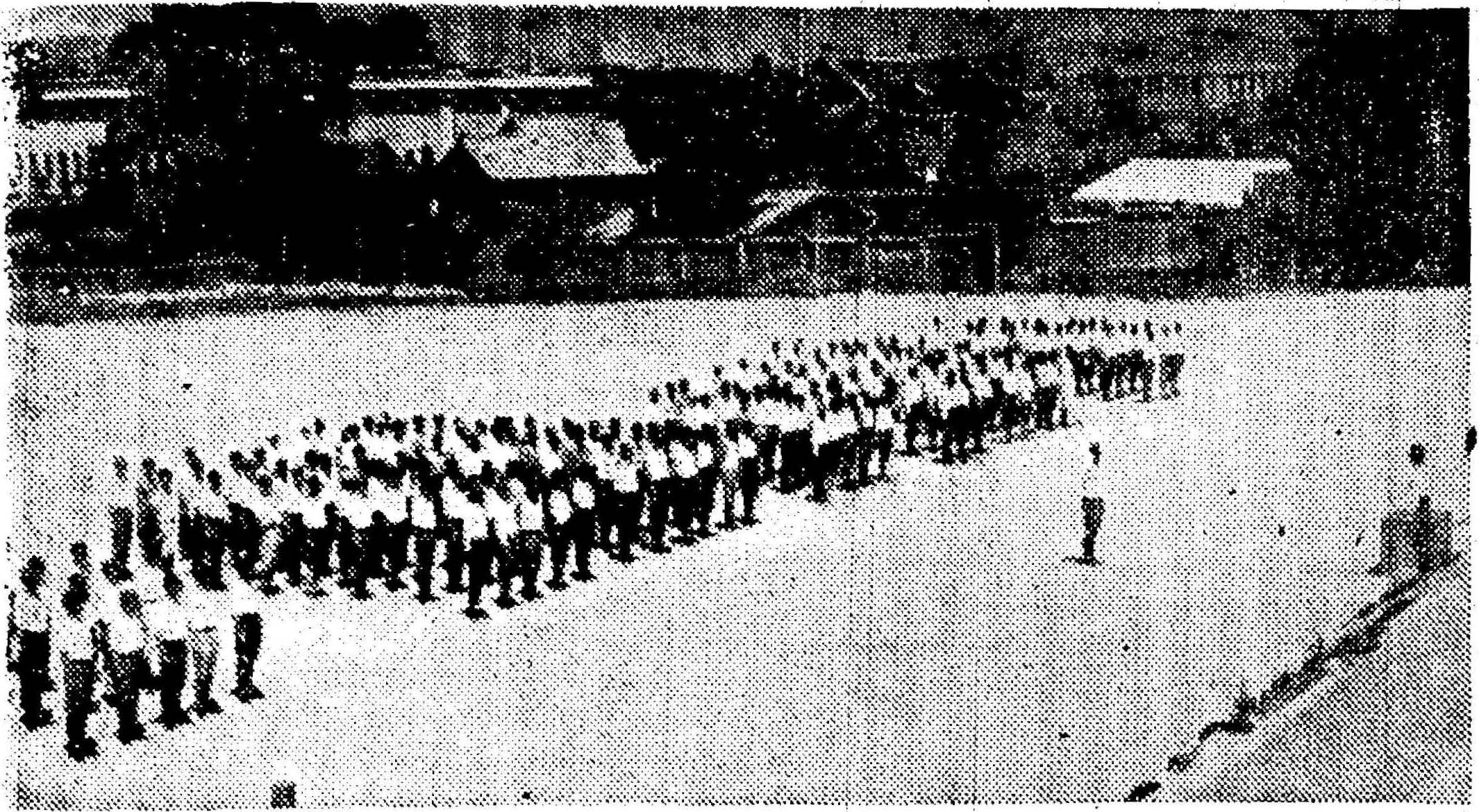
Korean kindergartners holding rising sun flags shouting ‘Banzai!’, schoolchildren worshiping at Shinto Shrines vowing to ‘defeat the U.S. and Britain’, high school girls ice skating on Chundangji Pond in Changgyeonggung Palace grounds – a series photos of student life in Seoul, late January 1943

2023-01-26

648

1407

The third and final school semester (January to March) began in Seoul in late January 1943, and the Keijo Nippo

Read More
Daily Life

Imperial Army general describes crowded movie theaters and cafes in Myeong-dong where Japanese and Korean ‘young people in flashy overcoats would flow into coffee shops, chatting with their friends using exaggerated American gestures’ in his January 1943 essays about daily life in Seoul

2023-01-23

561

1958

I found these four ‘slice-of-life’ personal essays written by an Imperial Army general in the Imperial Army press department describing

Read More
Daily Life

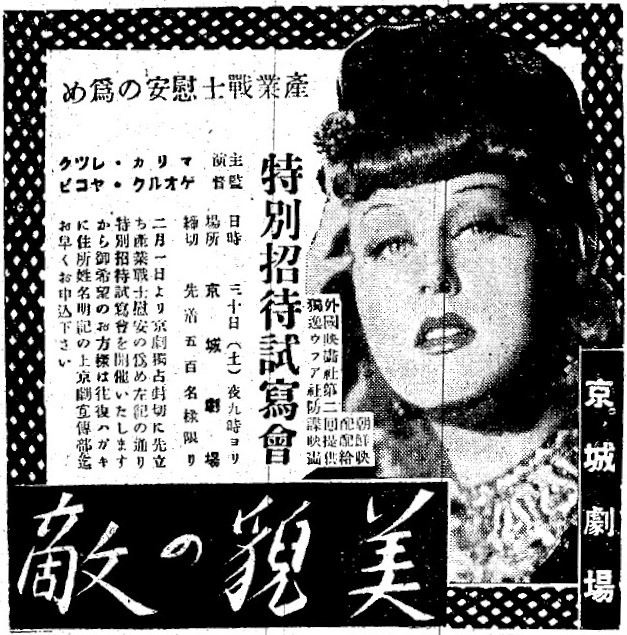
In January 1943, Hollywood films were banned in Korea, but 2 French films and 6 German films were showing in Seoul movie theaters: only ‘working women’ could watch Wunschkonzert, a Nazi propaganda drama, and only ‘industrial warriors’ could watch Kora Terry, a German spy thriller

2023-01-20

683

986

In January 1943, exactly eighty years ago, Imperial Japan was at war, but some Seoul residents still had time to

Read More
Japanese Language

Governor Koiso likened Korea to a disabled body whose brain (regime) could not talk to the limbs (Korean people), so an ‘exclusive use of Japanese’ policy was forced on Koreans, starting with Seoul city employees who were labeled ‘inferior’ and ‘weak-willed’ if they still spoke Korean at work

2023-01-15

791

1656

In 1943, Governor-General Koiso kicked off the new year by intensifying his campaign to further restrict the public spaces in

Read More
Business

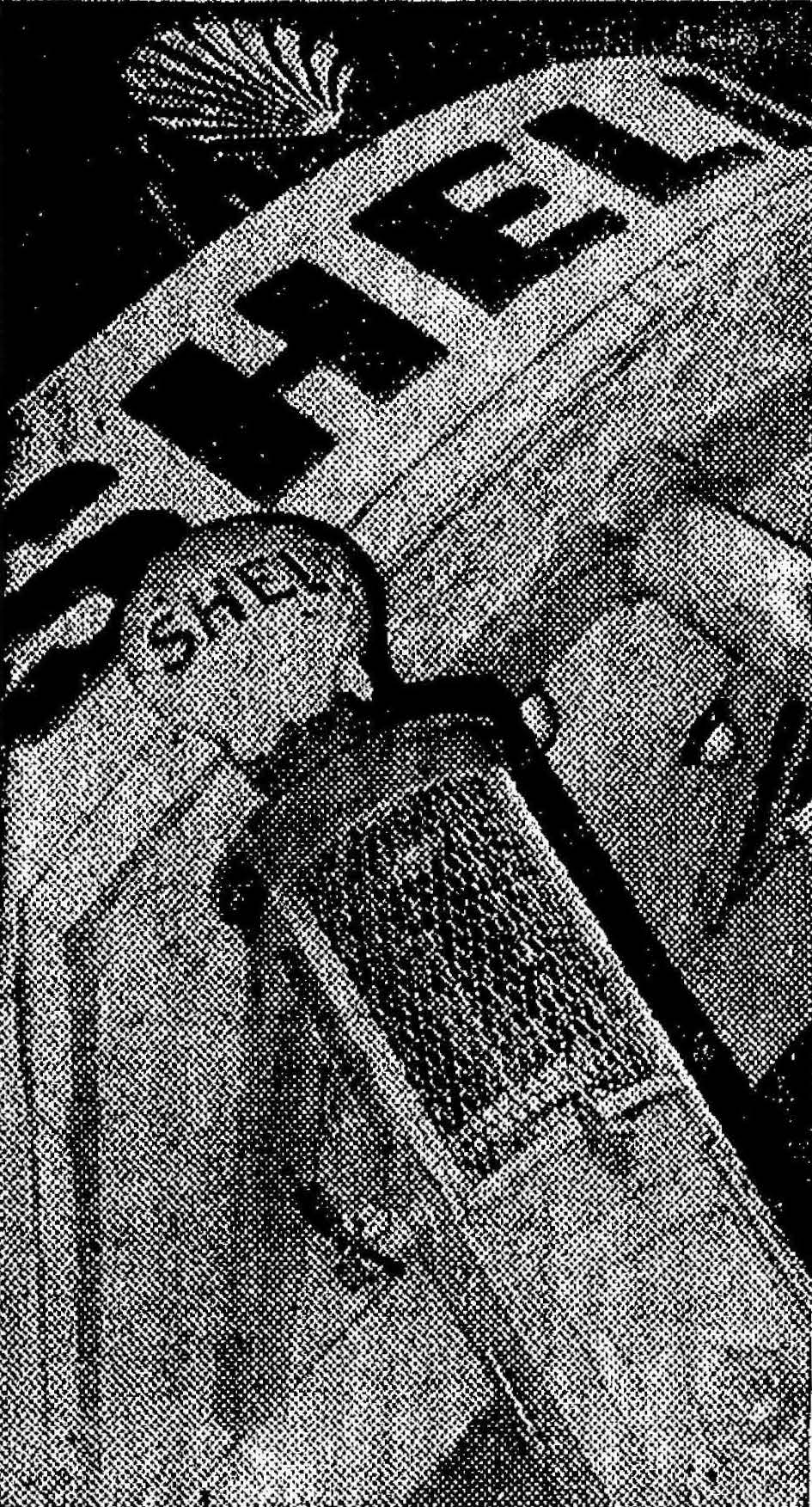
Western firms including Shell, Mobil, HSBC, Otis Elevator, Singer were active in colonial Korea, a US firm had a corn starch factory in Pyongyang, until the regime confiscated their assets with the outbreak of war, accused of having a ‘Jewish spirit’ which ‘exploits the entire wealth of mankind’

2023-01-11

815

1581

This is an article from December 1942, and it particularly stands out for its especially antisemitic, anti-American, and anti-British messaging.

Read More
Philosophy

Master Imaizumi Teisuke, the spiritual leader of the ruling class of colonial Korea, taught that Japanese-Korean unification should be thought of as a relationship between husband and wife, between a horse and its rider, and between a parent and a child, during his 12-day tour of Korea in 1942

2023-01-07

680

2361

Master Imaizumi Teisuke was a prominent Shinto theologian and spiritual leader of Imperial Japan. By 1942, when he went on

Read More
Japanese Language

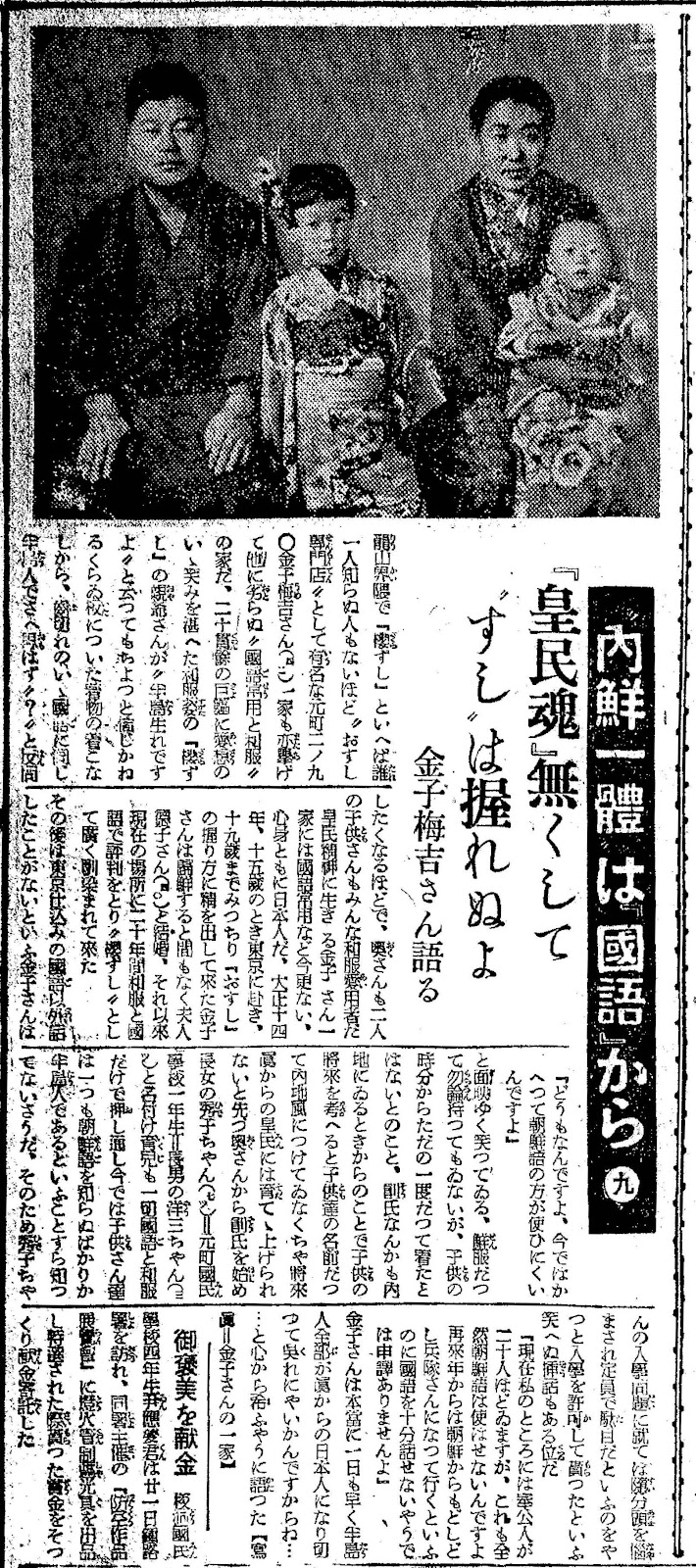
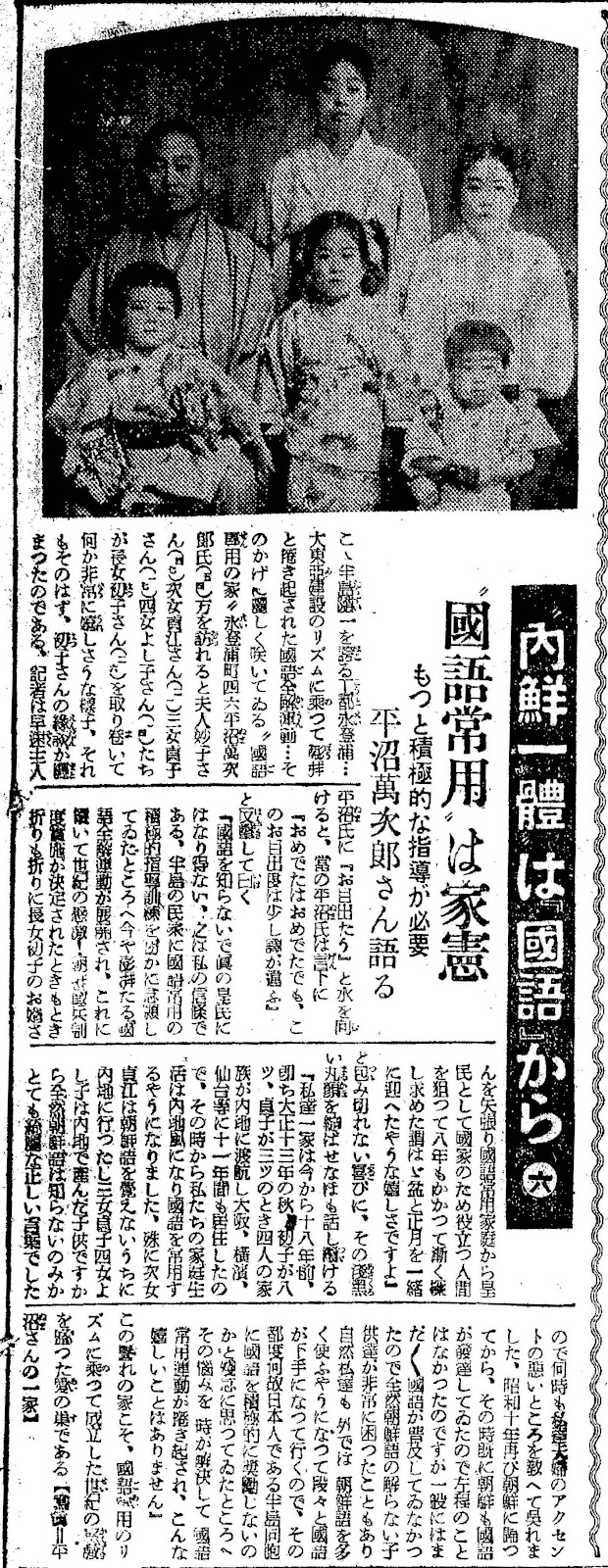
‘Jeon’ became ‘Takamatsu’ and ‘Park’ became ‘Masaki’: 1940 profiles of Korean families in Seoul adopting Japanese names to purportedly honor their Korean roots, be accepted by Japanese neighbors, to better interact with the public, to instill a ‘spirit befitting Imperial subjects’ in their children

2023-01-02

723

878

This 1940 article profiles two Korean families in Seoul who adopted Japanese names: the Jeon family, which became the Takamatsu

Read More

Recent Posts

  • Nazi German community in Seoul December 1941 celebrating Imperial Japan’s declaration of war
  • Wartime rations often vanished amid corrupt neighborhood leadership, leading to so much public anger that Imperial officials pleaded, ‘let us avoid becoming emotional with one another’ (Feb. 1945)
  • Inside the 1943 Seoul Crackdown on ‘Demonic Music’: Imperial Japan’s Campaign to Purge American and British Records, From Hawaiian Jazz to Dvořák, but German music (Beethoven, Mozart, Bach) and Italian music (Verdi) were allowed
  • How Imperial Japan spun a dead Korean industrial accident victim into a wartime hero: ‘Follow in the spirit of Mr. Lim!’, ‘The flower of the workplace!’ at Tōyō Metal in Sinuiju (October 1, 1943)
  • Rule by Fear: How Imperial Japan Expanded the Death Penalty and Toughened Sentences in Wartime Korea – Crackdowns on Protesters After Just One Warning (February 1944)

Recent Comments

  • vong quay on Imperial officials fanned out across rural Korea visiting townships one by one to indoctrinate villagers in Imperialist ideology in ‘Grassroots Penetration’ Campaign (March 1944)
  • act-two on Koiso’s 1943 ‘Great Leader’ Strongman Tours: Surprise village inspections to intimidate local leaders and impose Japanese language and culture all over the Korean countryside
  • laser marking machine on Koiso’s 1943 ‘Great Leader’ Strongman Tours: Surprise village inspections to intimidate local leaders and impose Japanese language and culture all over the Korean countryside
  • zorse on April 1945 Seoul dining: the public endured price-gouging and scraps, while privileged Japanese and Korean collaborator elites drank and feasted behind closed doors

Archives

  • December 2025
  • November 2025
  • October 2025
  • September 2025
  • August 2025
  • July 2025
  • June 2025
  • May 2025
  • April 2025
  • March 2025
  • February 2025
  • January 2025
  • December 2024
  • November 2024
  • October 2024
  • September 2024
  • August 2024
  • June 2024
  • May 2024
  • April 2024
  • March 2024
  • February 2024
  • January 2024
  • December 2023
  • November 2023
  • October 2023
  • September 2023
  • August 2023
  • July 2023
  • June 2023
  • May 2023
  • April 2023
  • March 2023
  • February 2023
  • January 2023
  • December 2022
  • November 2022
  • October 2022
  • September 2022
  • August 2022
  • July 2022
  • June 2022
  • May 2022
  • April 2022
  • March 2022
  • February 2022
  • January 2022
  • December 2021
  • November 2021

Meta

  • Log in
  • Entries feed
  • Comments feed
  • WordPress.org

Categories

  • Agriculture
  • Business
  • Christianity
  • Clothing
  • Comfort Women
  • Currency
  • Daily Life
  • Education
  • Entertainment
  • Food
  • Food Shortages
  • Foreign Residents
  • Imperial Way
  • Internment Camp
  • Japanese Language
  • Korean Royal Family
  • Korean Workers
  • Medical
  • Military
  • Model Korean Family
  • Moment of Silence
  • Philosophy
  • Police
  • Post-Liberation
  • Press
  • Prisoners of War
  • School
  • Travel
  • Uncategorized
  • University

Pages

  • About me
  • Donate
  • Get Involved
  • Imperial Japanese penal official said Korean 'ideological criminals' (independence activists) were 'not well made as human beings', but 'if only their thoughts could be corrected, then they will get better' so they can be 'used' for wartime labor, but 'this is not the case with ordinary criminals'
  • Nostalgia for Imperial Japan and its undercurrents in Kishi Nobusuke's legacy in postwar Japan, in Park Chung-hee and Chun Doo-hwan's legacy in South Korea, and why access to wartime newspapers of Japan-occupied Korea is important to combat historical misinformation by the far-right in both countries
  • Simon Young Kim (김영근), a South Korean violin virtuoso and disciple of famous violinist Jascha Heifetz, Simon was once my teacher and mentor, and his son was my best friend in elementary school
Exposing Imperial Japan
Designed & Developed by WpTheme Space