1938 Italian Fascist Delegation to Korea news coverage: Paulucci arrives in Seoul, Polyglot Pietro Silvio Rivetta translates, hotel chef prepares their meal, Yi Un and Yi Bangja visit wounded soldiers
This is the second part of the news coverage about a 22-member Italian Fascist delegation which visited Korea in 1938 from the afternoon of April 23 until the evening of April 24. They had just spent roughly 40 days traveling throughout Japan proper before continuing through colonial Korea.
Despite spending only about 36 hours in Korea, the delegation received extraordinarily lavish newspaper coverage, with pages upon pages devoted to virtually every aspect of the visit. The reporting ranges far beyond official speeches and diplomatic ceremonies. It documents exchanges involving sports, cinema, food, music, Catholicism, martial arts, military affairs, and youth organizations. There were also numerous encounters with schoolchildren and ordinary people.
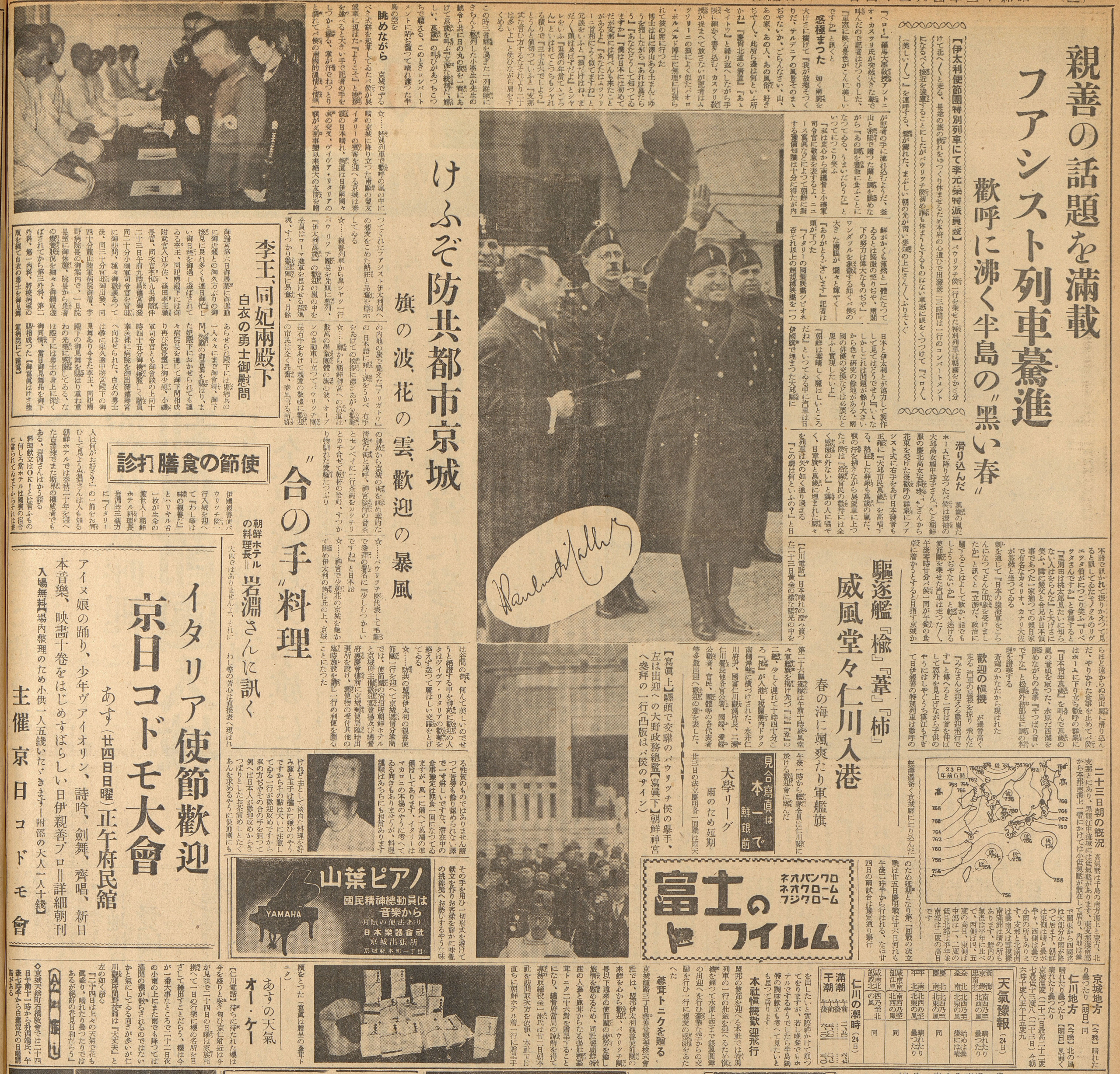
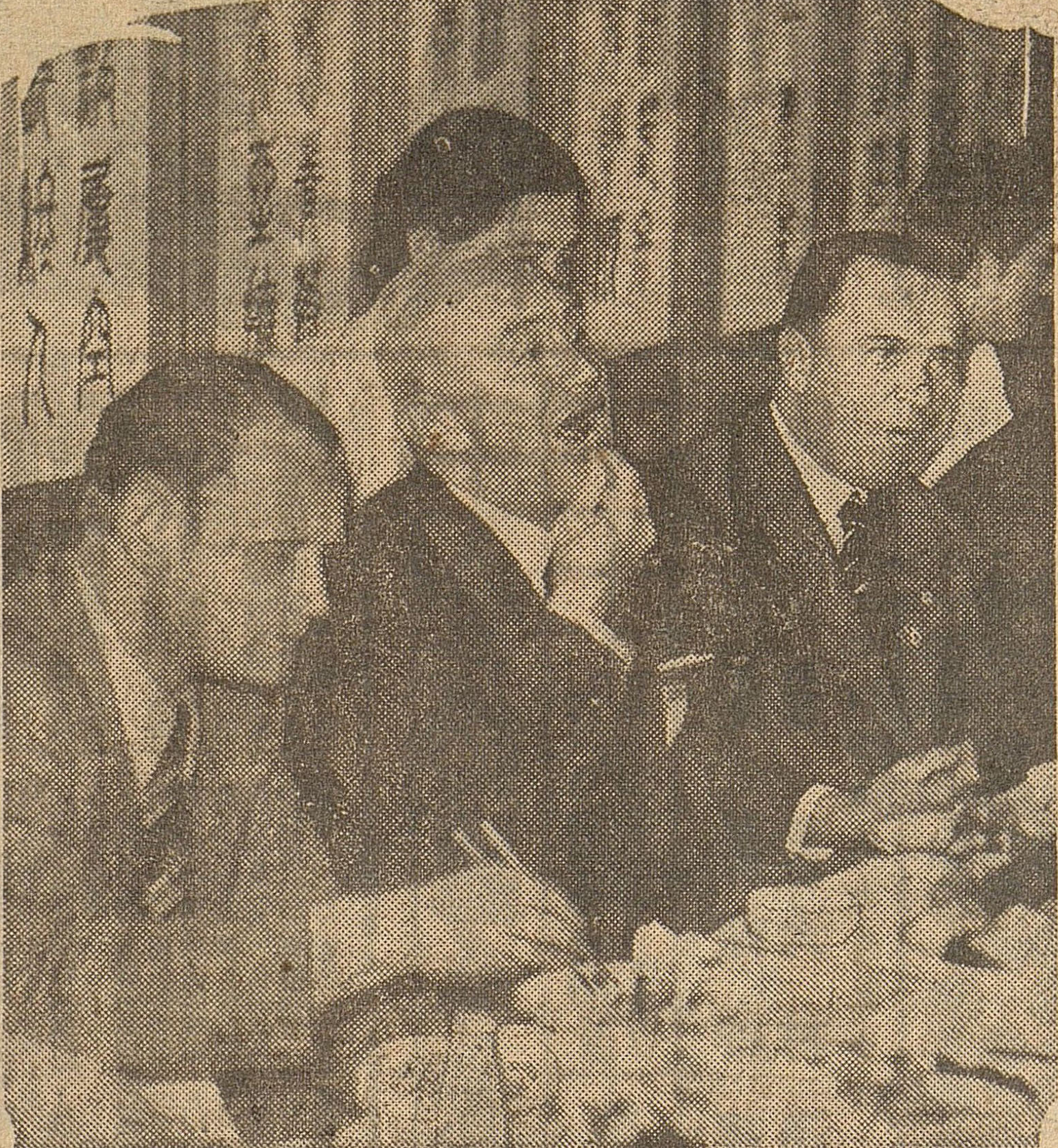
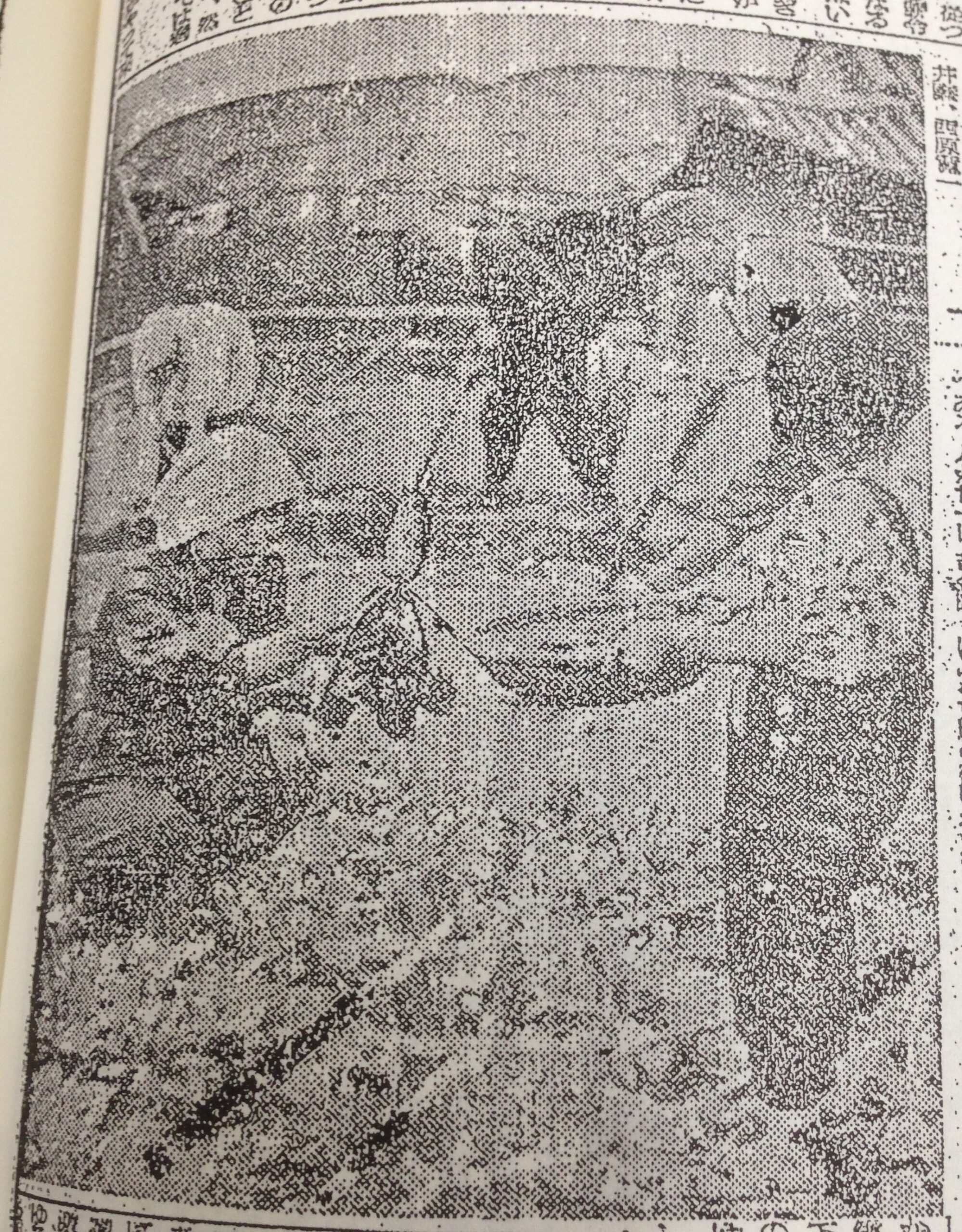
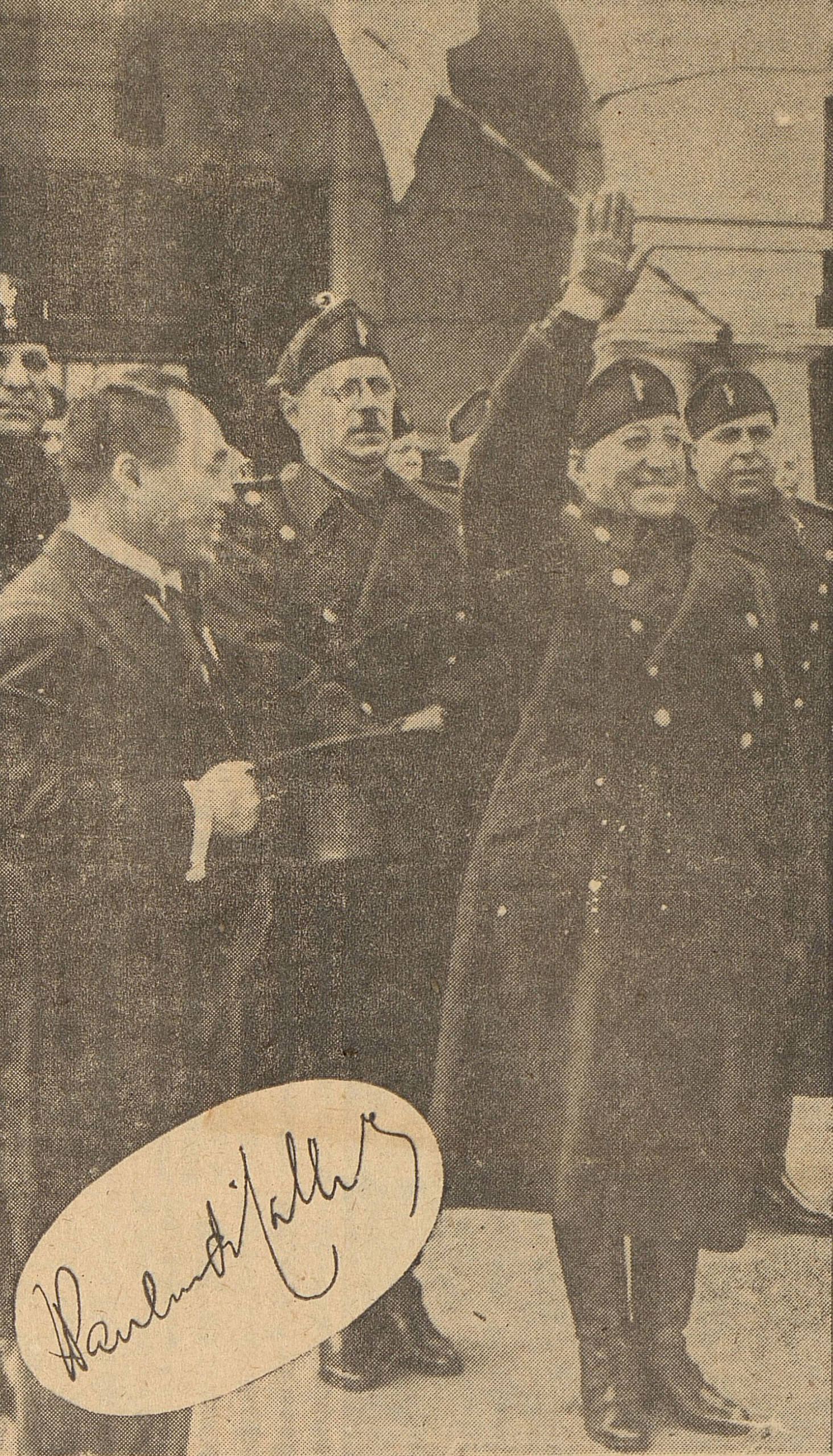
The delegation was headed by Marquis Giacomo Paulucci di Calboli Barone, an Italian diplomat whom Mussolini had appointed president of the Istituto Luce, the state-controlled film and newsreel organization that played a major role in Fascist propaganda. In this photograph from the trip, Paulucci appears relaxed and smiling as he holds up his right arm in a Fascist salute. To Paulucci’s right is Director of Political Affairs Ōno smiling as he holds his hat. The photo shows Paulucci’s signature, which is a stylized rendering of “Paulucci di Calboli”.
In this installment, we get to accompany Korean reporter Yi Won-yeong aboard the delegation’s special train as it travels north toward Seoul. His account is unusually lively and gives us a much more personal view of the visitors than the official ceremonies do. He jokes with the delegates, asks them about Korea and Japan, and records their reactions to the countryside, schoolchildren greeting the train, Korean grave mounds (bongbun, 봉분), and even the sea bream they are about to eat for lunch.
Fortunately for the delegation, there was at least one highly accomplished Japanese speaker among them: Pietro Silvio Rivetta (1886–1952), better known by his pen name Toddi. Rivetta was a polyglot writer reputed to know numerous languages, and the newspaper treats him as someone already familiar to Japanese readers. He appears to have played an important role as an interpreter and linguistic intermediary during the trip.
We also meet Chef Iwabuchi of the Chōsen Hotel, who was responsible for preparing food for the delegation. His interview offers an amusing glimpse behind the scenes of official hospitality. He claims that Italians generally prefer lighter cooking and are not especially fond of pork or eggs, and explains that because the visitors were being subjected to one elaborate banquet after another, he wanted to serve something simpler, essentially the culinary equivalent of giving an exhausted Japanese diner ochazuke and pickles after too many formal meals.
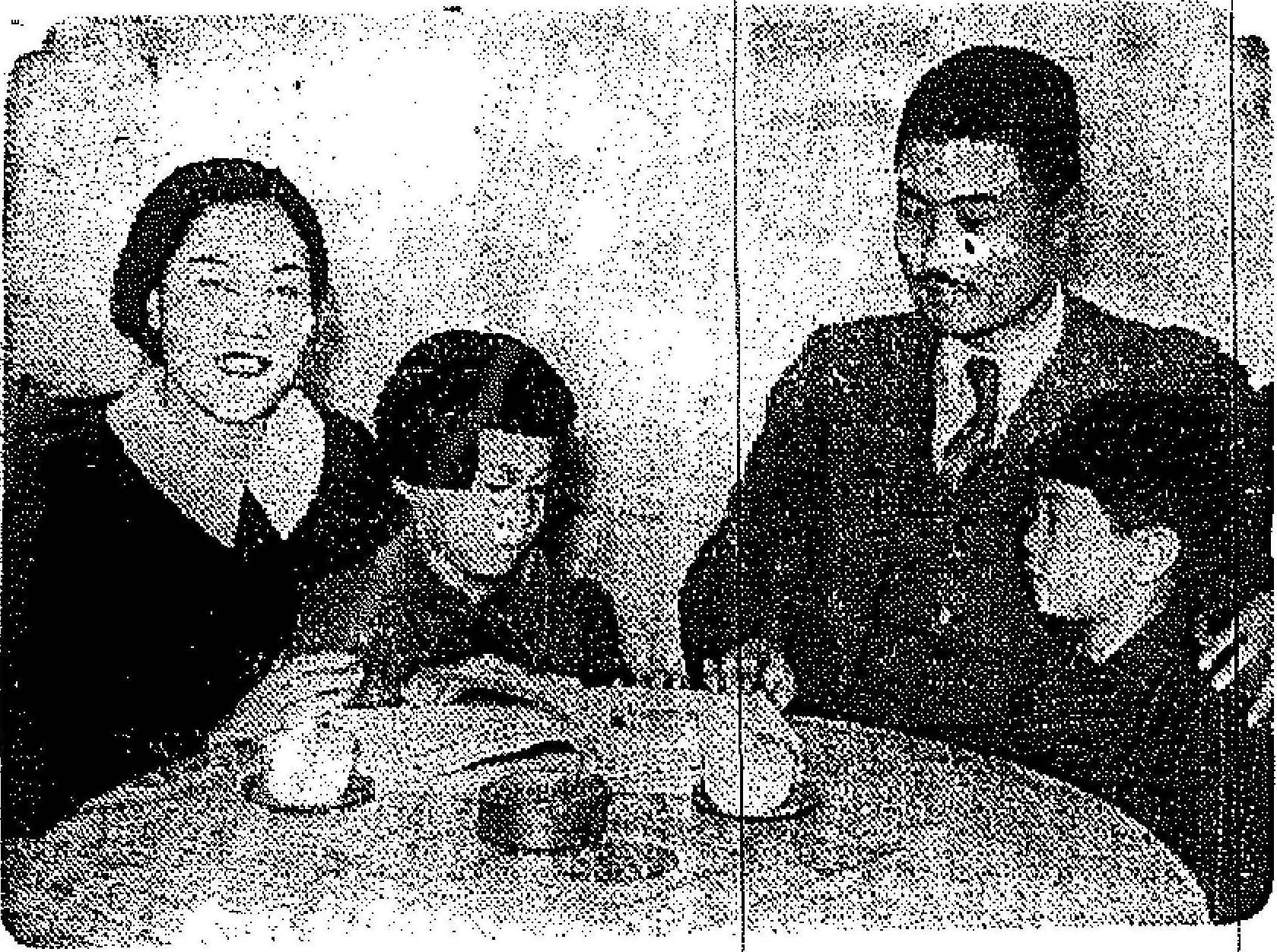
Printed alongside the delegation coverage is an article about Yi Un and Yi Bangja of the former Korean royal house visiting wounded and sick soldiers at Yongsan Army Hospital. At first this may seem unrelated, but the placement becomes more interesting later, when the royal couple themselves encounter the Italian delegation at an official banquet. Placing their activities alongside the visit of a major foreign Fascist delegation may have helped present them as lending legitimacy to Imperial Japan’s Fascist foreign relations, while also directing some of the extraordinary attention surrounding the Italian visitors toward the Korean royal household.
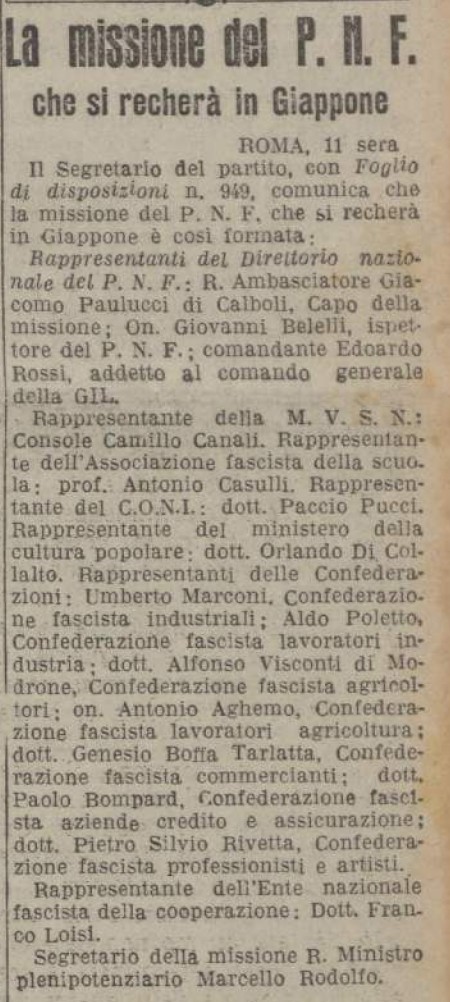
At the bottom of this post, I am also including a contemporary list giving the names and official titles or affiliations of 16 members of the Italian Fascist delegation. I found it in the January 12, 1938 issue of the Italian newspaper L’Avvenire d’Italia. It has been especially useful for identifying people whose names were rendered phonetically in Japanese in the news articles and for clarifying what organizations and branches of the Fascist state they represented.
[Translation]
Gyeongseong Ilbo (Keijo Nippo), April 24, 1938
Full Coverage of Stories of Goodwill
The Fascist Train Charges Ahead
A “Black Spring” on a Korean Peninsula Roaring with Cheers
[Special dispatch by correspondent Yi Won-yeong (이원영, 李元栄) aboard the Italian Delegation’s special train]
The special train carrying Marquis Paulucci and his party races northward, ever northward, cutting through the morning mist.
Out of consideration for the exhaustion of their long journey, the Government-General had arranged that, for the first two or three hours after departure, we should refrain as much as possible from intruding upon the delegation’s compartments. Yet beginning with Marquis Paulucci himself, not one of them shows any intention of resting.
Instead, they press their eyes to the windows and repeatedly exclaim:
“Bello, bello!” — “Beautiful, beautiful!”
The mist clears. Brilliant morning sunlight pours down upon fields of green wheat.
“Bello!”
Professor Antonio Casulli of the University of Rome suddenly lets out such a loud cry that this reporter is startled.
“Is the scenery outside really that beautiful?” I ask.
As though overcome with emotion, he throws both arms dramatically wide.
“It is exactly like my homeland! It is the very landscape of Sardinia. Look! The mountains, those houses, those people, their customs. I like it, I like it! What is this place called?”
“Cheongdo, North Gyeongsang Province.”
“Ah, Seidō.”
Repeating the name to himself, he carefully writes it down in his notebook.
Professor Casulli catches hold of me and seems unwilling to let me go, but Dr. Paolo Bompard, whose face bears a remarkable resemblance to Mussolini’s, forcibly pulls me over to his seat.
Pointing toward the many earthen mounds scattered across the hills, the doctor says:
“Those are graves, are they not?”
“How did you know?”
“This is my first time in Japan, but I have been to China many times.”
“You look very much like Prime Minister Mussolini,” I say jokingly.
“Only in the face. As for the brains, I have a long way to go,” he replies with a joke of his own.
“Go on, guess how old I am.”
Trying to joke in return, I deliberately shave down the figure:
“Thirty-five or thirty-six?”
“Do not give me one of those Chinese-style answers. Add another twenty years!”
He laughs and shrugs his shoulders.
Just then we pass Samseong Station. Elementary-school pupils stand neatly arranged in a single file. At their teacher’s command, they simultaneously raise Hinomaru flags and shout “Banzai!”
“What splendid discipline!”
“Wonderful! Banzai!”
Such cries can be heard here and there throughout the train.
At this moment Marquis Paulucci appears in the observation car. Until then he had been shut away in his compartment, gazing out at the now brilliantly clear skies over the Korean peninsula while drafting the speech he is to deliver in Seoul.
When I greet him with “Welcome,” he firmly grasps my hand in his enormous hand.
His palm is damp with perspiration, and it feels almost as though the Marquis’s southern warmth and passion are flowing directly into my own hand.
Looking at the orchids and sea bream presented to the delegation at Busan and Miryang, he smiles broadly.
“We are going to eat that sea bream for lunch. I expect it will be delicious.”
Then he says:
“I offer my heartfelt respect to Governor-General Minami and Commander Koiso. I had already acquired considerable knowledge of Korea from news photographs and the like, but I am deeply moved to see that Japan and Korea have become so completely fused into one. The efforts of Their Excellencies have been magnificent.”
As though to embody the word “wonderful,” the Marquis’s great eyes shine brilliantly.
“Thank you very much,” I reply, instinctively bowing my head.
“What about having Japan and Italy cooperate to produce a film on an even grander scale than the Italian national-policy film Scipione?”
“That would be splendid. But that is such a large question that it would require considerable study. I do think an exchange of actors between our two countries is necessary, and I would like to see it realized.”
“Korea is an extraordinarily beautiful place,” he says.
As he speaks, the train glides into Daegu Station, which is buried beneath Japanese and Italian flags.
A storm of “Banzai!”
Marquis Paulucci steps down onto the platform. He receives bouquets from Tokiko Fukunaka, 18, of Daegu Girls’ High School, dressed in a long-sleeved kimono, and An Yun-ju (안윤주, 安潤珠), 17, of North Gyeongsang Girls’ High School, dressed in Korean clothing.
Then, facing the cheering crowd, he raises his right hand in the Fascist manner and, with remarkably accurate Japanese pronunciation, cries:
“Banzai to the citizens of Daegu!”
The excited crowd replies with another storm of banzais.
Wiping the perspiration from his forehead as he climbs back into the observation car, the Marquis murmurs to the person beside him:
“I can only say how deeply moved I am by the welcome from officials and people all along the route.”
The train flies like an arrow past station after station, each buried beneath Hinomaru flags and cries of “Banzai!”
“What is this station called?”
The question is asked in Japanese.
I turn around and see the monocled Count Rivetta smiling at me.
“You are Count Rivetta, are you not?” I say with a bow.
With exaggerated laughter he replies:
“Why, there is no one who does not know Rivetta—just like Momotarō!”
Beside him sits Colonel Camillo Canali, relaxed and composed. He is renowned as coming from an entire family of Japanophiles, his father and elder brother having been connected with consular service in Japan.
After introductions, I ask:
“What impression did you receive from seeing Japan’s army and navy?”
“Splendid. But let us leave politics aside and talk about something lighter.”
He deftly slips away from the question.
The train carrying the delegation continued on its way.
At 12:20 p.m., just as Marquis Paulucci and the others are about to sit down to luncheon, the train pulls into Osan Station, now not far from their destination of Seoul.
Leaving their meal unfinished, the Marquis steps onto the platform. Facing the cheering crowd, he shouts:
“Banzai to the youth of Japan!” and himself leads the ensuing storm of banzais.
Then comes Suwon. As they dine while looking out toward Seoho, Paulucci praises the sea-bream dish to Foreign Affairs Department chief Matsuzawa:
“It really is delicious.”
Suddenly a welcoming aircraft emerges from the far side of the blue heavens and, its engine roaring, sweeps low over the roof of the speeding train.
“That flight is in your honor—it has come to welcome you,” we tell them.
Everyone cranes their necks toward the windows, looking upward and becoming as excited as children.
Soon the Han River, too, is behind us.
And at last the special train of Japanese-Italian friendship glides into Seoul Station, where a surging torrent of cheers awaits.
[Upper photograph] Marquis Paulucci raising his hand in greeting at the station; at left, Director of Political Affairs Ōno welcoming him.
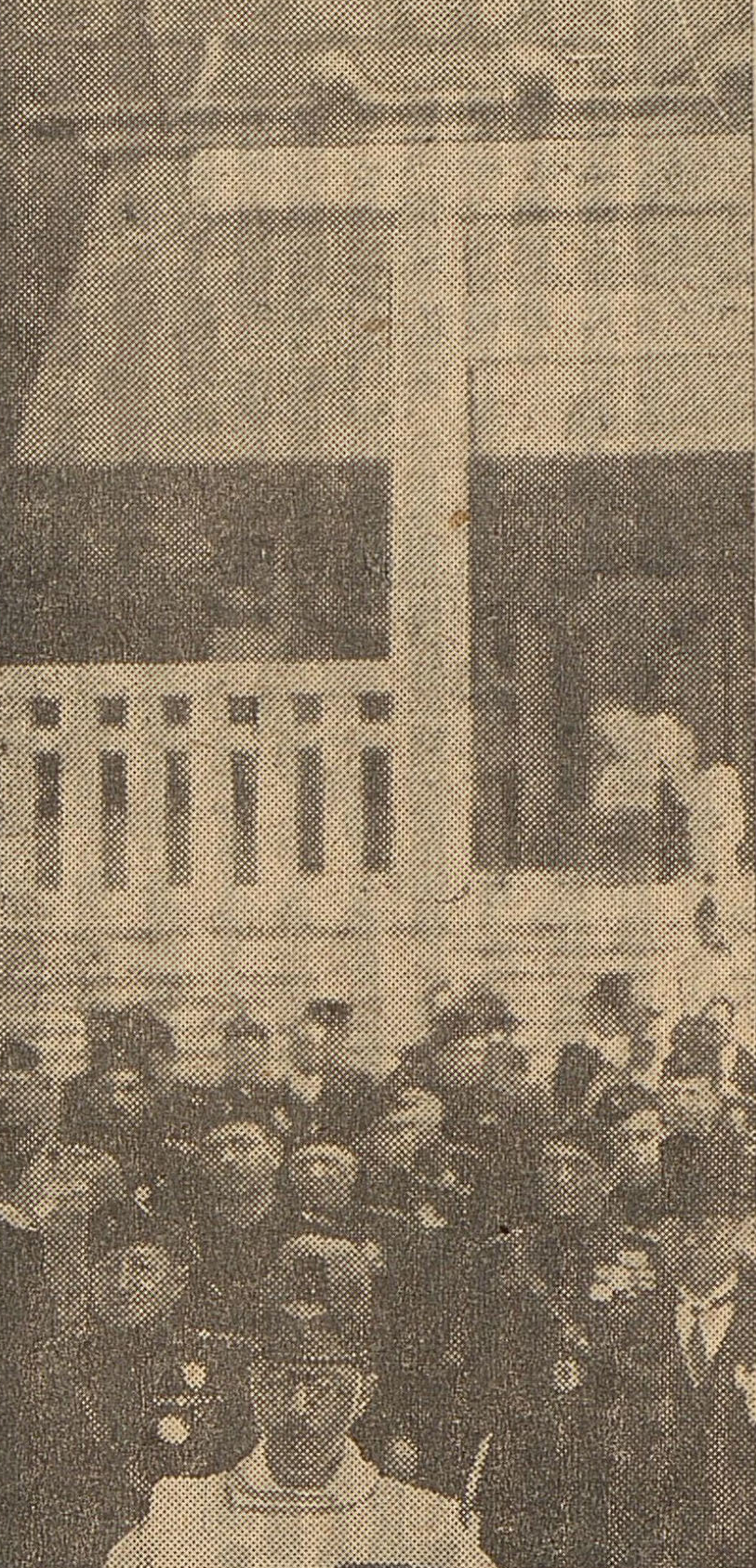
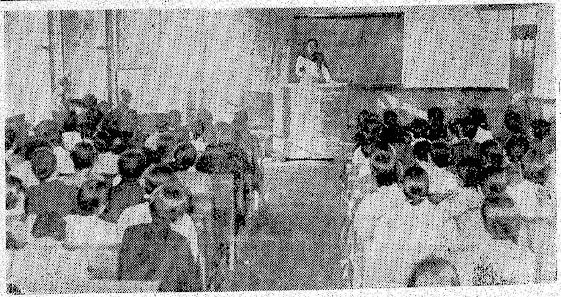
[Lower photograph] The delegation visiting Chōsen Shrine.
[Inset reproduction] Marquis Paulucci’s signature.
Today, Seoul Is an Anti-Comintern City
Waves of Flags, Clouds of Blossoms, a Tempest of Welcome
☆ … Seoul welcomes the guests from allied Italy, friends from southern Europe who stepped proudly from their special train amid a storm of cheers. Under a clear Japanese sky softened by spring haze, the streets are decorated everywhere with crossed Japanese and Italian flags. Signs proclaiming “Viva l’Italia” express the affection, excitement, and enthusiasm felt toward Fascist Italy, which has extended such tremendous friendship to Japan since the outbreak of the Second Sino-Japanese war.
☆ … From the goodwill train emerges the party of Blackshirts, forming ranks behind their leader, Paulucci. Amid a storm of cries of “Long live Italy!”, the entire party cuts such a dashing figure that one is reminded of the March on Rome. Thoroughly swept up by their reception, and with tears of happiness in their eyes, they respond with the Japanese word “Arigatō,” learned during more than a month of travel through mainland Japan, while raising their right hands in salute. Cheers erupt around them.
☆ … From the station to Chōsen Shrine, the roadside is a sea of flags held by tens of thousands of schoolchildren’s organizations. Standing in an open automobile, Marquis Paulucci raises his right hand in an affectionate salute. The welcoming citizens are beside themselves with excitement. From the sacred grounds, fresh with new greenery and fragrant with the spring breeze, the delegation looks down upon the city of Seoul, repeatedly exclaiming:
“What a lovely, clean city!”
At the shrine they are served bancha tea and senbei rice crackers. The members of the delegation knock their tea bowls together as though making a toast, displaying a thoroughly relaxed and good-humored familiarity with the occasion.
☆ … Representing the delegation, Marquis Paulucci signs the shrine register with a writing brush. In Japanese he says: “A little difficult, is it not?”
☆ … After taking a short rest at the shrine, the visitors continue gazing with delight over flower-filled Seoul. “Italian cities are built upon hills, but Seoul is a city among valleys. How beautiful it is!” As they voice their admiration, the people gathered throughout the shrine grounds continually send up cries of “Viva l’Italia!”, completing another warm exchange of goodwill.
☆ … To welcome the goodwill delegation from allied, anti-Comintern Italy, the Seoul Communications authorities have arranged temporary branches of the Seoul Post Office at the delegation’s lodging, the Chōsen Hotel, at the site of the welcoming banquet sponsored by Seoul municipality, and in front of Gyeonghoeru Pavilion, behind the Government-General Building. Temporary arrangements for accepting mail and providing other services will thus be made for the convenience of the delegation.
Culinary “Interlude”
Chōsen Hotel Head Chef Iwabuchi Answers Our Questions
Figuring Out What to Serve the Delegation
With the arrival in Seoul of Marquis Paulucci and the Italian goodwill delegation, there is one group declaring enthusiastically, “we extend goodwill through taste!”
So we decided to ask Tokizō Iwabuchi, head chef of the Chōsen Hotel, a man whose livelihood depends entirely upon his palate, one simple question: “What do Italians like to eat?”
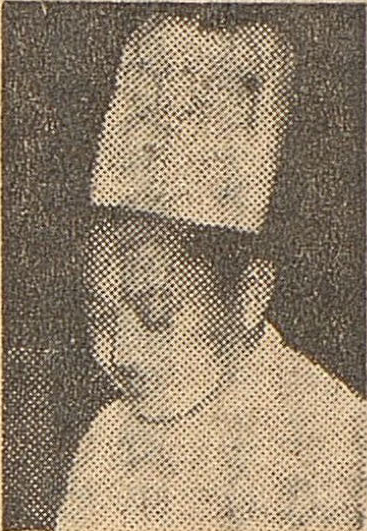
Iwabuchi is a veteran who has now spent some twenty years at the well-known Chōsen Hotel, and is also regarded as an authority in his profession. Chef Iwabuchi tells us:
“The menu is all set, OK! But since this hotel has been designated as the lodging place for distinguished state guests, this is no ordinary assignment. The trouble with our work is that the effort we put into it is not something that shows directly. So people do not always notice how much trouble we take, which can be a little lonely for us.
“As things stand, the delegation is scheduled to eat only one breakfast here during their stay, but we have made every possible preparation in case anything should arise.
“Some people may think of Italy simply as the home of macaroni, but naturally they have a considerable variety of dishes over there. Generally speaking, however, they appear to prefer fairly light cooking, and they certainly seem not to care much for pork or eggs, so we are paying particular attention to that.
“The delegation is being subjected everywhere to one welcoming banquet after another. So what we are aiming for is a kind of culinary interlude.
“It is rather like a Japanese person, exhausted from being feasted everywhere, suddenly longing for a simple bowl of ochazuke and some takuan pickles.
“We want to use that same idea with the delegation. Avoiding formality altogether, I would like to prepare dishes whose flavors quietly lead our guests into a kind of paradise of taste. I swear that is genuinely what I am hoping to accomplish.
“And if it should turn out that the hotel is asked to provide a dinner as well, I would like to think about a menu incorporating seasonings and dishes distinctive to the Korean peninsula.”
Keijo Nippo Newspaper’s Aircraft Makes a Welcome Flight
To welcome the emissaries of our allied nation, this newspaper dispatched its own aircraft to greet the delegation’s special train on its splendid journey.
Flying as far as the skies above Suwon, its silver wings performed an aerial dance of welcome, producing a magnificent exchange of greetings in the sky and deeply moving the members of the delegation.
Ginseng-and-Deer-Antler Tonic Presented to the Delegation
The Jaseondang (자선당, 慈善堂) Pharmaceutical Company, located in Jongno 3-ga, Seoul, has expressed its heartfelt welcome for the visit to Korea of the Italian goodwill delegation from our allied nation.
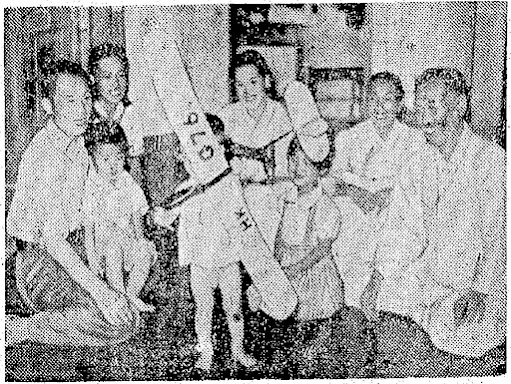
To relieve the fatigue of delegation leader Marquis Paulucci and the other visitors after their long journey, and to provide them some comfort during their travels, the company decided to present twenty-six sets of its “Samnyong (삼용, 蔘茸) Tonic,” a restorative medication made from Korea’s famous ginseng and deer antler.
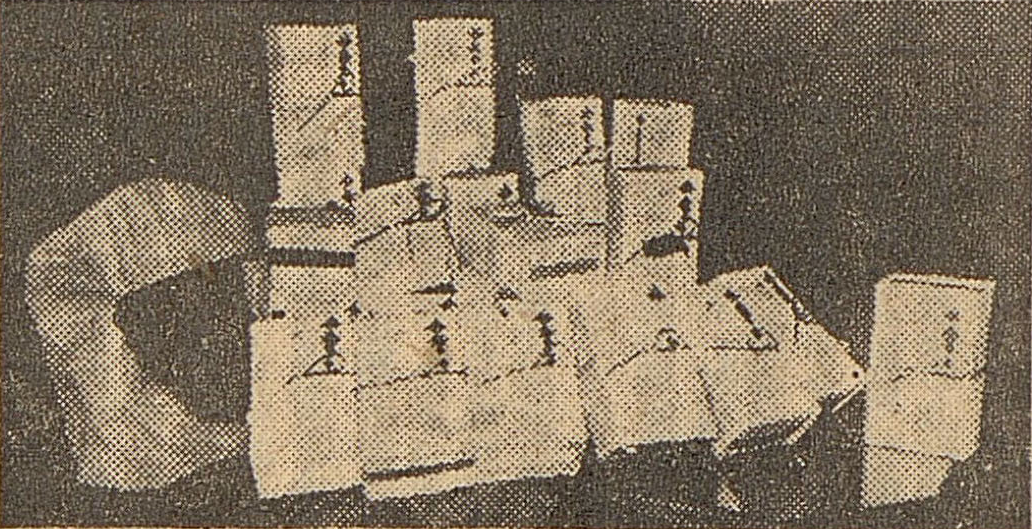
After receiving the approval of the Government-General authorities, company managing director Kim Il-yeong (김일영, 金一泳) visited this newspaper on the morning of April 22nd and asked us to act as intermediary.
This newspaper immediately made arrangements for the gifts to be presented to the delegation upon its arrival at the Chōsen Hotel.
[Photograph: the Samnyong Tonic presented to the delegation.]
Their Highnesses Prince Yi and Princess Yi
Visit and Comfort the “Warriors in White”
On the sixth day since their return to the palace, Their Highnesses Prince Yi Un (이은, 李垠) and Princess Yi Bangja (이방자, 李方子) have been passing through an extremely busy schedule, including visits to family graves and long-awaited meetings with close relatives.
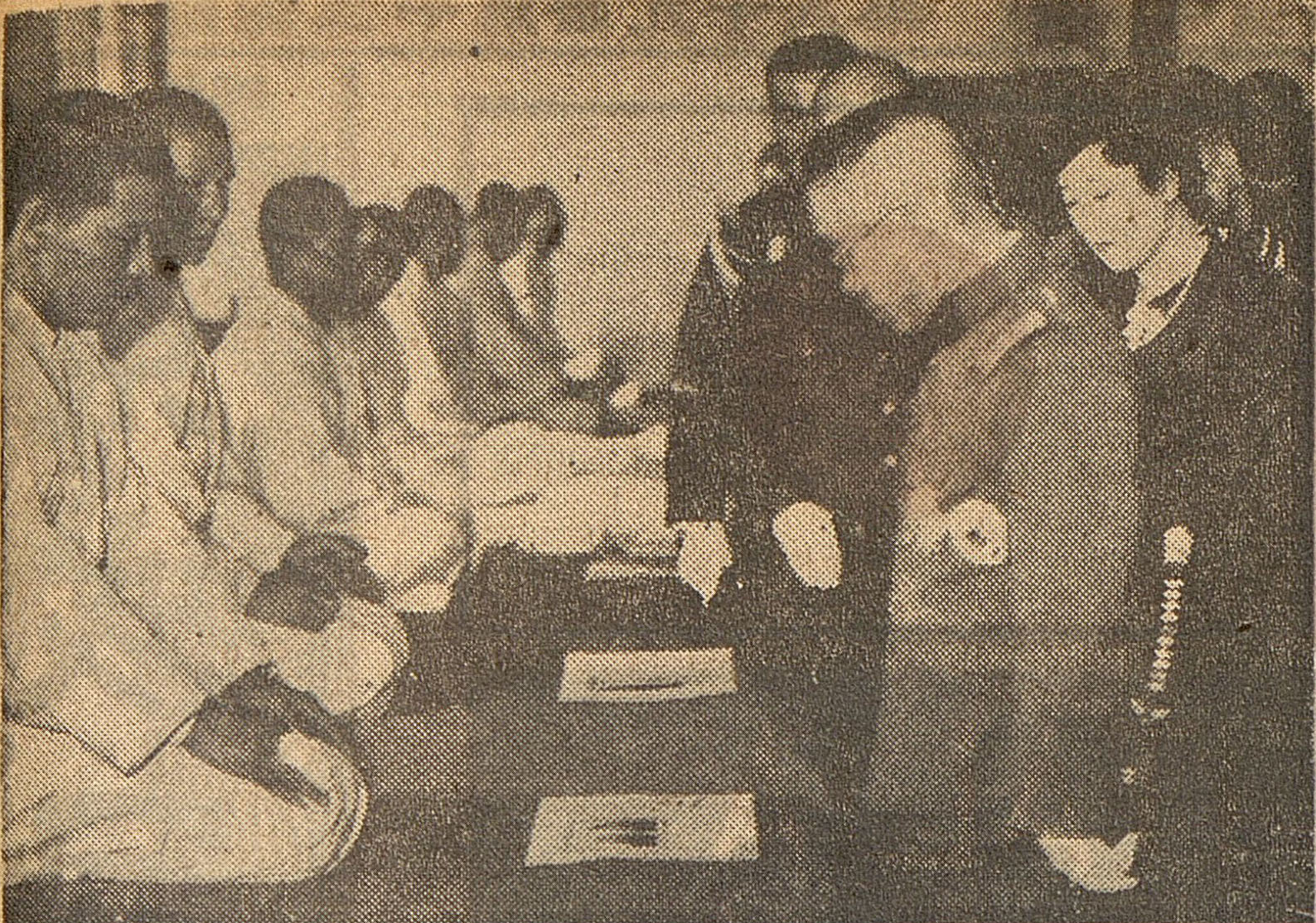
On the morning of the 23rd, accompanied by their aide-de-camp Major Irie, Director Shinoda of the Office of the Yi Royal Household, and Vice-Director Baron Yi Hang-gu (이항구, 李恒九) Their Highnesses departed Changdeok Palace at 9:00 a.m.
At 9:20 a.m. they visited Army Commander Koiso at his official residence, where they engaged in various cordial conversations. They departed the residence at 9:30 a.m.
At 9:40 a.m. they arrived at Yongsan Army Hospital. Guided by Hospital Director Uno, they first rested briefly in the director’s office. After hearing a detailed report from the director concerning the condition and treatment of the patients, Their Highnesses proceeded in order through the Third Surgical Ward, Second Surgical Ward, First Internal Medicine Ward, and the officers’ ward, where they visited the wounded and sick soldiers: the “warriors in white.”
His Highness acknowledged each wounded or sick soldier individually, asking after his condition and offering words of encouragement. Her Highness likewise made various inquiries through the hospital director.
The royal couple then returned to the director’s office for another brief rest and also conversed with Army Commander Koiso.
At 10:45 a.m., in excellent spirits and seen off by the assembled officials, Their Highnesses departed the hospital and proceeded to Deoksu Palace.
The “warriors in white,” having recently been honored by a visit from Prince Higashikuni, Lieutenant General of the Army, and now once again by the visit of Their Highnesses Prince and Princess Yi, were deeply moved by these repeated honors.
His Highness also expressed profound sympathy for the circumstances of the wounded soldiers and bestowed gifts upon them that day.
[Photograph: respectfully taken this morning at the Army Hospital]
[Transcription]
京城日報 1938年4月24日
親善の話題を満載
ファシスト列車驀進
歓呼に沸く半島の”黒い春”
【伊太利使節団特別列車にて李元栄特派員発】パウリッチ侯一行を乗せた特別列車は朝霧をかき分けて北へ北へと走る。長途の旅の疲れをゆっくり休ませるため本府の心遣いで出発二三時間は一行のコンパートメントになるべく接近を遠慮することにしたが、パウリッチ侯初め誰も休もうとするものはない。車窓に眼をくっつけて『ベロベロ(美しい美しい)』を連呼する。霧が霽れた、まぶしい朝の光が青い麦畑の上にさんさんふりそそぐ。
『ベロー!』羅馬大学教授アントニオ・カスッリ氏が突然大きな声で叫んだので記者はびっくりした。『車窓に映る景色がこんに美しいですか』と訊くと、感極まった如く両腕を大げさに拡げて『我が故郷そっくりだ。サルデニアの風景そのままじゃないか。ごらんなさい、山、あの家、あの人、あの風俗、好きじゃ好きじゃ。此所ら辺は何という所かね』『慶尚北道の清道』『ああセイドウ』と繰り返えしながら手帳に細かく書き込む。カッスリ教授が捉まえて放さないが記者はムッソリーニの顔によく似たパオロ・ボルパルド博士に無理に引張られて彼の席に行った。
博士は山に沢山ある土まんじゅうを指しながら『あれは墓だろう』『あなたどうして知っていますか』『僕は日本には初めてだが支那には何べんも来たことがあるよ』『あなたはムッソリーニ首相によく似てますね』と冗談をいうと『顔だけはね。まだまだ頭は及ばずだよ』とシャレをいう。『君僕の年当ててごらん』といわれて、こっちもシャれる積りで『三十五六でしょう』とうんと値切っていうと『支那式な言い方するな。それより二十は多いよ』と笑いながら肩をすくめる。
この時三省駅を過ぎた一列縦隊にきちんと整列した小学生が先生の号令と共に日の丸の旗を一斉にあげて万歳を叫ぶ『立派な統制だ。嬉しい、万歳』の叫びがあっちこっちで聴こえる。このときコンパートメントに閉じ籠って晴れ渡った半島の空を眺めながら京城でやるべき式辞を起草していたパ侯が展望車に現われた『ようこそ』と挨拶を述べると大きい手で記者の手をしっかと握る。掌が汗でねっとりと濡れてパ侯の南国的温情と情熱が記者の手に流れ込むようだ。釜山と密陽で贈った蘭と鯛を眺めながら『あの鯛を昼飯に食うことになっている。うまいだろうな』といってにっこり笑う。
『私は衷心から南総督と小磯司令官に敬意を表するよ。ニュース写真などによって朝鮮に対する予備知識は十分に得たが内鮮がかくも渾然と一体になっているとは感激の至りじゃ。両閣下の努力は偉大なものじゃ』
ワンダフルを象徴する如くパ侯の大きな両眼が烱々と輝く。
『ありがとうございます』記者は頭が下った。
『イタリーの国策映画シピオネ否それ以上の超規模映画を一つ日本と伊太利とが協力して製作して見てはどうでしょう』『いいな、しかしこれは問題が余り大きいから色々研究の余地がある。両国の俳優の交換などは必要だと思うし実現したいよ』
『朝鮮は素晴らしく麗わしいところだね』といっている中に汽車は日伊国旗で埋まった大邱駅に滑り込んだ。万歳の嵐だ。ホームに降り立ったパ侯は振袖の大邱高女福中時子さん(一八)と朝鮮服の慶北高女安潤珠(一七)さんから花束を受けた後歓呼の群集にファシスト式に右手をあげ日本発音も正確に『大邱市民万歳』を高唱する。熱狂した群集も万歳の嵐だ。額の汗を払きながら展望車に上ったパ侯は『沿線官民の歓待には全く感激の外ない』と隣の人に囁く。日章旗と万歳に埋まれた駅々を列車は矢の如く通り過ぎる。
『この駅は何というの?』と日本語で訊かれて振りかえって見ると訊していたモノクルのリヴェッタ伯がにっこり笑う。『リヴェッタさんですか』と会釈すると『里別田は桃太郎見たいに知らない人はおらんな』と大げさに笑う。隣に厳父と令兄が日本領事であった一家揃っての親日家で有名なカミリオ・カナリ大佐が悠然と坐っている。
刺を通じて『日本の陸海軍をごらんになってどんな印象を受けましたか』と訊くと『立派だ。政治に関することはよして軟らかい話でもしようじゃないか』と軽く逃げる使節団を乗せた汽車は走った走った。午後零時二十分パ侯一同が午餐の食卓に着こうとすると目指す京城からほど遠からぬ烏山駅に滑り込んだ。やりかけた食事を止めてパ侯はホームに下り立ち歓呼の群集に『日本青年万歳』を叫んで万歳の嵐の音頭を取った。水原だ西湖を眺めながらの食事『やっぱり旨いですな』と松沢外務部長に鯛の料理を讃美する。
蒼穹のかなたから現われた歓迎の慎機が爆音高く走る汽車の屋根を掠り飛んだ『みなさんを迎える歓迎飛行です』と伝えると一行は首を伸ばして窓外を見上げながら子供のようにはしゃぐうち漢江もすぎて日伊親善の特別列車は歓呼の怒濤渦巻く京城駅に辷り込んだ。
【写真上】駅頭で交歓のパウリッチ侯の挙手、左は出迎えの大野政務総監【写真下】朝鮮神宮へ参拝の一行(凸版はパ侯のサイン)
きょうぞ防共都市京城
旗の波、花の雲、歓迎の暴風
☆...特別列車で歓呼の嵐の中に晴の京城に降り立った南欧の盟友イタリーの賓客を迎える京城は春霞の日本晴れ、街道は日伊両国国旗の交叉、ヴィヴァ・リタリアの額が支那事変以来絶大の友情を贈ってくれたファシスト伊太利国への親愛をこめた熱狂と昂奮を標示している。
☆...親善列車から黒シャツ一行パウリッチ団長を先頭に整列。『伊太利万歳』の歓迎の嵐の中を全員はローマ進軍を思わせる程颯爽、すっかり歓迎陣に昂奮、月余の内地の旅で覚えた『アリガトウ』の日本語に嬉しい涙をうかべ右手をあげての挨拶に沸きあがる歓声。
☆...駅から朝鮮神宮への沿道は数万の学童団体の旗の波、オープンの自動車に立ってパウリッチ団長右手をあげて親愛の敬礼に歓迎の市民は全く昂奮、春風薫る新緑の神苑から京城の街を眺め素的な清楚な街と連呼。神宮接待の番茶とセンベイに一行茶碗をカッチリとカチ合せて乾杯の恰好、すっかり物馴れた愛嬌たっぷり。
☆...パウリッチ侯代表して毛筆で参拝の署名に『少しむずかしいですね』と日本語。
☆...神宮で少憩花の京城を飽かず眺め伊太利の街は丘の上、京城は谷間の街、何んて美しいのでしょうと絶讃する中を神苑に歓迎の人々はヴィヴァ・リタリアの歓声を絶えず送って麗わしい交歓をとげている。
☆...防共の盟邦伊太利の親善使節団一行を迎えて京城逓信分掌局では、使節団の宿泊所朝鮮ホテルと京城府主催歓迎宴会場及び総督府裏慶會樓前に京城郵便局臨時出張所を設け、郵便物の受付其他の臨時施設を講じ一行の利便を図ることになった。
”合の手”料理
朝鮮ホテルの料理長=岩淵さんに訊く
使節の食膳打診
伊国親善使パウリッチ侯一行入城を迎えて『わし等は味の親善だ』とハリキル舌一枚が生命の渡世人―朝鮮ホテル料理長岩淵時三親方に『イタリー人は何がお好き?』の一節をお伺いして見よう。岩淵さんは人も知る朝鮮ホテルでは春秋二十年を迎えた古参株でまた斯界の権威者でもある。
岩淵さんはこう語る:『料理献立はOK!とは言うものの何しろ当ホテルは国賓の宿舎に当てられていますから、それは並大抵ではありませんよ。それにわし等の苦心は直接表れ現われる性質のものではありません。随って苦労も余り認められない訳で一寸淋しいですな。滞在中の食事予定は朝食一回になっていますが、万一に備えて万端の準備はしてあります。イタリーはマカロニの本場のように考えている向きもありましょうが、料理の種類はあちらにも相当ありますけれど主として淡白な料理を好み豚と玉子は確かに嫌いのようですから、その点は大いに注意している一行が歓迎攻めですから、私の方じゃその合の手を狙って例えば日本人が歓迎攻めからさっぱりとしたお茶漬めしとたくあんを求めるように使節団にもその手を用い一切形式を避けて献立を作りお客様を静かに味覚の挑源境へお誘いするような味を出したいと実際神かけて願っておりますが、若し晩餐でもホテルでするようでしたら半島独特の調味献立も考えて見たいとも思って居ります』
本社慎機歓迎飛行
盟邦の使節を迎える本社では特別列車の一行の壮途を迎えるため慎機を翔って水原上空まで銀翼円舞の出迎えを行い豪華な空からの交歓を行い一行に親愛の感激をあたえた。
蔘茸トニクを贈る
京城鐘路三丁目慈善堂製薬株式会社では、盟邦伊太利親善使節団の来鮮を心から歓迎。パウリッチ団長以下遠来の使節団の疲労を癒し旅情を慰めるため、同社製朝鮮特産の人蔘と鹿茸からなる強壮剤蔘茸トニク二十六対を贈呈することになり、総督府当局の諒解を得て専務取締役金一泳氏は二十二日朝本社を訪問取次方を依頼。本社では直ちに朝鮮ホテル着一行に贈呈手続きをとった(写真は贈呈の蔘茸トニク)
李王、同妃両殿下
白衣の勇士御慰問
御帰宮第六日御展墓に御運動に御近親との御久方ぶりの御接見に畏れ多くも連日御忙しい御日程を御過ごし遊ばされている李王、同妃両殿下には御附武官入江少佐、篠田李王職長官、同次官李恒九男御随伴二十三日午前九時昌徳宮御発同二十分小磯軍司令官を官邸に御訪問。種々御歓談あって後、同三十分官邸御出発。
同四十分龍山陸軍病院御着、宇野病院長の御案内で、一旦院長室に御休憩。院長から患者の療養状況を細々と御聴取遊ばされてから第三外科、第二外科、第一内科、将校病室の順を経て白衣の勇士を御見舞あらせられ殿下には傷病兵の一人一人にまで御会釈、御下問、激励の御言葉を賜わり、また妃殿下におかせられても種々病院長を通じて御下問相成り再び院長室に御少憩。小磯軍司令官とも御会談の上同十時四十五分御機嫌麗しく諸員奉送裡に病院を御出発徳壽宮へ向わせられた。白衣の勇士は嚢に東久邇中将宮殿下の御見舞あり今また李王、同妃両殿下の御見舞を賜わり重ね重ねの光栄に感激している。なお殿下には勇士の身上に深く御同情、当日御見舞品を御下賜相成った【御写真はけさ陸軍病院にて謹写】
L’Avvenire D’Italia, January 12, 1938
La missione del P. N. F. che si recherà in Giappone
ROMA, 11 sera: Il Segretario del partito, con Foglio di disposizioni n. 949, comunica che la missione del P. N. F., che si recherà in Giappone è così formata:
- Rappresentanti del Direttorio nazionale del P. N. F.: R. Ambasciatore Giacomo Paulucci di Calboli, Capo della missione;
- On. Giovanni Belelli, ispettore del P. N. F.;
- comandante Edoardo Rossi, addetto al comando generale della G.I.L.
- Rappresentante della M. V. S. N.: Console Camillo Canali.
- Rappresentante dell’Associazione fascista della scuola: prof. Antonio Casulli.
- Rappresentante del C.O.N.I.: dott. Paccio Pucci.
- Rappresentante del ministero della cultura popolare: dott. Orlando Di Collalto.
- Rappresentanti delle Confederazioni: Umberto Marconi, Confederazione fascista industriali;
- Aldo Poletto, Confederazione fascista lavoratori industria;
- dott. Alfonso Visconti di Modrone, Confederazione fascista agricoltori;
- on. Antonio Aghemo, Confederazione fascista lavoratori agricoltura;
- dott. Genesio Boffa Tarlatta, Confederazione fascista commercianti;
- dott. Paolo Bompard, Confederazione fascista aziende credito e assicurazione;
- dott. Pietro Silvio Rivetta, Confederazione fascista professionisti e artisti.
- Rappresentante dell’Ente nazionale fascista della cooperazione: Dott. Franco Loisi.
- Segretario della missione R. Ministro plenipotenziario Marcello Rodolfo.
Sources:
- Digital Newspaper Archive, National Library of Korea
- L’Avvenire D’Italia, January 12, 1938 (link)
See also:
- Part 1 of Fascist Italian Delegation Coverage (link)
- Coverage of Nazi German newspaper delegation in Korea, May 1939 (link)
- Coverage of Fascist Spain’s delegation in Korea, July 1940 (link)