



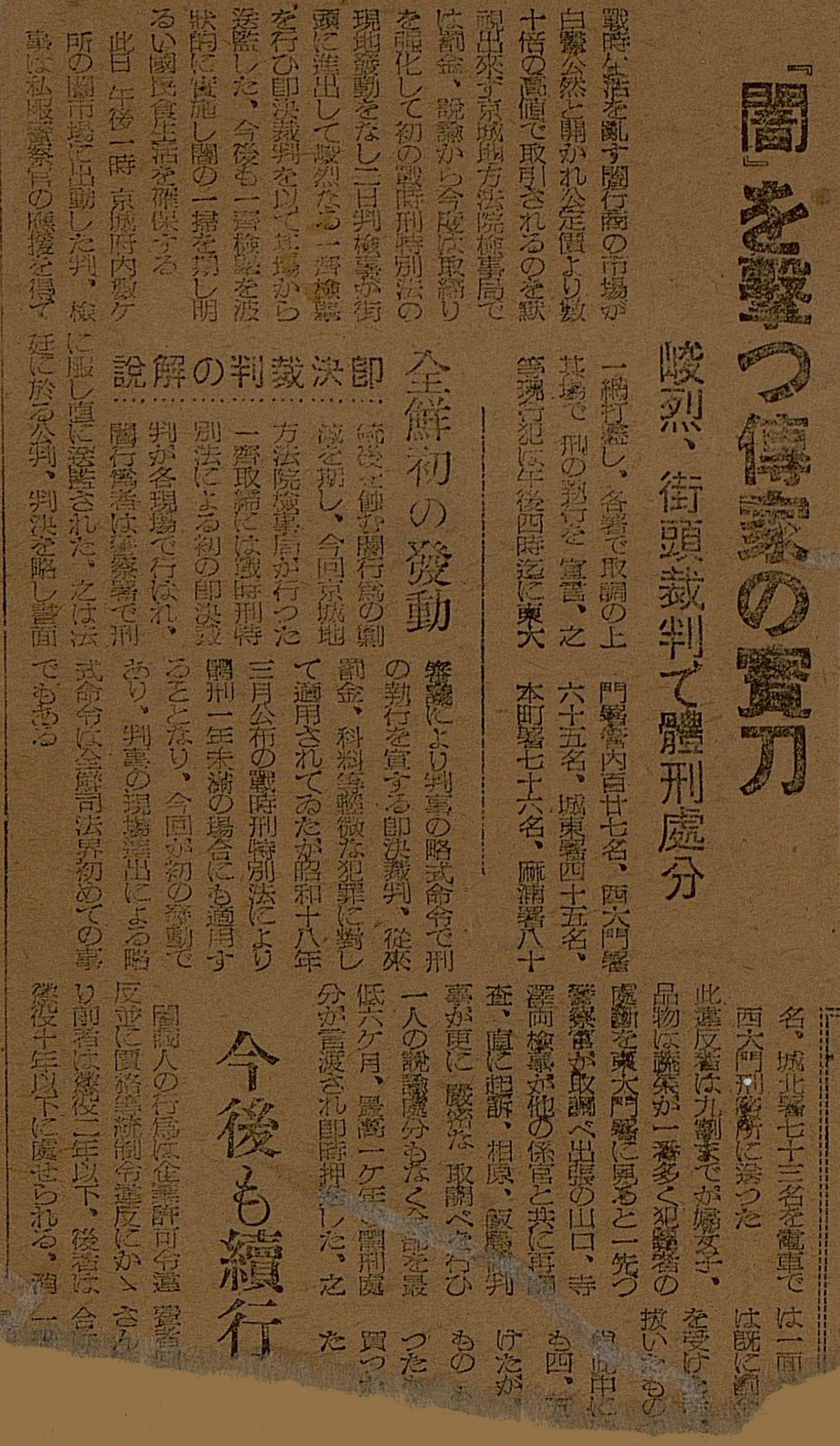
In just three hours, Japanese colonial authorities rounded up 466 Seoul residents for black-market trading, sentenced them on the spot, and sent them by streetcar to Seodaemun Prison (July 1945)
This article illustrates an example of the brutal “summary trials” carried out in connection with mass police sweeps against black-market sellers, just one of the ways the authorities in colonial Seoul appear to have been resorting to extraordinarily harsh measures in the streets of Seoul in July 1945 during the last weeks before Imperial Japan’s surrender.
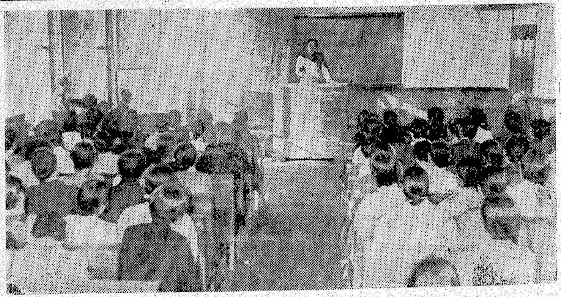
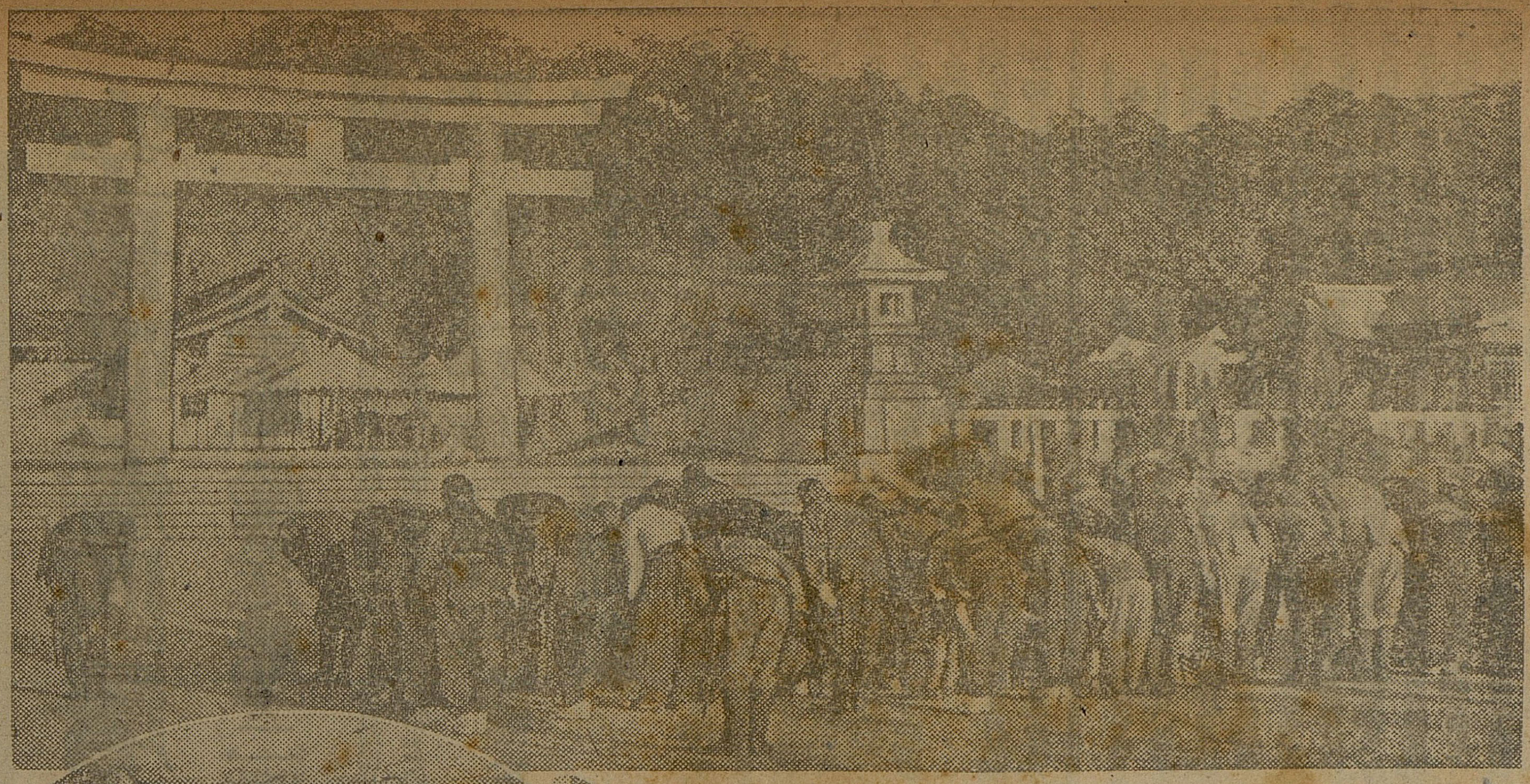
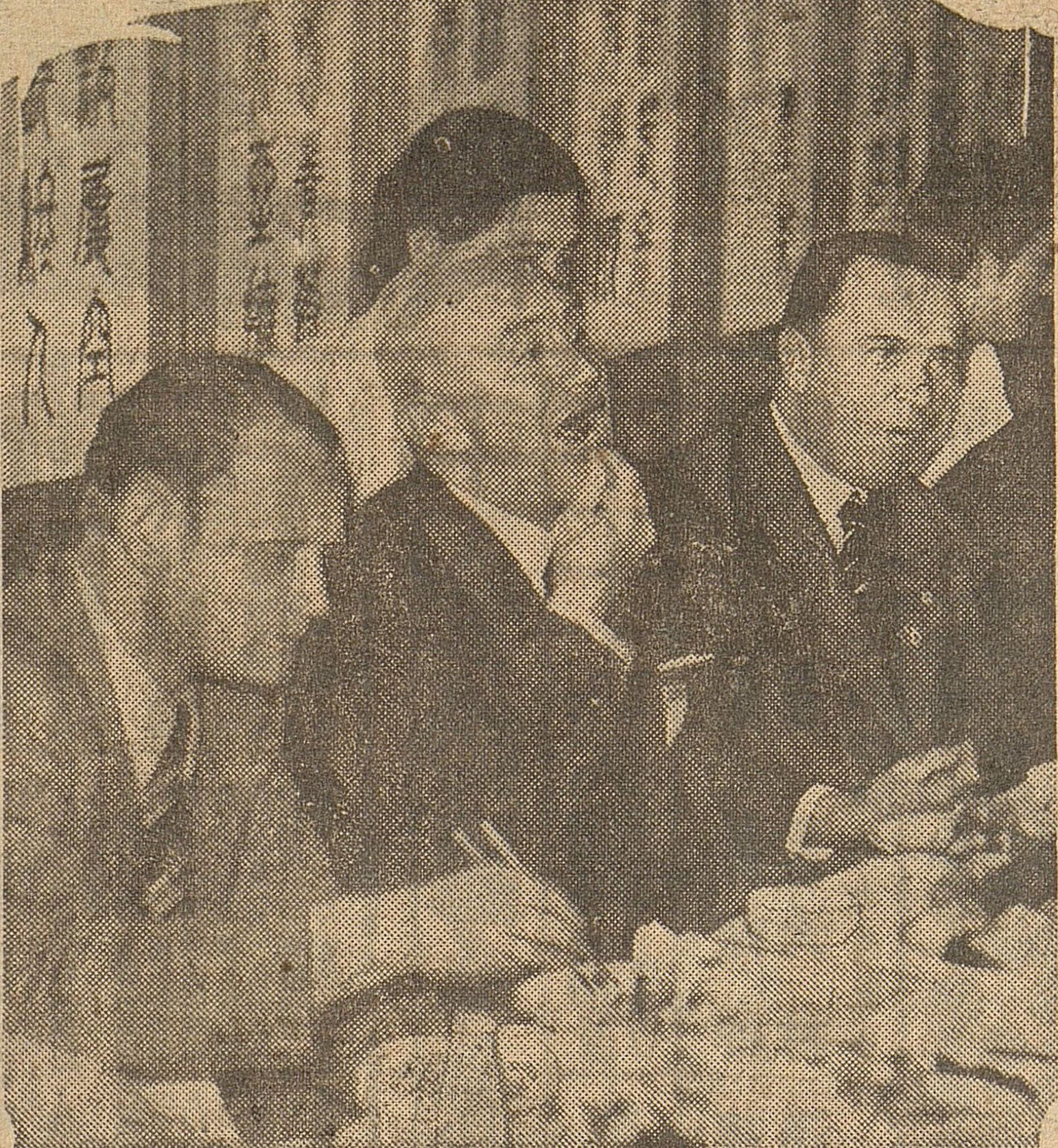
Judges and prosecutors left the courthouse and went directly to the sites of the crackdown, backed by plainclothes police. Police rounded up suspected black-market sellers, questioned them at the local police stations, and prosecutors immediately brought charges. Judges then conducted further questioning and handed down sentences on the spot. There was apparently no mercy. According to the article, not a single person was let off with a warning: everyone processed at Dongdaemun Police Station received between six months and one year of imprisonment.
The speed is staggering. The operation began at about 1 p.m. By 4 p.m., 466 people arrested across Seoul had already been sentenced and were being transported by streetcar to the notorious Seodaemun Prison. The entire process (from arrest, to questioning, prosecution, conviction, sentencing, and being sent to prison) took only around 3 hours. It is difficult to imagine how anything resembling a meaningful defense or fair trial could have taken place under such conditions.
The article itself proudly presented this as the first use of this wartime summary-trial procedure anywhere in Korea, made possible by the Wartime Special Criminal Law. About 90 percent of those arrested were women and girls, and the most common goods involved were vegetables.
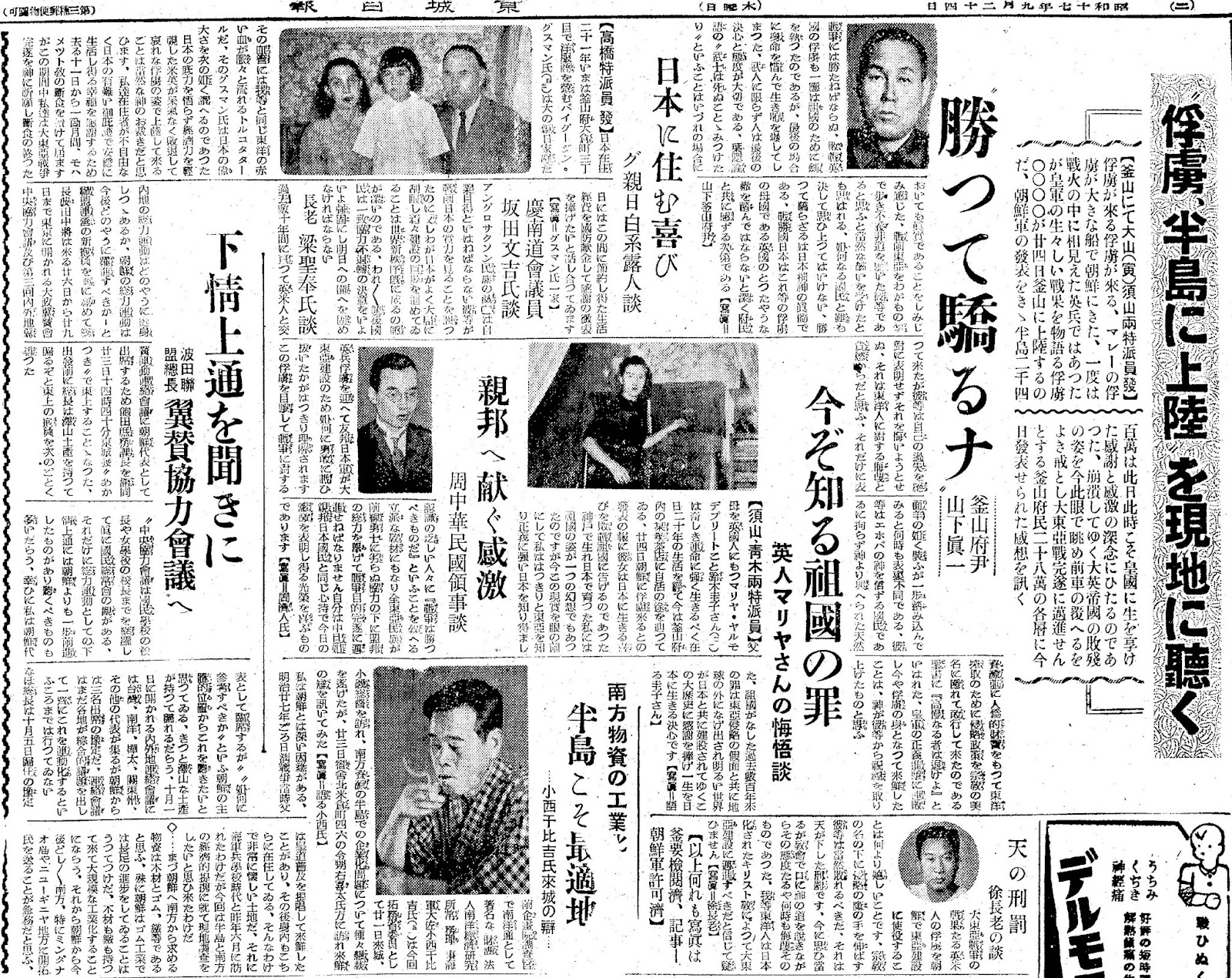
Unfortunately, substantial portions of the original article have been lost. The newspaper page scanned by the National Library of Korea is extremely badly damaged, with pieces missing from several parts of the page. I previously asked ChatGPT to examine the damage pattern, and its assessment was that rodent gnawing was the most likely cause, based particularly on the curved, scalloped “bite” contours and the way the damage appears to progress inward from several exposed edges of the sheet.
What survives, however, gives a remarkable glimpse of just how extreme wartime policing had become in Seoul in the final weeks of Japanese colonial rule.
Japanese colonial propaganda tended to portray black marketeers as greedy profiteers getting rich at the public’s expense. But when you look at the actual cases behind the rhetoric, many seem much more mundane: ordinary people running businesses and trying to buy and sell scarce goods in an economy increasingly strangled by wartime price controls and shortages.
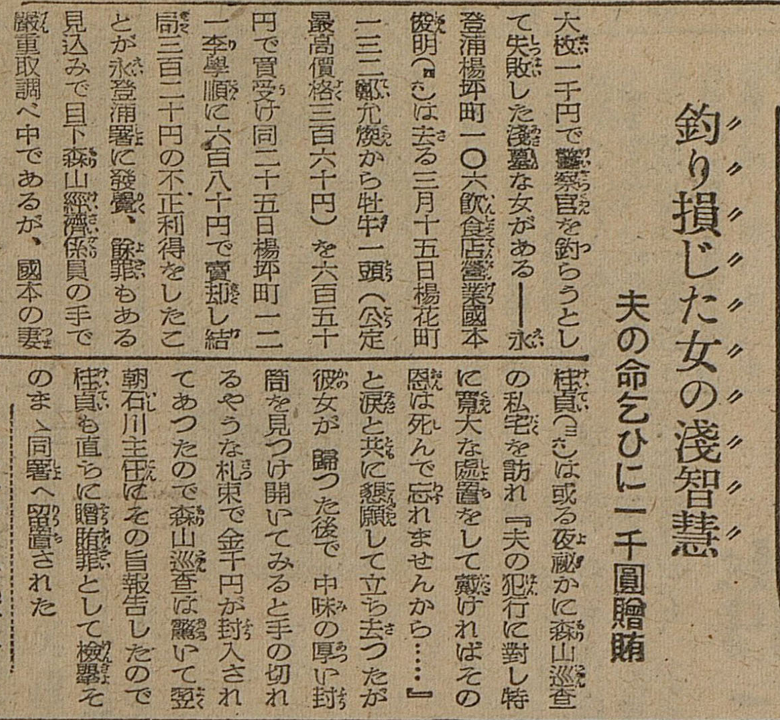
I’m sharing a 1942 article below as one example. Mr. Kunimoto, who ran a restaurant in Yeongdeungpo, bought a bull from a Mr. Jeong for 650 yen and later sold it to a Mr. Yi for 680 yen. In ordinary terms, he made only 30 yen on the transaction. But because the government-fixed maximum price for the animal was 360 yen, the newspaper declares that he had made an “illicit profit” of 320 yen—the difference between the legal ceiling and the price at which he sold it.
Then the story takes a much darker turn. While her husband was being subjected to a “rigorous investigation” by the police, his wife, Gye-jeong, secretly went to the investigating officer’s home. Crying, she begged him to treat her husband leniently. After she left, the officer discovered that she had left behind an envelope containing the enormous sum of 1,000 yen. He reported her, and she was immediately arrested for bribery and detained as well.
Why risk such a desperate measure? As we saw in the July 1945 article, people arrested for black-market offenses could be subjected to extraordinarily rapid prosecution and sent directly to Seodaemun Prison, an institution notorious for the brutal treatment of prisoners. A 1,000-yen bribe was not the action of someone treating the matter as a minor regulatory fine; she apparently believed that something very serious could happen to her husband.
And yet the newspaper has remarkably little sympathy for her. The headline mocks the episode as “A Woman’s Foolish Scheme Fails to Land Her Catch,” while the opening sentence calls her a foolish woman who unsuccessfully tried to “hook” a policeman with money. Her fear and tears become material for ridicule.
That misogynistic tone is something I have started to notice repeatedly in these newspapers. Women—particularly Korean women—are often presented not simply as people behaving badly, but as objects of mockery, scolding, or moral instruction. Other articles attack women for continuing to wear chima or other improper clothing, or chastise women who fail to volunteer for wartime labor as evidence of backwardness or selfishness.
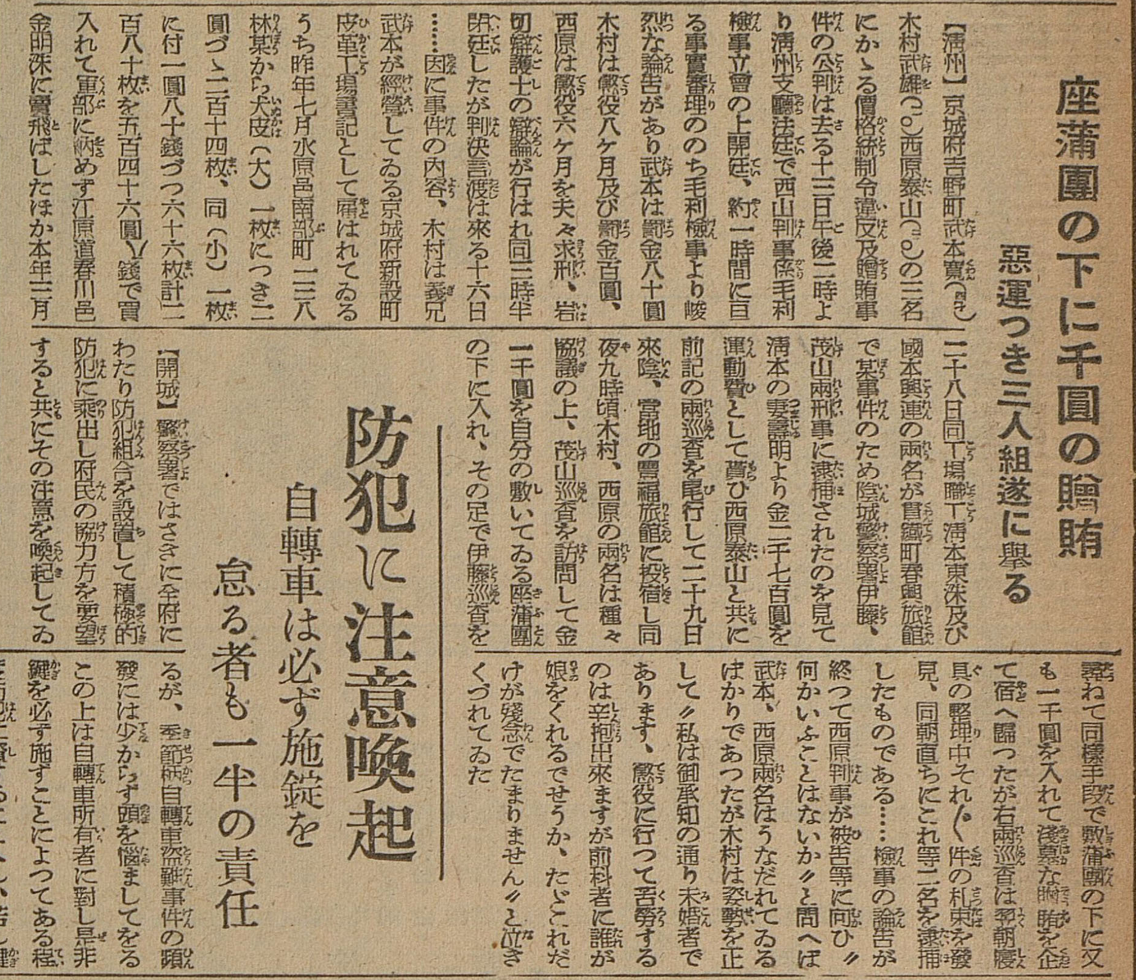
I’m also sharing a 1941 article below as another example. In this case, the business involved dog pelts. Employees connected with a dog-leather factory bought and sold pelts on the black market rather than supplying them through the channels designated for military use, and the police arrested those involved.
What is particularly striking is how closely part of this story resembles the 1942 case above. Once again, the wife of an arrested man apparently became desperate enough to try bribing the authorities to secure her husband’s release. According to the article, two police officers were each offered 1,000 yen, the same amount that was quoted in the 1942 case.
And again, punishment through humiliation seems to be part of the storytelling. On top of naming and shaming the buyers and sellers, the article ridicules one of the arrested men by quoting him worrying tearfully about his future: with an arrest record like this, how was he ever going to get married?
That detail has little relevance to whether he violated the price-control laws. Its purpose seems to be to make the defendant look pathetic and foolish for the entertainment and moral instruction of the reader. The police investigation becomes almost a cautionary tale: break the economic regulations, and not only will you be arrested, but your name, your family, your embarrassment, and even your fears about your marriage prospects may be printed in the newspaper for everyone to see.
Taken together with the 1942 article, there seems to be a recurring formula here. Wartime economic offenders are labeled as profiteers, their names are publicly exposed, their family members’ desperate attempts to help them are turned into sensational stories, and the defendants themselves are portrayed as ridiculous figures deserving humiliation rather than as ordinary people navigating an increasingly coercive and scarcity-ridden wartime economy.
[Translation]
Gyeongseong Ilbo (Keijo Nippo) July 3, 1945
The Authorities Unleash Their Long-Reserved Powers Against the “Black Market”
Severe Measures: Prison Terms Imposed in Street-Side Summary Trials
Unable to stand by while markets of black-market peddlers disrupting wartime life operated openly in broad daylight, with goods changing hands at prices dozens of times the official rates, the Seoul District Court Prosecutors’ Office has now stepped up enforcement beyond fines and admonitions. For the first time, it invoked the Wartime Special Criminal Law on the spot. On July 2nd, judges and prosecutors took to the streets, conducted a severe mass roundup, and through summary proceedings sent the offenders directly to prison from the scene. Similar mass roundups will continue in waves, with the aim of wiping out the black market and securing a sound food supply for the people.
At 1 p.m. that day, judges and prosecutors deployed to several black markets within Seoul, and with the assistance of plainclothes police officers swept up the offenders en masse. After questioning at the respective police stations, sentences were pronounced on the spot. By 4 p.m., 127 persons from the Dongdaemun Police Station district, 65 persons from Seodaemun, 45 persons from Seongdong, 76 persons from Honmachi, 80 persons from Mapo, and 73 persons from Seongbuk had been taken by streetcar to Seodaemun Prison.
As many as ninety percent of the offenders were women and girls, and vegetables made up the largest share of the goods involved. At Dongdaemun Police Station, where the disposition of the offenders could be observed, police officers first conducted questioning. The visiting prosecutors Yamaguchi and Terazawa then reinvestigated the cases together with other officials and immediately filed charges. Judges Aihara and Iijima conducted still more rigorous questioning. Not a single offender was disposed of with merely an admonition; all were sentenced to prison terms ranging from a minimum of six months to a maximum of one year and were immediately taken away under guard. This was, in one respect . . .
First Use of the Measure Anywhere in Korea
Explanation of the Summary Trials
With the aim of eradicating black-market activity that is eating away at the home front, the mass crackdown carried out this time by the Seoul District Court Prosecutors’ Office featured, for the first time, summary trials under the Wartime Special Criminal Law at each enforcement site. Black-market offenders were sentenced at the police stations and immediately sent to prison.
These summary proceedings dispense with a formal trial and judgment in a courtroom and instead allow a judge, after reviewing the case in writing, to order the sentence carried out by summary order. Previously, this procedure had been applied to minor offenses punishable by fines and petty fees. Under the Wartime Special Criminal Law promulgated in March 1943, however, it was made applicable even where a prison sentence of less than one year was imposed. This crackdown marked the first time that this procedure had been invoked. It was also the first occasion anywhere in the Korean judicial system on which judges themselves went to the enforcement sites and issued summary orders there.
Crackdown to Continue . . .
The acts of black-market dealers constitute violations of the Enterprise Licensing Ordinance as well as the Price and Related Controls Ordinance. The former is punishable by up to two years’ imprisonment, while the latter is punishable by up to ten years’ imprisonment …
Gyeongseong Ilbo (Keijo Nippo) July 24, 1942
A Woman’s Foolish Scheme Fails to Land Her Catch
A 1,000-Yen Bribe in a Plea for Mercy for Her Husband
There was a foolish woman who tried—and failed—to hook a police officer with the hefty sum of 1,000 yen.
Kunimoto Toshiaki, 46 years old, who operated an eating establishment at 106 Yeongdeungpo, Yangpyeong-dong, purchased a bull on March 15 from Cheong Yun-hwan (정윤환, 鄭允煥) of 132 Yanghwa-dong for 650 yen, although its officially fixed maximum price was 360 yen. On the 25th of the same month, he sold it to Yi Hak-sun (이학순, 李學順) of 121 Yangpyeong-dong for 680 yen, thereby making an illicit profit of 320 yen. The matter came to light at Yeongdeungpo Police Station. As he is suspected of having committed additional offenses, he is currently undergoing a rigorous investigation by Mr. Moriyama, an officer of the Economic Section.
One night, however, Kunimoto’s wife, Gye-jeong (계정, 桂貞), 36 years old, secretly visited Policeman Moriyama at his private residence. In tears, she pleaded, “If you would show particular leniency toward my husband for what he has done, I would never forget your kindness for as long as I live…” and then departed.
After she had gone, Moriyama discovered a thick envelope. When he opened it, he found that it contained 1,000 yen in a crisp stack of banknotes. Startled, Moriyama reported the matter to Chief Ishikawa the following morning. Gye-jeong was immediately arrested on a charge of bribery and detained at the police station.
Gyeongseong Ilbo (Keijo Nippo) May 18, 1941
A 1,000-Yen Bribe Hidden Beneath a Seat Cushion
Luck Runs Out at Last for a Gang of Three
[Cheongju] The trial of Takemoto Hiroshi, 45 years old, Kimura Takeo, 20 years old, and Nishihara Taizan, 20 years old, all of Yoshino-chō, Seoul, on charges of violating the Price Control Ordinance and bribery opened at 2 p.m. on May 13th in the courtroom of the Cheongju Branch Court, before Judge Nishiyama, with Prosecutor Mōri in attendance. After about an hour of examination of the facts, Prosecutor Mōri delivered a severe closing argument, seeking a fine of 80 yen for Takemoto, eight months’ imprisonment and a fine of 100 yen for Kimura, and six months’ imprisonment for Nishihara. Defense counsel Iwakiri then presented his argument, and the court adjourned at 3:30 p.m. Sentencing was set for the 16th…
The details of the case were as follows. Kimura was employed as a clerk at a leather factory in Sinseol-dong, Seoul, operated by his brother-in-law Takemoto. In July of last year, he purchased from a certain man surnamed Im (임, 林), of 138 Nambu-chō, Suwon-eup, 214 large dog pelts at two yen each and 66 small dog pelts at one yen 80 sen each, a total of 280 pelts, for 546 yen 80 sen. Instead of supplying them to the military, he resold them to Kim Myeong-su (김명수, 金明洙) of Chuncheon, Gangwon Province.
Then, on March 28 of this year, two workers from the same factory, Kiyomoto Dong-su (동수, 東洙) and Kunimoto Heung-ryeon (흥련, 興連), were arrested at the Shunkyō Inn in Gwancheol-dong in connection with another case by Detectives Itō and Shigeyama of Eumseong Police Station. After witnessing the arrests, Kimura received 2,700 yen from Kiyomoto’s wife, Su-myeong (수명, 壽明), as money to use in securing their release. Together with Nishihara Taizan, he followed the two police officers and arrived in Eumseong on the 29th.
The pair checked into the Toyofuku Inn. At about nine o’clock that night, after discussing what to do, Kimura and Nishihara visited Detective Shigeyama and slipped 1,000 yen beneath the seat cushion on which he was sitting. They then went directly to Detective Itō and, using the same method, placed another 1,000 yen beneath his bedding. After this foolish attempt at bribery, they returned to their inn. The next morning, however, the two officers discovered the respective bundles of banknotes while straightening their bedding. Kimura and Nishihara were immediately arrested that same morning…
After the prosecutor had finished his closing argument, Judge Nishiyama asked the defendants, “Do you have anything to say?” Takemoto and Nishihara merely hung their heads, but Kimura straightened himself and said, “As you know, I am an unmarried man. I can endure the hardship of going to prison, but who will give his daughter in marriage to a man with a criminal record? That is the one thing I cannot bear to think about.” He then broke down in tears.
[Transcription]
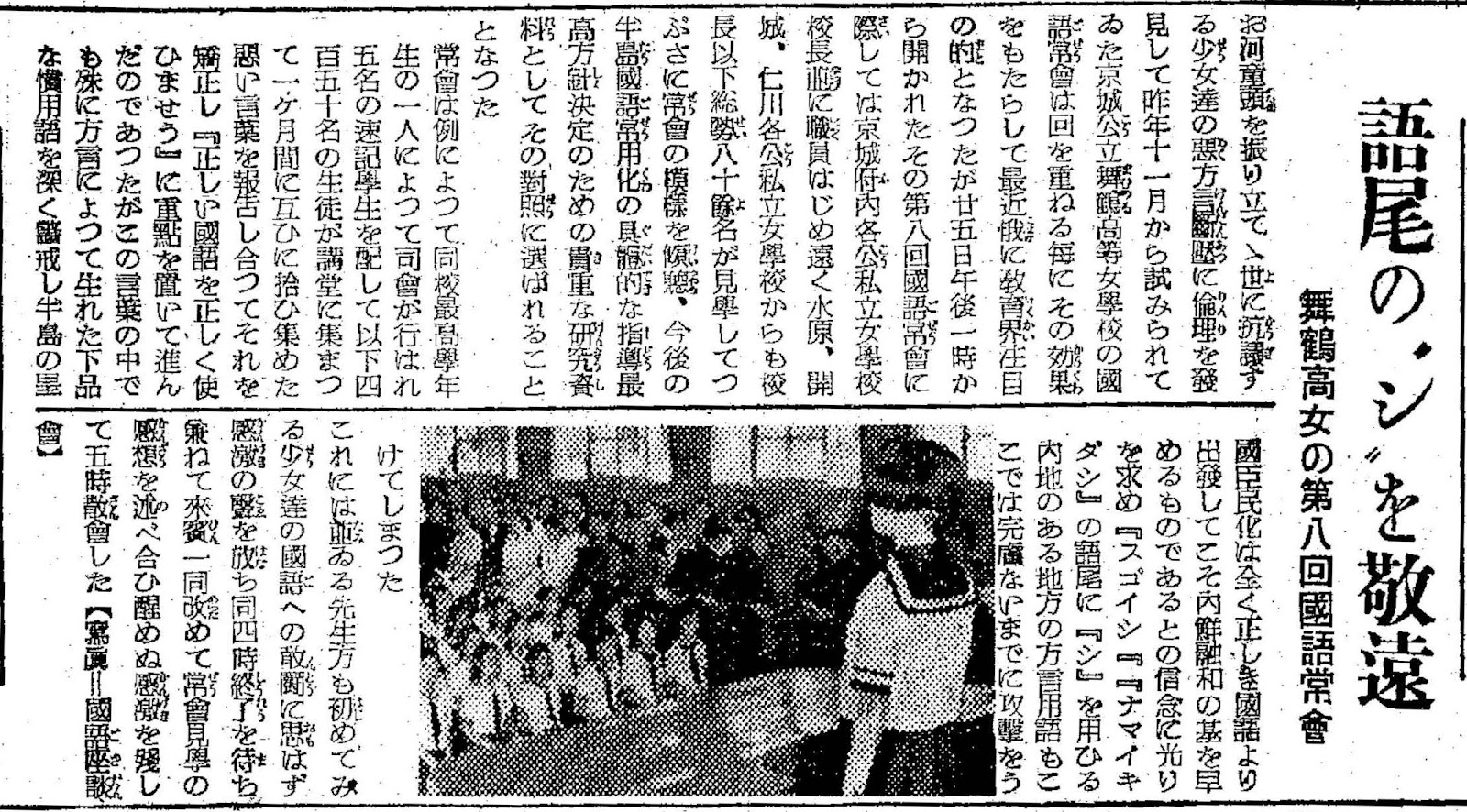
京城日報 1945年7月3日
『闇』を撃つ伝家の実力
峻烈、街頭裁判で体刑処分
戦時生活を乱す闇行商の市場が白昼公然と開かれ公定価より数十倍の高値で取引されるのを黙視出来ず京城地方法院検事局では罰金、説諭から今度は取締りを強化して初の戦時刑特別法の現地発動をなし二日判検事が街頭に進出して峻烈なる一斉検挙を行い即決裁判を以て其場から送監した。今後も一斉検挙を波状的に実施し闇の一掃を期し明るい国民食生活を確保する。
此日午後一時、京城府内数ヶ所の闇市場に出動した判、検事は私服警察官の応援を得て一網打尽し、各署で取調の上其場で刑の執行を宣言。之等現行犯は午後四時迄に東大門署管内百二十七名、西大門署六十五名、城東署四十五名、本町署七十六名、麻浦署八十名、城北署七十三名を電車で西大門刑務所に送った。
此違反者は九割までが婦女子、品物は蔬菜が一番多く犯罪者の処断を東大門署に見ると一先ず警察官が取り調べ出張の山口、寺澤両検事が他の係官と共に再調査、直に起訴。相原、飯島両判事が更に厳密な取り調べを行い一人の説諭処分もなく全部を最低六ヶ月、最高一ヶ年の体刑処分が言い渡され即時押送した。之は一面...
全鮮初の発動
即決裁判の解説
銃後を蝕む闇行為の剿滅を期し、今回京城地方法院検事局が行った一斉取締には戦時刑特別法による初の即決裁判が各現場で行われ、闇行為者は警察署で刑に服し直に送監された。之は法廷に於ける公判、判決を略し書面審議により判事の略式命令で刑の執行を宣する即決裁判。従来罰金、科料等軽微な犯罪に対して適用されていたが、昭和十八年三月公布の戦時刑特別法により体刑一年未満の場合にも適用することとなり、今回が初の発動であり、判事の現場進出による略式命令は全鮮司法界初めての事でもある。
今後も続行...
闇商人の行為は企業許可令違反並びに価格等統制令違反にかかり前者は懲役二年以下、後者は懲役十年以下に処せられる。
京城日報 1942年7月24日
釣り損じた女の浅智恵
夫の命乞いに一千円贈賄
大枚一千円で警察官を釣ろうとして失敗した浅墓な女がある。
永登浦楊坪町一〇六飲食店営業国本俊明(四六)は去る三月十五日楊花町一三二鄭允煥から牡牛一頭(公定最高価格三百六十円)を六百五十円で買受け同二十五日楊坪町一二一李學順に六百八十円で売却し結局三百二十円の不正利得をしたことが永登浦署に発覚。余罪もある見込みで目下森山経済係員の手で厳重取調べ中であるが、国本の妻桂貞(三六)は或る夜秘かに森山巡査の私宅を訪れ『夫の犯行に対し特に寛大な処置をして戴ければその恩は死んで忘れませんから...』と涙と共に懇願して立ち去ったが彼女が帰った後で中味の厚い封筒を見つけ開いてみると手の切れるような札束で金千円が封入されてあったので森山巡査は驚いて翌朝石川主任にその旨報告したので桂貞も直ちに贈賄罪として検挙そのまま同署へ留置された。
京城日報 1941年5月18日
座蒲団の下に千円の贈賄
悪運つき三人組遂に挙る
【清州】京城府吉野町武本寛(四五)、木村武雄(二〇)、西原泰山(二〇)の三名にかかる価格統制令違反及贈賄事件の公判は去る十三日午後二時より清州支庁法廷で西山判事係毛利検事立会の上開廷。約一時間に亘る事実審理ののち毛利検事より峻烈な論告があり武本は罰金八十円、木村は懲役八ヶ月及び罰金百円、西原は懲役六ヶ月を夫々求刑。
岩切弁護士の弁論が行われ同三時半閉廷したが判決言渡しは来る十六日...
因に事件の内容:木村は義兄武本が経営している京城府新設町皮革工場書記として雇われているうち昨年七月水原邑南部町一三八林某から犬皮(大)一枚につき二円ずつ二百十四枚、同(小)一枚に付一円八十銭ずつ六十六枚計二百八十枚を五百四十六円八十銭で買い入れて軍部に納めず江原道春川邑金明洙に買い飛ばしたほか、本年三月二十八日同工場職工清本東洙及び国本興連の両名が貫鉄町春興旅館で某事件のため陰城警察署伊藤、茂山両刑事に逮捕されたのを見て清本の妻壽明より金二千七百円を運動費として貰い西原泰山と共に前記の両巡査を尾行して二十九日来陰。
当地の豊福旅館に投宿し同夜九時頃木村、西原の両名は種々協議の上、茂山巡査を訪問して金一千円を自分の敷いている座蒲団の下に入れ、その足で伊藤巡査を尋ねて同様手段で敷蒲団の下に又も一千円を入れて浅墓な贈賄を企て宿へ帰ったが、右両巡査は翌朝寝具の整理中それぞれ件の札束を発見。同朝直ちにこれ等二名を逮捕したものである...
検事の論告が終って西原判事が被告等に向い”何かいうことはないか”と問えば武本、西原両名はうなだれているばかりであったが、木村は姿勢を正して”私は御承知の通り未婚者であります。懲役に行って苦労するのは辛抱出来ますが、前科者に誰が娘をくれるでしょうか。ただこれだけが残念でたまりません”と泣きくずれていた。
Source: Digital Newspaper Archive, National Library of Korea
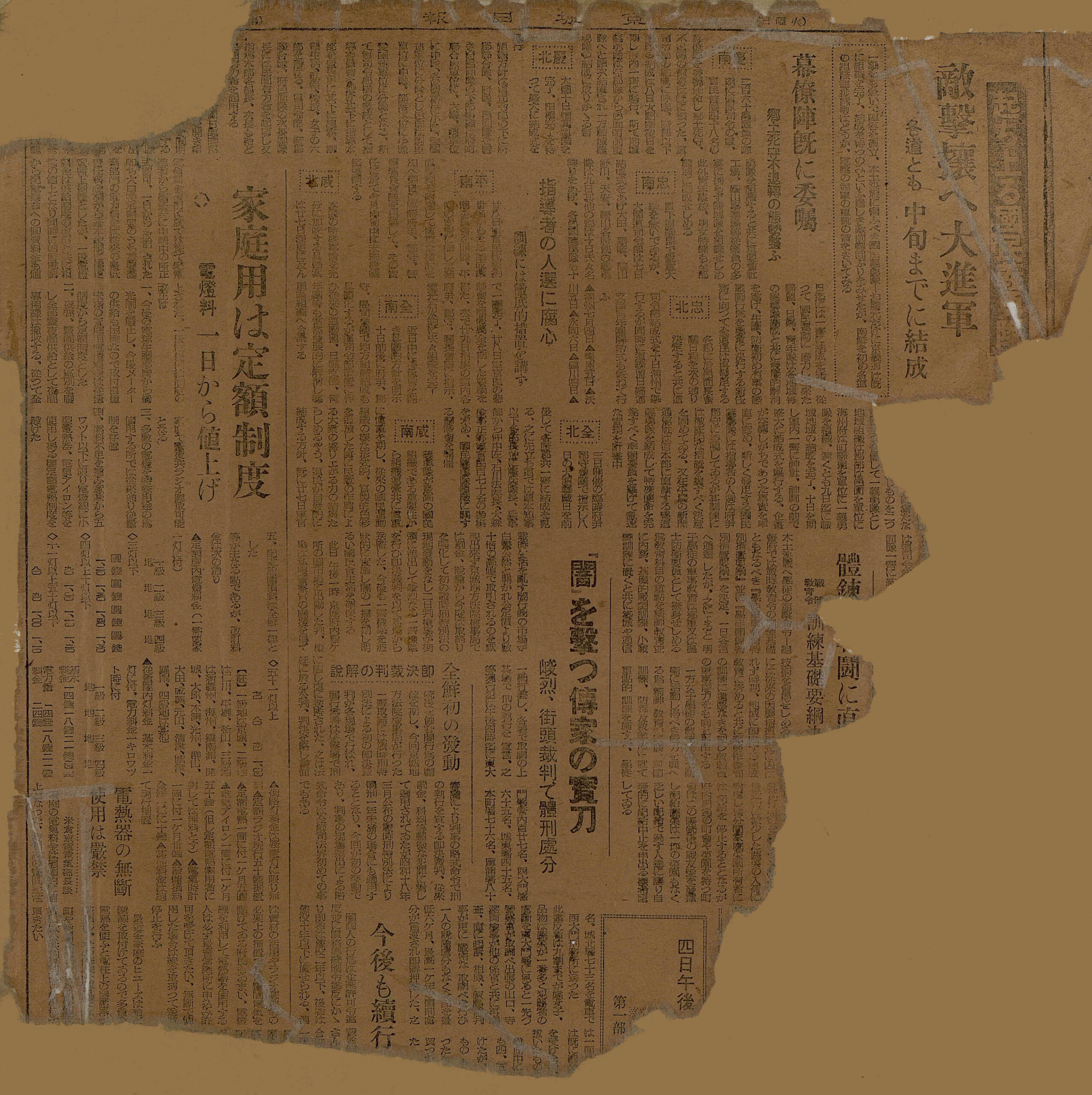
Rodent-gnawed July 3rd, 1945 newspaper page.