

Three American missionaries defied Imperial Japan’s order to worship at a Shinto shrine in Pyongyang in 1935: George McCune and Velma Snook refused to back down, while Howard Lee eventually gave in to the regime’s demands
In November 1935, three American missionaries defied Imperial Japan’s order to worship at a Shinto Shrine in Pyongyang. George McCune and Velma Snook stood their ground and were subsequently expelled from Imperial Japan, but Howard Lee eventually yielded to pressure from the colonial authorities.
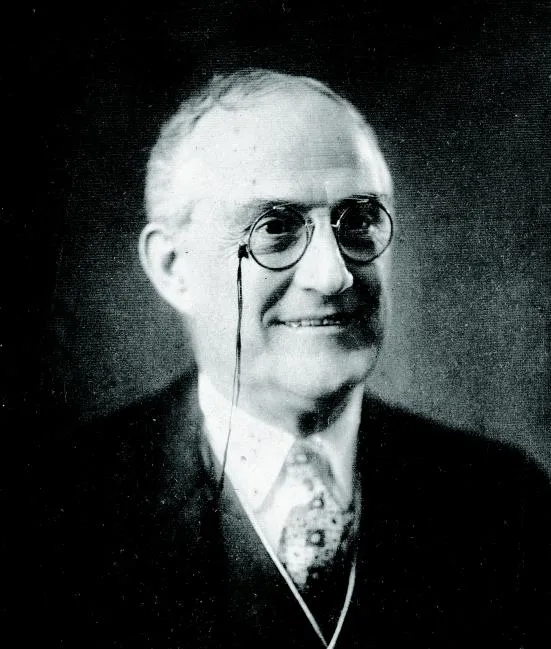
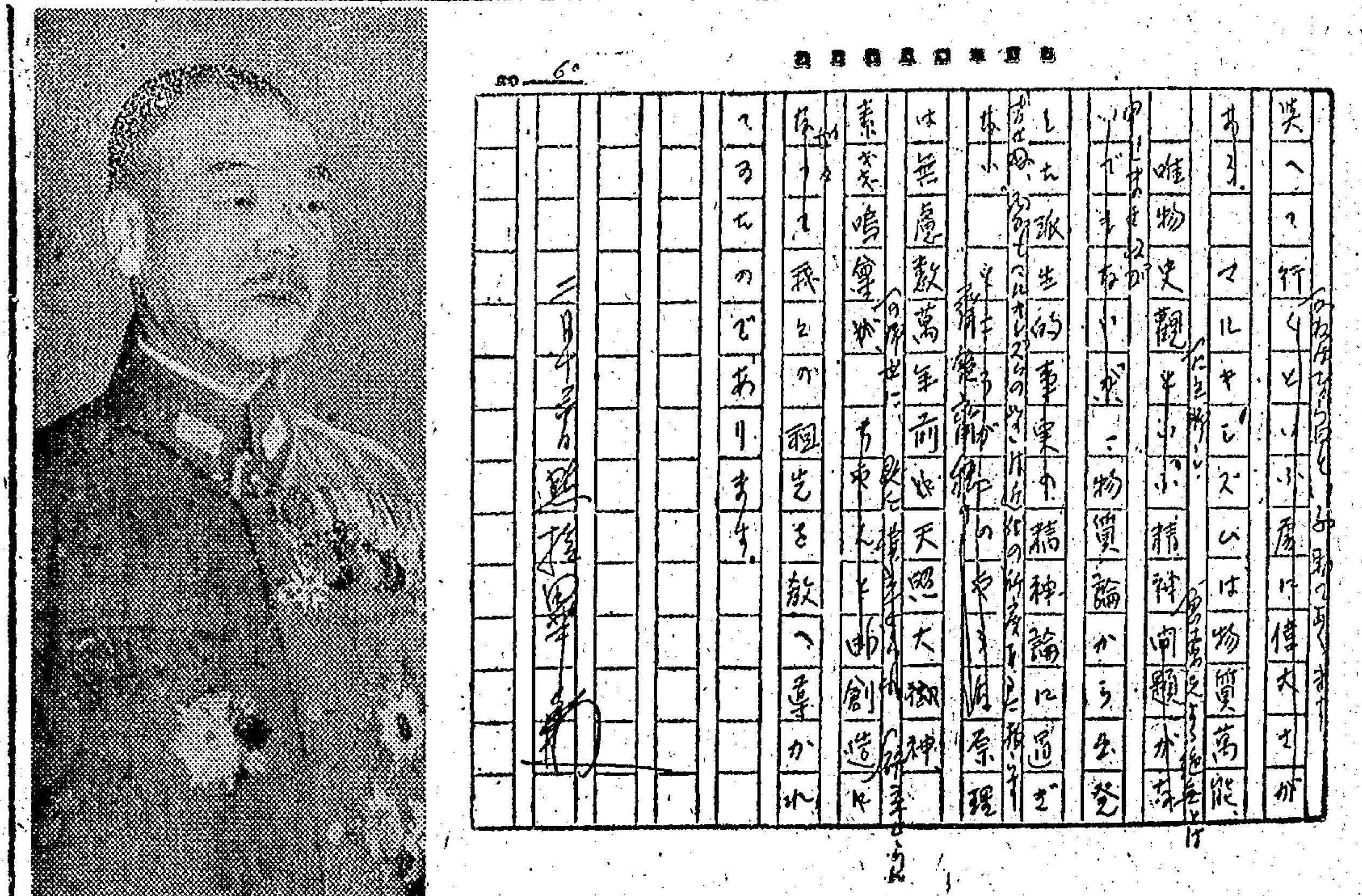
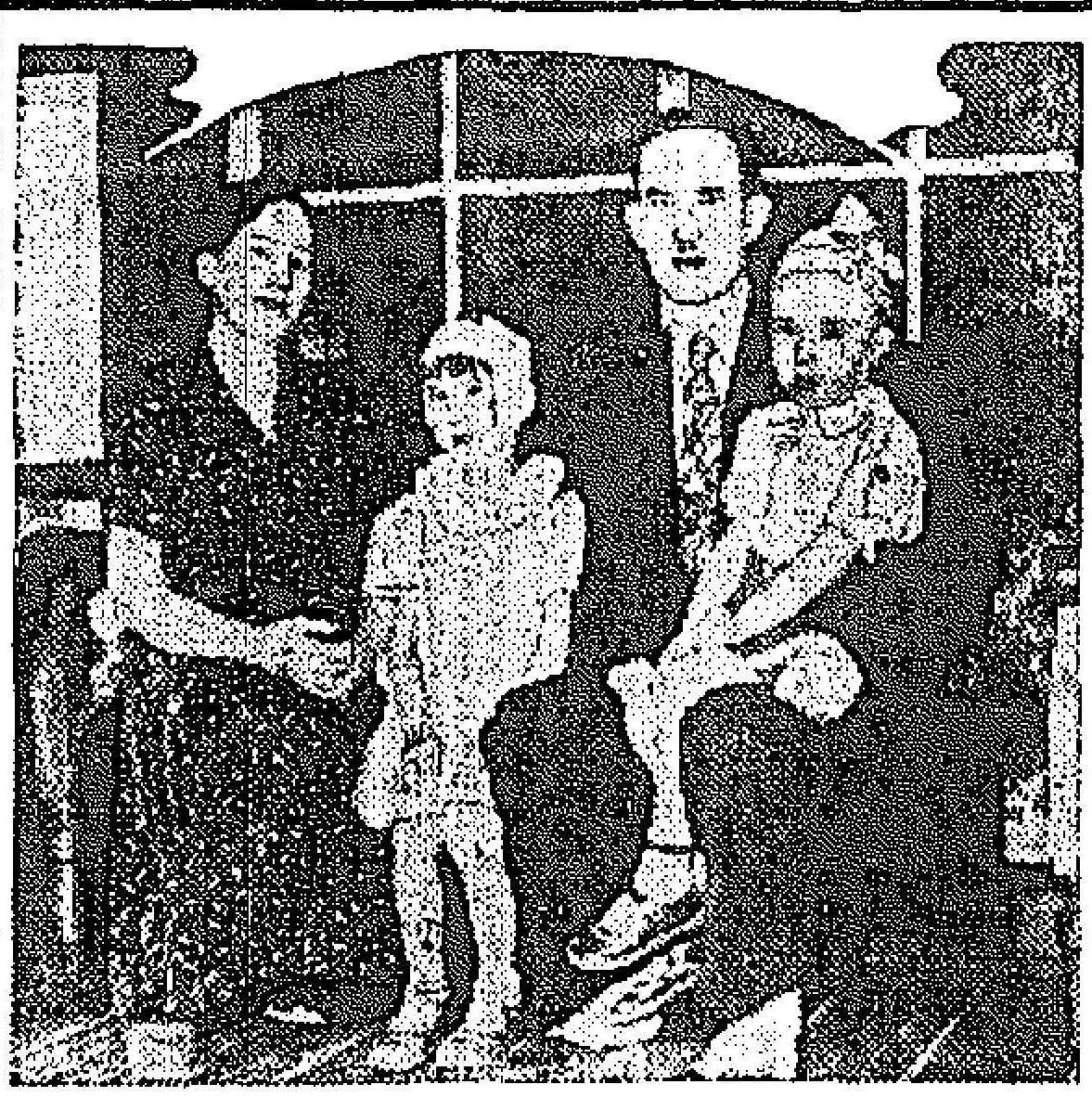
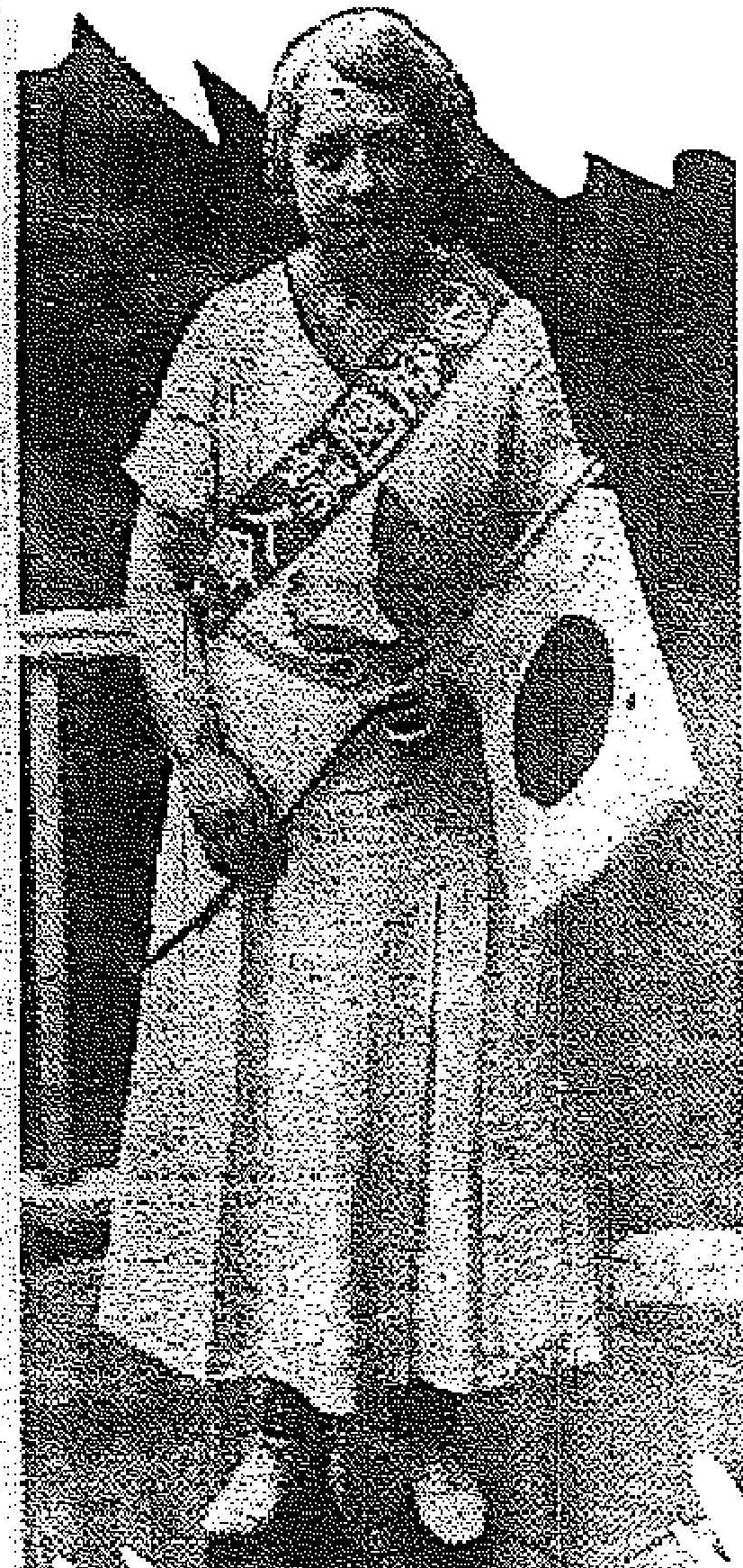
The incident took place on November 14, 1935, when colonial authorities demanded that the principals of various secondary schools in South Pyongan Province worship at the Heijō Shinto Shrine in Pyongyang. Three principals refused: George Shannon McCune, President of Soongsil University, Velma Lee Snook, acting principal of Soong Eui Girls’ School, and Howard Milton Lee (also named “Hei Mau Ree”, 이희만, 李希萬 in Korean), principal of Euimyung College.
The principals who refused were given sixty days to reconsider, but when McCune and Snook again refused, the authorities revoked their authorization as principals, and they were subsequently deported from Imperial Japan.
On the other hand, Howard Milton Lee eventually capitulated by making this groveling statement: “I now clearly understand that attendance at the Jinja is quite different from religious worship and that obeisance by students at the shrine is quite indispensable to the Japanese national educational system. In view of this I have decided to cause all members of the faculty and students of my school to make obeisance at the shrine.“
McCune was supported by a majority of the Korean Mission of the Presbyterian Church U.S.A. and the Korean church. On the other hand, the American diplomatic establishment and many church organizations took the accommodationist position and accepted Imperial Japan’s stance that shrine worship attendance and the required bow were civic or patriotic acts rather than actual worship, so Christian schools could comply without violating Christian conscience.
In other words, the regime insisted that compulsory shrine observances were not religious at all, but merely patriotic civic ceremonies, even though they involved traditional Shinto rites performed at Shinto Shrines. This would appear to be extreme gaslighting, especially since the regime effectively told Christians that what they regarded as unmistakably religious worship was “non-religious” simply because the state had officially defined it that way.
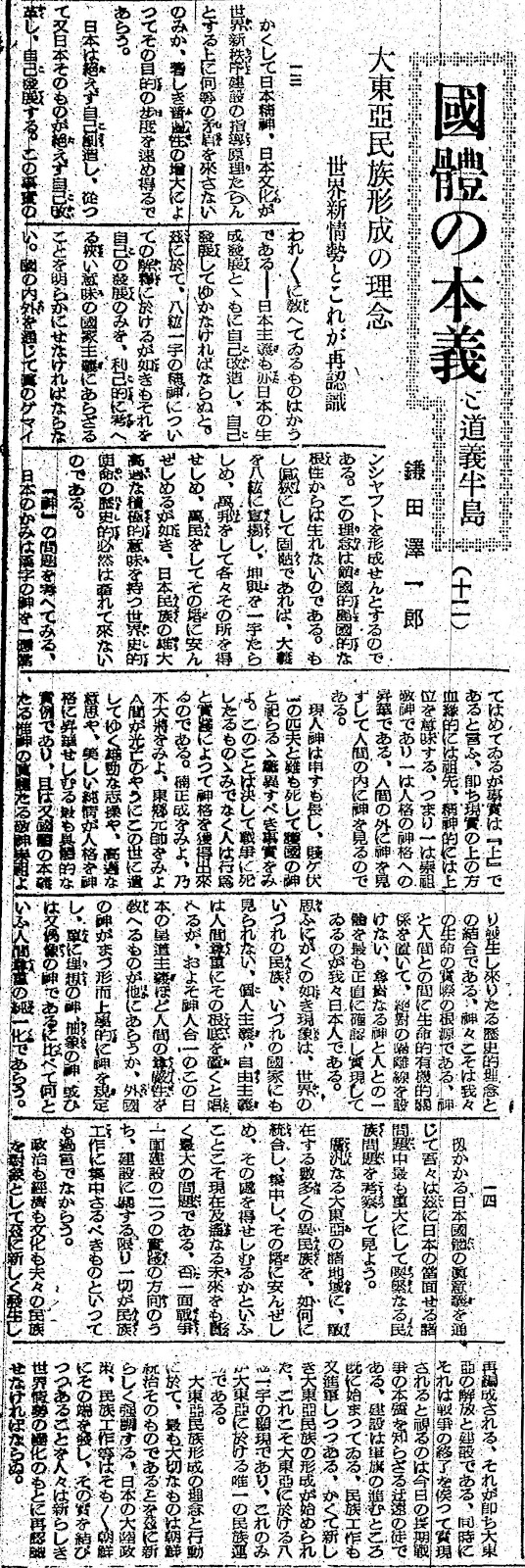
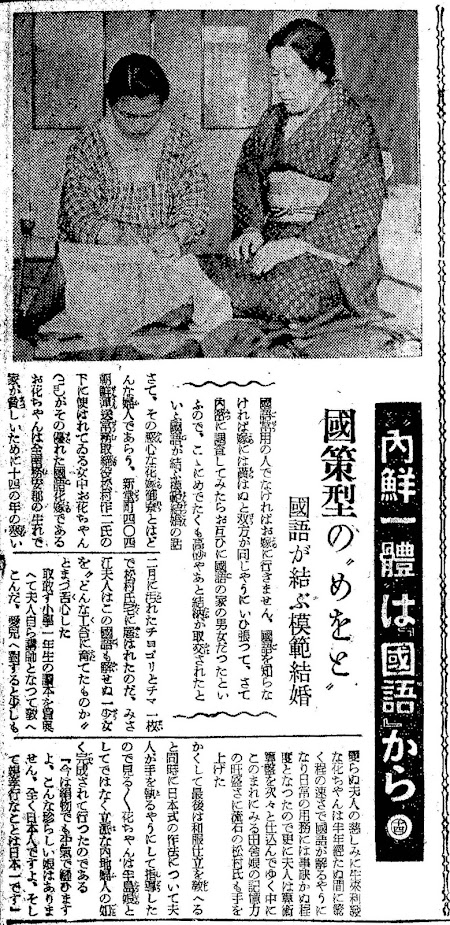
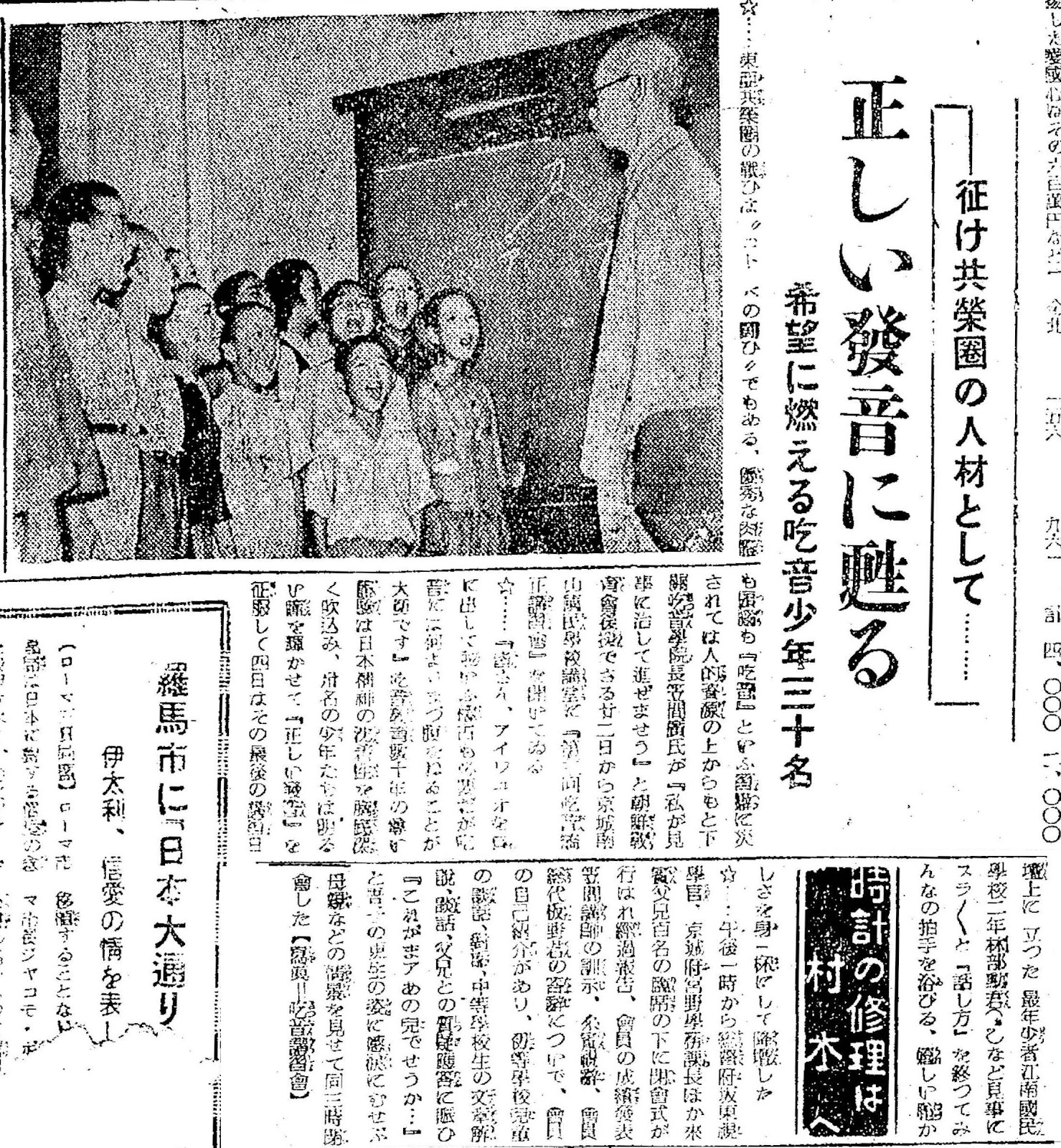
It would seem that the accommodationist position hurt American interests in Korea, especially since it made them look weak and cowardly in the eyes of the Imperial regime. As church organizations closed schools and withdrew missionaries rather than comply with the shrine worship requirement, the regime turned this withdrawal into a triumphalist narrative. Propaganda articles would portray deceitful Americans retreating in shameful disgrace, while “pure” Imperialists advanced in their wake with a divine mission to take over the schools in all of Imperial Japan. This perceived retreat may have encouraged the regime to carry on in escalating their campaign to force the State Shinto religion and Imperial ideology on all of Korea.
Transcribed below are two contemporary English accounts of this shrine incident from the Christian religious perspective as reported in 1936 in Christianity Today and The Presbyterian Guardian. Links to the scanned PDFs are also provided below. I have also provided links below to translated and transcribed Imperial Japanese propaganda articles related to the Imperialist takeover of Korean Christian schools.
Note: “Pyengyang” is an old spelling of Pyongyang. “Heian Province” refers to Pyongan Province. “Heijo” is the Japanese word for Pyongyang. “Chosen” is the Japanese word for Korea.
[Transcription from THE PRESBYTERIAN GUARDIAN, March 2, 1936, pp. 188-189]
Shrine Obeisance Issue Brings Crisis in Korea
Perils of missionaries who teach Christianity as an exclusive religion when they labor in a “Totalitarian State” are strikingly illustrated by the long-simmering issue of “shrine obeisance,” which has suddenly become acute in Japan-controlled Korea.
The Japanese Constitution guarantees religious freedom. However, certain government agencies made attendance at shrines, or “Jinja,” compulsory as a part of all education in the Japanese empire. “Jinja” means “spirit house.” These shrines are a part of the Shinto faith. They are supposed to be the abode of deceased and venerated Imperial Ancestors. Priests are in attendance, and long-time usage has accepted as a matter of course that obeisance at the shrines was an act of religious worship. The government, however, insisted that this obeisance to the Imperial Ancestors was a necessary part of Japanese education and morality.
However, vigorous objections were made by Christians to being compelled to do obeisance at Shinto shrines. As a way out, it was decreed that there is a difference between State Shinto and the Shinto religion-that any observances required by the authorities were State Shinto, while ordinary worship was religious.
Commenting upon this, the cautious Japan Weekly Chronicle, English language paper of Kobe, said, in its issue of January 30th:
“The conveniences of the distinction were obvious, and as it was declared that State Shinto, being merely a mark of respect towards the Imperial Ancestors and in no way religious, did not in any way interfere with the individual’s religious beliefs, a large majority of the people accepted the explanation without protest. No small number, nevertheless, felt uncomfortable, and far from satisfied that obeisances at shrines were not religious exercises. Different Christian bodies have some variants in their doctrines, but very few of them would be prepared to recognise the reality of the tutelary deities of shrines, or, indeed, if any kind of spiritual existence not mentioned in the Bible. For the time being, the missionaries, who felt the difficulty most, were concerned rather with their flocks, especially when they were engaged in educational work, than for themselves. The Japanese pastor or student who evaded the order to make mass visits to shrines was in a very invidious position, He was liable to be charged with disloyalty-a charge greatly dreaded by Japanese even when their loyalty is so famous as to make the accusation ridiculous; and, where missionaries found shrine-visiting inconsistent with their beliefs, they still shrank from advising Japanese co-religionists to invite obloquy and court punishment when such penalties were not likely to fall on the givers of such advice. So far as foreign missionaries themselves were concerned, they could generally refrain from the obeisances by simply staying at home.
“There has been a marked increase in the inclination to insist upon State Shinto observances since the Manchurian adventure was embarked upon, largely because since that time it has become more necessary, politically, to demonstrate Japanese unity to the world, and in part because the increase in military influence has brought with it the desire for discipline and uniformity, to the detriment of too fender a regard for the rights of the individual. Some time ago the Japanese Press was much occupied with the case of the Catholic University in Tokyo, where the prescribed visits to the Yasukuni Shrine had not been made in full strength. As the military were particularly interested, the shrine being dedicated to those who have fallen in the service of the country, they took the remedy in hand. In the higher places of learning, there is a course of military instruction supervised by officers appointed by the military authorities, and the taking of this course excuses the student from his service as a conscript. It was intimated to the University authorities that the military instructors would be withdrawn, thereby subjecting the students to the serious interruption of their studies that must result if undergraduates on reaching the age for service are called to the colours. It was announced thereafter that this step had cured the obstinacy of the priests connected with the Catholic University.
“In conforming to the requirements. most Christians-or most foreign Christians at all events-satisfy themselves with the argument that as the ceremony, according to the official interpretation means nothing religious to them, they may perform it, since doing so saves a great deal of trouble. There may be some Japanese officials who entertain doubts as to whether this is the correct attitude of mind; but generally speaking they are satisfied that the requirements are carried out and that in the eyes of all men, especially of the students, authority is unquestioningly recognized; besides, they cannot know what any man is thinking, and the most that can be required is obedience to the regulations. However, there are some missionary educationists (they are really the only class of foreign Christian affected) who have conscientious objections to performing what seems to them, notwithstanding the official explanation, to come within the bounds of religion, as they understand the word.”
The present crisis was presaged in November, 1935, when, after a conference of principals of middle grade schools of the province of South Heian, Korea, those present simultaneously paid respects at the Heijo Shrine. Three persons refused: Dr. G. S. McCune, President of the Sujitsu (Sung-sil) or Union Christian College of Seoul; Miss O. R. Swallen, principal of the Seung-eui Girls’ School; and Mr. Hei Mau Ree, principal of the Eui-myung School in Jun-an. The first two named are Northern Presbyterian missionaries, the last a Seventh Day Adventist.
The Seoul Press reports that “all missionary educational organs in all parts of Korea except the three institutes referred to have to date been voluntarily yet faithfully observing the government policy in connection with obeisance at the shrine.”
Since November, the authorities have attempted to make the three persons change their minds, “explaining” that the observance was not religious. Finally, an ultimatum was issued. Thereupon, on January 17th, Mr. Hei Mau Ree “caved in” with a face-saving statement:
“I now clearly understand that attendance at the Jinja is quite different from religious worship and that obeisance by students at the shrine is quite indispensable to the Japanese national educational system. In view of this I have decided to cause all members of the faculty and students of my school to make obeisance at the shrine.”
At the same time he submitted to the Governor a note pledging obeisance at the shrine, which was written in English. Governor Yasutake, greatly satisfied with the school, warmly shook hands with him as with others present.
This interview, after lasting for more than an hour, was thus brought to an end satisfactory to the government.
Dr. McCune, accompanied by Dr. S. A. Moffett, veteran missionary, founder of the College, appeared before the Governor the next day. Despite pressure, they would not yield an inch, and submitted a note in English clarifying their position. (This statement is not yet available.)
After this refusal, Governor Yasutake immediately cancelled government recognition of Dr. McCune as principal of the Sung-sil school and college. Miss Swallen being home on furlough, the issue concerning the Seung-eui Girls’ School was placed in the hands of acting principal Miss V. I. Snook. Miss Snook likewise refused to make obeisance, and her acting principalship was also terminated. In the Japanese empire all educationists must possess official recognition in order to function.
After the government action, Mr. T. Watanabe, director of the Educational Bureau for the Government General of Korea issued a statement which contained thinly-veiled threats of strong-arm action. Excerpts:
“The Educational authorities of the Government-General in elucidating the outlines of our national system and the Government-General Policy with reference to education and religion, calls for some self-reflection from a portion of those missionaries and others concerned with school education. Dr. McCune, the Principal of the Sujitsu School, who is directly responsible for this affair in Heijo, should now understand the intentions of the authorities in view of his responsibility as Principal of the school, and should change his attitude promptly, make obeisance at the Jinja himself, and clearly state his intention to cause his students to make obeisance at the Jinja. Otherwise the solution of the affair will be prolonged in vain. It will badly affect the national education and also may disturb the peaceful religious life of the Christian people in general.
“Therefore if Dr. McCune do not understand his responsibility as School Principal and not go himself to make obeisance at the Jinja and not make clear his intention to do this, the authorities will be obliged to take the necessary measures, which fact I now make clear to you.”
The Japanese Constitution guarantees religious freedom, but the state reserves the right to decide what is religion and what is not religion. This acute situation strikingly resembles two instances in Church history, one ancient, the other modern. Ancient: Christians in Rome, under the early Empire, were ordered to burn a little incense before an image of the Emperor. They were assured by the authorities that it was a mere ceremonial act, did not interfere with their religion, for all religion was free in Rome. Some obeyed, thousands did not and paid for their refusal to bow to any but the true God by torture and death.
Modern: the attempt of the 146th General Assembly of the Presbyterian Church in the U.S.A. to turn the church into a totalitarian organization, demanding implicit, conscience surrendering obedience to man by members of the Independent Board and the whole church. Same in principle as these cases are, observers predicted that those most actively pushing un-Christian tyranny at home would be loudest in commending the brave and Christian stand taken by Dr. McCune and Miss Snook, abroad.
[Transcription from CHRISTIANITY TODAY March, 1936, p. 236.]
News of the Church
Dr. G. S. McCune, Mission College and Academy President, Deposed
The Union Christian College, together with the Presbyterian Boys’ Academy and Girls’ Academy in Pyengyang, Korea, is now “faced with serious trouble on account of its refusal to comply with instruction, issued by the provincial government authorities concerned, to make obeisance at the shrine for the reason-obeisance at the shrine runs counter to the spirit underlying the Ten Commandments,” according to a news item in the Seoul Press, a daily paper published in English and an organ of the Japanese Government General of Chosen.
Missionaries have been very reluctant to write of this problem with which they have been faced lest they should unnecessarily prejudice the officials against the difficult stand that they have been led to take. Nor would the writer wish to create such a prejudice, but he believes that now Christians in America have a right to know of the situation, that they might be able to pray intelligently for those under fire and he will try to keep largely to the information which has been released to the public by papers which have passed the Japanese Government censor.
“True causes of trouble,” according to the report, began when “a conference of principals of middle schools, both public and private, throughout South Heian province, was held in Heijo (Pyengyang) on November 14, last year.
“Following close of the conference those present simultaneously paid respects at the Heijo Shrine. On the occasion Dr. G. S. McCune, president of the Union Christian College and principal of the Sung-sil School (Boys’ Academy); and the principal of the Seung-eui Girls’ School (the three above institutions are under the Presbyterian U.S.A. mission work) and Mr. Hei Man Ree, Principal of the Eui-myung School in Jun-an (Seventh Day Adventist school) respectively flatly refused to follow example for the reason … they still mistake Jinja (shrine) for institution set apart for religious worship, which is quite different from actual fact according to the Japanese Constitution.”
When it is said that missionaries “mistake Jinja (shrine) for institutions set apart for religious worship,” one should have before him, among other things, the quotation from the “Annual Report on Administration of Chosen, 1932-33,” compiled by Government-General of Chosen, Keijo, December, 1933, page 85, where, in speaking of Jinja, it says: “The deification of her illustrious dead and erection of places of veneration to their memory have for ages been the custom of Japan, and the ceremonies held in those are treated by the Government as absolutely distinct from those of a purely religious nature.” Deification means to make a god, and the first commandment says, “Thou shalt have no other gods before me.”
According to the report “Dr. McCune formally declared to the authorities concerned, that it was quite impossible for him as head of a school to respect ancestors at the shrine and to cause even his students to do so.” We are sure Dr. McCune is supported by a majority of the Chosen Mission of the Presbyterian Church U.S.A. and the Korean Church in this stand.
To go on with the narrative as given in the newspaper report “For the past three months the issue has so far been hanging fire-the South Heian provincial authorities-inviting on several different occasions representatives of the said three schools to the provincial offices, did everything in their power to sincerely and clearly bring home to them the fact that in Japanese national education obeisance at the shrine is sine qua non-to which the latter respectively turned deaf ears.”
“In view of this the South Heian provincial authorities-issued strong ultimatum to representatives of the said three schools to make clear by the middle of this month their definite attitude regarding the issue as to whether their schools would make obeisance or not.”
As a result of this “at 11.30 A. M. on January 17,” Mr. Ree, principal of the Seventh Day Adventist School, “accompanied by Rev. E. J. Urquhart of the Chosen Union of the Seventh Day Adventists Mission-called on- the Governor of South Heian province and sincerely declared as follows”:
” ‘I now clearly understand that attendance at Jinja is quite different from religious worship and that obeisance by students at the shrine is quite indispensable to the Japanese national educational system. In view of this I have decided to cause all members of the faculty and students of my school to make obeisance at the shrine.’ “
“On the other hand, Dr. G. S. McCune, principal of the Sung-sil School, accompanied by Dr. S. A. Moffet, founder of same, called on Mr. Yasutake at 2.30 P. M. on January 18, at the South Heian provincial offices with regard to the same issue.”
“In the course of the interview Governor Yasutake for the last time most logically and sincerely explained to the two North Presbyterian missionary educationists true purport of obeisance by students at the shrine. To this the latter categorically declared they could not yield an inch in this connection and at the same time submitted to the Governor a note written in English March, 1936 clarifying their refusal to make obeisance at the shrine.”
“Such being the case Governor Yasutake – put into execution the-drastic policy of the South Heian provincial government by at once cancelling recognition of Dr. McCune as principal of the Sung-sil School (Boys’ Academy). The same day Governor Yasutake took necessary procedures with the educational bureau of the Government General for cancelling recognition of Dr. McCune as president of the Sung-sil College which procedures the Educational Bureau under date of January 20 has formally approved.”
The “Case of Seung-eui Girls’ School (Girls’ Academy), Presbyterian U.S.A., remains unsettled owing to absence of Miss O. R. Swallen, principal of the school,-now on furlough. Miss V. I. Snook is at present acting principal of the school. It is understood the South Heian provincial authorities are determined to request her to clarify her final attitude in regard to this issue within this week.”
The report says further that “Recently it has appeared that impressions have been entertained by people connected with the Northern Presbyterian mission in Heijo (Pyengyang) district that there might be certain interferences with the propagation of Christianity and the religious belief of the Christian adherents, caused by the South Heian Provincial Government and centering round the Jinja problem with relation to the Principal of a Private Secondary School. This, however, may be attributed entirely to the confusion of education and religion.” The Director of the Educational Bureau of the Government-General asserts “Freedom of Belief is assured by our Constitution. It is unnecessary to repeat that neither the South Heian Provincial Government nor the Government General of Chosen, has no slightest intention of attempting to interfere with the Propagation of Christianity or with the religious faith of the Christian adherents.” One is thankful for this assurance and yet he wonders what the closing words of the article mean when it says “Dr. McCune-who is directly responsible for this affair in Heijo-should change his attitude promptly, make obeisance at the Jinja himself, and clearly state his intention to cause his students to make obeisance at the Jinja. Otherwise the solution of the affair will be prolonged in vain. It will badly affect the national education and also may disturb the peaceful religious life of the Christian people in general.”
Christian people in this country should be praying for this crisis, which will have its effects in the whole Empire of Japan, that God’s people may remain true and that the Christ may be glorified.
BRUCE F. HUNT.
Related Imperial Japanese propaganda articles:
- In 1938, an Imperial Japanese ideologue took over Chungshin Girls’ High School in Seoul and replaced prayers with moments of silence for the Imperial military, replaced bible readings with Imperial vows, and scrubbed foreigners from school portraits (link)
- Despite Pastor Underwood’s heroic refusal to worship the Emperor, Korean churches were eventually forced to worship at Shinto Shrines and announce “we shall forsake the evil thoughts from our past dependence on the West, and strive for purification… towards a Japanese-style Christianity” (link) [correction: it was McCune, not Underwood, who refused to worship at the Shinto shrine]
- Imperial Japan purged Korean schools of ‘pro-American’ professors, abolished Christian prayers, and labeled the English language as the ‘product of the enemy’, expelled Western missionaries (Dec. 1942) (link)
