


“Even prison will not save you”: unmarried young Korean women feared sexual enslavement in Imperial Japan’s wartime labor conscription, but officials said evaders would be imprisoned and then conscripted anyway (September 1944)
By early 1944, months before Japan formally promulgated the Women’s Labor Volunteer Corps Ordinance in August 1944, reports from colonial Korea described young unmarried women rushing into early marriages to avoid labor conscription. Their panic was not irrational. Korean women had already heard widespread reports of abuse associated with wartime labor mobilization, and many evidently feared that being taken away for “labor service” could expose them to sexual exploitation or trafficking.
Some women may have concluded that imprisonment or a heavy fine was still preferable to conscription. The colonial authorities appear to have anticipated precisely that response.
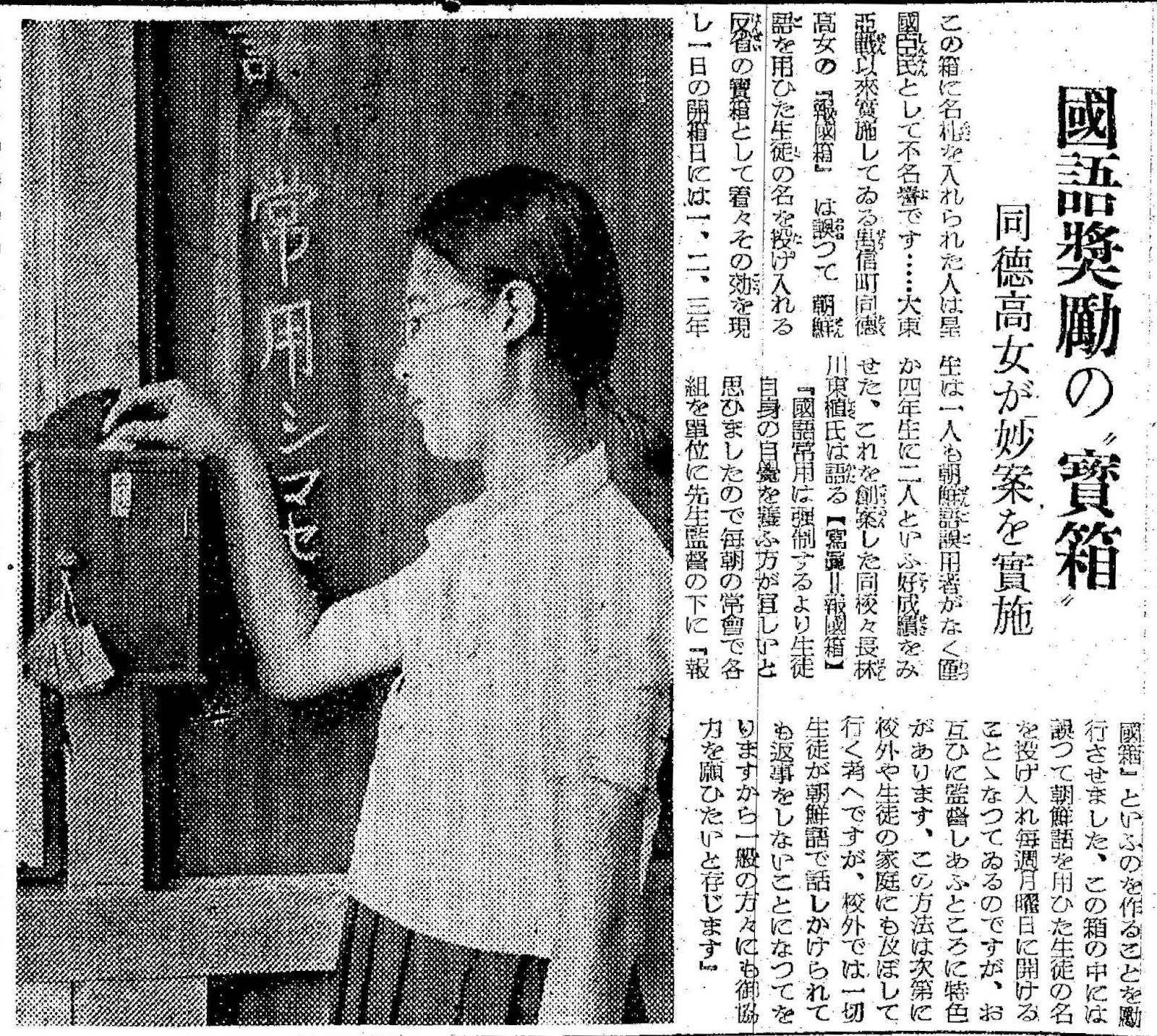
On September 6, 1944, only two weeks after the ordinance was promulgated on August 23, the following informational article warned that women who attempted to evade mobilization would not escape merely by serving a prison sentence or paying a fine. After completing their punishment, they would still be conscripted.
The ordinance gave the Japanese state a formal legal framework for mobilizing unmarried women and girls between the ages of twelve and forty for wartime labor connected to the Imperial Army, Navy, and other state-directed industries. Calling these organizations “volunteer corps” was therefore deeply misleading: participation was backed by criminal penalties, including imprisonment and substantial fines.
What is especially revealing is the article’s evasive tone. Even after the ordinance had been promulgated, it continued to characterize reports about female conscription as false or exaggerated rumors. It suggested that women were panicking largely because they feared low wages, and reassured readers that the ordinance would not be implemented in Korea immediately. In other words, the authorities simultaneously denied or minimized the policy while explaining the punishments awaiting anyone who resisted it.
This article seems to undermine common revisionist claims that the wartime recruitment of Korean women into Imperial Japan’s system of sexual exploitation was fundamentally voluntary. It shows Imperial Japan mobilizing women through threats of imprisonment and fines, attempting to prevent evasion, and publicly downplaying the very coercive system it was preparing to enforce.
[Translation]
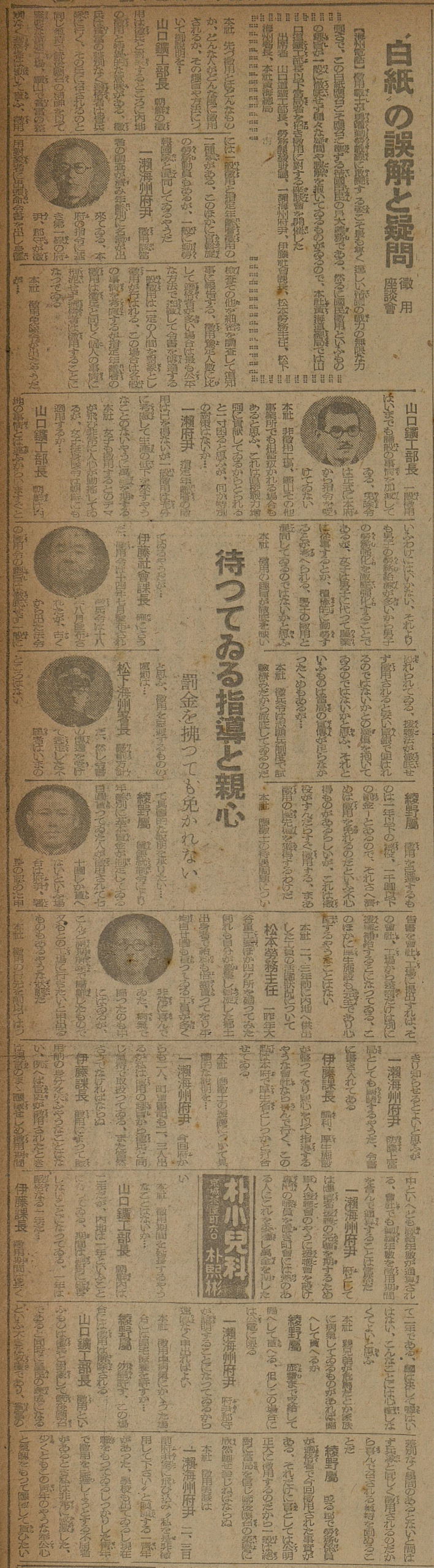
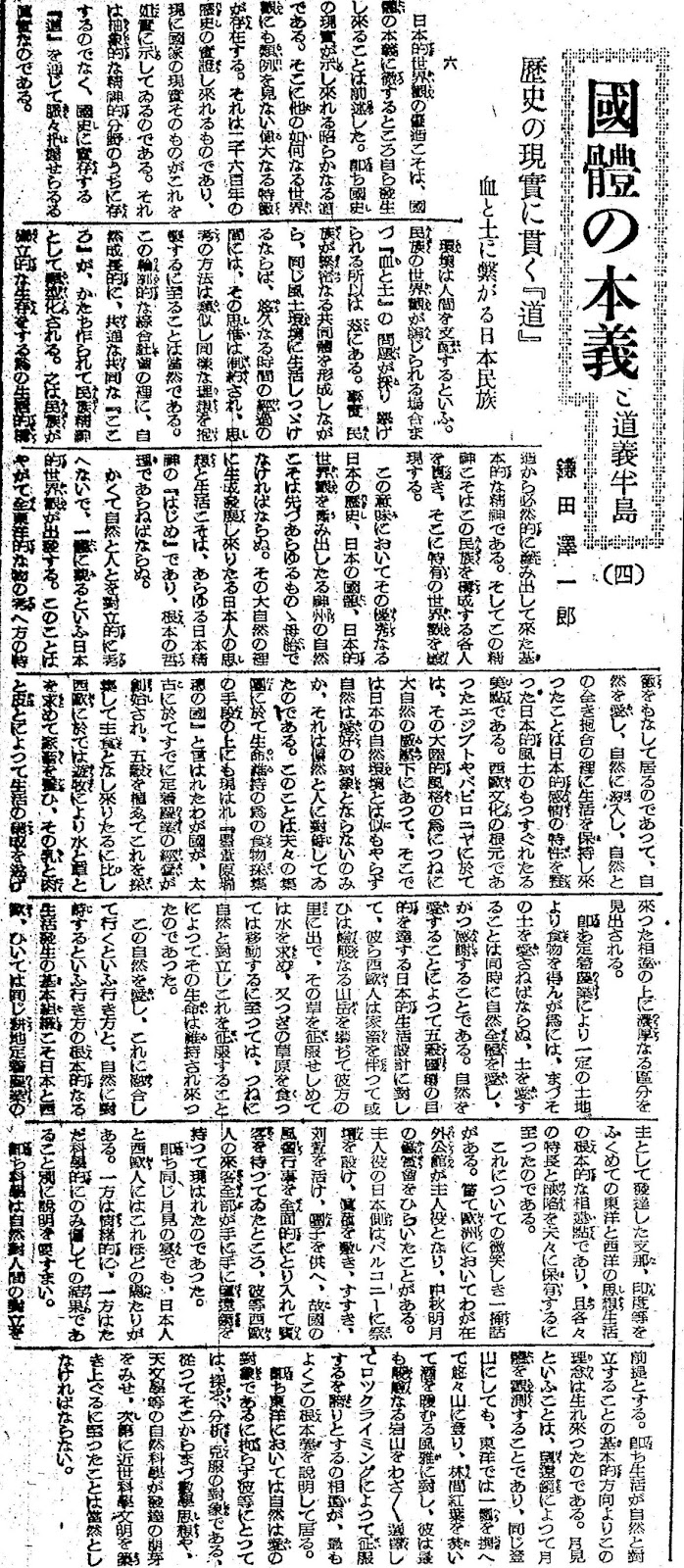
Gyeongseong Ilbo (Keijo Nippo) September 6, 1944
Misunderstandings and Questions About White Paper Conscription
Roundtable on Labor Conscription
Guidance and Paternal Care Await
You Cannot Escape Even by Paying a Fine
[Telephone report from Haeju] The sight of labor-conscripted warriors bravely fighting on the labor front is the most noble expression of the boundless strength of the mighty Empire’s war power. This “white-paper call-up” is the greatest duty of imperial subjects, second only to military call-up itself.
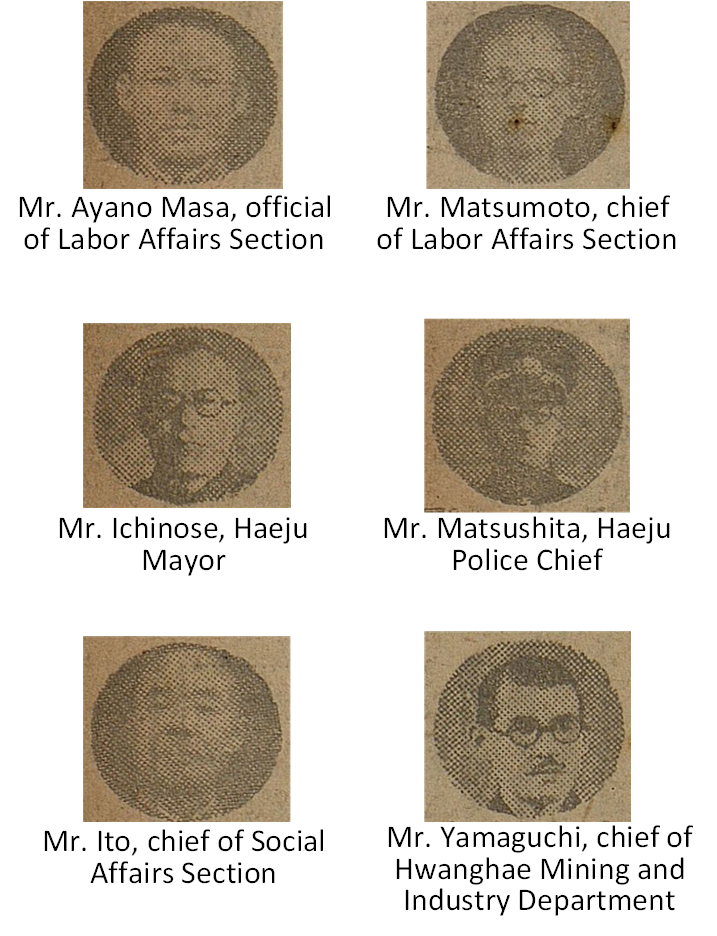
However, the purpose of national labor conscription has not been thoroughly understood among the general public, and some people have various doubts and misunderstandings. Therefore, the Hwanghae Province bureau of this newspaper invited officials, including Mr. Yamaguchi, chief of the provincial Mining and Industry Department, and held a roundtable discussion on labor conscription.
Participants: Mr. Yamaguchi, chief of the provincial Mining and Industry Department; Mr. Ayano Masa, official of the Labor Affairs Section; Mr. Ichinose, Mayor of Haeju; Mr. Ito, chief of the Social Affairs Section; Mr. Matsumoto, chief of the Labor Affairs Section; Mr. Matsushita, chief of the Haeju Police Station; and the Hwanghae bureau of this newspaper.
Newspaper: First, please explain what labor conscription is, what kinds of people are conscripted, how they are conscripted, and the purpose and method of the system.
Mr. Yamaguchi, chief of the provincial Mining and Industry Department:
Labor conscription in Korea has a distinctive meaning, compared with labor conscription in mainland Japan, because it is placed alongside military conscription. Military conscription sends all qualified men into the army without distinction between rich and poor. In the same spirit as being called up as a soldier, and with the attitude of answering the call on the home front, qualified persons, without distinction between rich and poor, are to work in vital factories and mines.
There are two types of labor conscription: general labor conscription and conscription of designated age groups. In addition, there is also labor mobilization mediated by public officials, but people seem generally to confuse this with the Patriotic Labor Service Corps.
Mr. Ichinose, Mayor of Haeju: The investigation of those subject to labor conscription has been completed, and lists have been prepared by age. Based on instructions from the Governor-General’s Office, the mayors and county heads on the front line issue summonses to those subject to conscription, conduct physical examinations and other detailed investigations, and report to the provincial governor.
If there are more qualified persons than the planned number to be conscripted, then the orders are delivered after drawing lots by the fairest possible method. General labor conscription is carried out with certain persons as the target. In that case, various circumstances are taken into consideration. But conscription of designated age groups, like military conscription, is carried out without being bound by individual circumstances, and qualified persons are to be conscripted.
Newspaper: It seems that exemption orders from labor conscription have been issued.
Mr. Yamaguchi, chief of the provincial Mining and Industry Department: Even now, in general labor conscription, various circumstances are being taken into account. As for exemption orders, we have not officially received instructions from the Governor-General’s Office.
Newspaper: I think there are cases where considerable numbers are taken even from non-conscripted factories, mines, and other workplaces. Since such places are directly contributing to the strengthening of military power, it would be somewhat troublesome if workers were taken from them. Are there any special measures?
Mr. Ichinose, Mayor of Haeju: Conscription of designated age groups is unavoidable, but in the case of general labor conscription, we will take full care so that production will not be reduced.
Newspaper: Rumors are spreading that women will also be conscripted, and public sentiment is unsettled. Will the Women’s Labor Volunteer Corps Ordinance also be applied in Korea?
Mr. Yamaguchi, chief of the provincial Mining and Industry Department: Conditions in Korea differ from those in mainland Japan, so it is not a matter of applying it immediately. Rather, since there is a large source of male labor, the first thing is to thoroughly strengthen male labor mobilization. As for women, one can think of them engaging in agriculture in place of men, or taking up labor actively. I think people may be confusing this with male labor conscription.
Newspaper: It seems that the purpose of labor conscription has not been fully understood.
Mr. Ito, chief of the Social Affairs Section: That is certainly true. The Labor Conscription Ordinance was promulgated in July 1939, and the Military Conscription Ordinance was promulgated in August 1943. Yet the purpose of the older law, the Labor Conscription Ordinance, has not been thoroughly understood and is generally feared. I think people may suspect that, if they are conscripted, they will be used for low wages, because the relief and assistance laws have not been fully understood. This is partly because the authorities have not done enough publicity.
Newspaper: I think the Military Conscription Ordinance is well understood because it had already been tested through the volunteer soldier system. What punishment is there for those who evade labor conscription?
Mr. Matsushita, Haeju Police chief: The policy is strict punishment. However, at present there have been no outrageous persons who fled after receiving an order.
Mr. Ayano Masa, official of the Labor Affairs Section: The law says that those who evade labor conscription are subject to imprisonment for up to one year or a fine of up to 1,000 yen. Apparently there are some misguided people who think that, once they have served the sentence or paid the fine, they can escape labor conscription. But once the imprisonment is finished, they will immediately be conscripted. In other words, they will have earned priority for conscription.
Newspaper: Please explain concretely the treatment of conscripted laborers.
Mr. Ayano Masa: Under the Wage Control Ordinance, basic wages have been established by age. Suppose a person who had been receiving 100 yen is conscripted and receives only 70 yen. If he submits to the company or factory a declaration recognized by the mayor and police chief, then the company or factory will separately provide relief assistance for the difference. In addition, welfare facilities are complete, so there is nothing to worry about.
Newspaper: What about the activities of workers supplied to mainland Japan two or three years ago?
Mr. Matsumoto, chief of the Labor Affairs Section: The year before last, I visited Ōtani Heavy Industries and four other places. In each case, they were people from our home district whom I had recruited and mediated for. They were receiving double the pay, and many workers were very pleased to receive an average of 120 yen. Some returned because of illness, but among those who have now returned to Korea after completing their terms, some are even saying that they want to go back to their former factories.
Newspaper: It would be good to clearly inform people in advance where they will be sent for labor conscription.
Mr. Ichinose, Mayor of Haeju: From the standpoint of counter-espionage, the authorities seem hesitant about that. It is written in the labor summons.
Mr. Ito, chief of the Social Affairs Section: If the company has welfare and benefit facilities in place and provides guidance with paternal care, then people will gladly go. On this point, the Governor-General’s Office is making firm arrangements with the Ministry of Welfare.
Newspaper: Please explain concretely the relief and support for conscripted laborers.
Mr. Ichinose, Mayor of Haeju: This time, two people from the city office and two or three town council clerks will also be going. I treat labor conscription in the same spirit as military conscription, based on the purpose of the system. Naturally, that is how it must be.
Mr. Ito, chief of the Social Affairs Section: A person does not lose his previous status because of labor conscription. For example, when a government official is conscripted, he is made to answer the call while retaining his current official status, and even during the period of labor conscription, the years count toward his pension. At companies, too, it is only natural that the period of labor conscription should be included in the calculation of years of service.
Mr. Ichinose, Mayor of Haeju: In order to make relief for conscripted laborers complete, the city intends to establish a relief association like the Military Relief Association, assign specialized staff, and entrust the work in town councils to enthusiastic people, so that all possible measures are taken.
Newspaper: Is there any possibility that the period of labor conscription will be extended?
Mr. Yamaguchi, chief of the provincial Mining and Industry Department: Within Korea, it is two years, while in mainland Japan it is one year. The period is absolutely not to be extended. One year means strictly one year.
Mr. Ito, chief of the Social Affairs Section: The labor conscription period is at most two years. The state never lies. There is no need to worry about such things.
Newspaper: If a parent or sibling is critically ill, or if a family member is sick, will the conscripted person be allowed to return home?
Mr. Ayano Masa, official of the Labor Affairs Section: He will be allowed to return, and even his travel expenses will be paid. However, in such cases, it must be by official telegram.
Mr. Ichinose, Mayor of Haeju: The mayor or county head is to certify it, so people should apply without hesitation.
Newspaper: If a person becomes ill during labor conscription, will he be allowed to recuperate at home?
Mr. Ayano Masa, official of the Labor Affairs Section: Of course. In that case, the labor conscription will be canceled.
Mr. Yamaguchi, chief of the provincial Mining and Industry Department: Labor conscription is placed alongside military conscription. It is a home-front call-up, and at the same time it is a great harvest in the training of Imperial subjects. Without distinction between rich and poor, and regardless of whether one has education or not, people are conscripted just like soldiers. Therefore, they must steel themselves to be called up gladly.
Mr. Ayano Masa, official of the Labor Affairs Section: In one county, a labor affairs official himself was qualified and was conscripted this time. Precisely because the authorities conduct labor conscription fairly and openly, the general public must absolutely trust the authorities and gladly rush forward to the honor of answering the call on the home front.
Newspaper: Are there any inspiring stories about labor conscription?
Mr. Ichinose, Mayor of Haeju: Two or three days ago, a young man rushed into the mayor’s office and pleaded, “Please conscript me without fail.” He was a reliable young man who had already received his papers and currently had a job. At a time when there are outrageous people trying to evade labor conscription, I was deeply moved. At the very least, I want people to answer labor conscription with the same spirit of service and vigor as this young man.
[Transcription]
京城日報 1944年9月6日
”白紙”の誤解と疑問
徴用座談会
待っている指導と親心
罰金を払っても免かれない
【海州電話】徴用戦士が勇躍勤労戦線に敢闘する姿こそ最も尊く、逞しい帝国の戦力の無限な力強さで、この白紙応召こそ応召に準ずる帝国臣民の最大義務である。然るに国民徴用というものの趣旨が一般に徹底せず種々な疑問や誤解を抱いているものがあるので、本社黄海道総局では山口道鉱工部長以下当局者を招き徴用に対する座談会を開催した。
出席者:山口道鉱工部長、勤務課綾野屬、一瀬海州府尹、伊藤社会課長、松本労務主任、松下海州署長、本社黄海総局
本社:先ず徴用とはどんなものか、どんな人がどんな風に徴用されるか、その趣旨や方法について御説明を...
山口鉱工部長:朝鮮の徴用は徴兵と対象するところに内地の徴用と特異的な意味がある。徴兵は貧富の差別なく適格者は皆兵隊に行く。その兵に召されるのと同じ気持で銃後応召の精神を以て緊要な重用工場、鉱山で貧富の差別なく適格者は働いて貰う。徴用には一般徴用と指定年齢層徴用の二種類がある。このほかに官斡旋の労務動員もあるが、一般に勤労報国隊と混同しているようだ。
一瀬海州府尹:徴用該当者の調査が済み年齢別に名簿が出来ている。本府の指令に基き第一線の府尹、郡守が徴用対象者に出頭命令書を出し身体検査その他を細密を調査して道知事に報告する。徴用予定人数に比して適格者が多い場合は最も公平な方法で抽籤して令書を伝達する。一般徴用は一定の人間を対象として徴用が行われる。この場合は各般の事情を考慮するが指定年齢層の徴用は徴兵と同じく個人の事情に拘泥せず適格者は徴用することになっている。
本社:徴用免除令が出たようだが...
山口鉱工部長:一般徴用はいまでも諸般の事情を加減している。免除令は正式に本府から指令を受けていない。
本社:非徴用工場、鉱山その他事業所でも相当抜かれる場合もあると思う。これは直接戦力増強に貢献しているからとられると一寸困ると思うが、何か特別の対策はないか...
一瀬府尹:指定年齢層の徴用は已むを得ないが、一般徴用は充分に考慮して生産の低下を来すようなことのないように万全を期する。
本社:女子も徴用するとのデマが飛び人心が動揺しているが、女子挺身隊令は朝鮮にも適用するか...
山口鉱工部長:朝鮮は内地の事情とは違うからいますぐというわけにはいかない。それよりも男子の労務給源が多いから男子の労務強化を徹底強化することであるが、女子は男子に代って農業に従事するとか、積極的に勤労することが考えられる。男子の徴用と混同しているのではないかと思う。
本社:徴用の趣旨が徹底を欠いているようだが...
伊藤社会課長:確かにそうだ。徴用令は十四年七月発布され、徴兵令は十八年八月発布されたが、古くから出た法令の徴用令の趣旨は徹底せず一般に恐れられている。援護法が徹底せず徴用されると安い賃銀で使われるのではないかとの疑惧を抱いているのではないかと思う。それというものは当局の宣伝が足らなかったためもあるが...
本社:徴兵令は志願兵制度で試験済みだから徹底しているのだと思う。徴用を忌避するものの処罰は...
松下海州署長:厳罰方針だ。然し令書の伝達を受けて逃走した不届者はいまのところはない。
綾野屬:徴用を忌避するものは一年以下の懲役、一千円以下の罰金ーとあるので、それさえ済めば徴用を免れるのだという不心得ものがあるらしいが、これは懲役がすんだらすぐ徴用する。まあ徴用の優先権を獲得するわけだ。
本社:応徴士の待遇問題について具体的な説明を承りたい...
綾野屬:賃銀統制令により年齢別に基本賃金が制定している百円貰っていた人が徴用されて七十円しか貰えないという場合は府尹、署長の認めた申告書を会社、工場に提出すれば、その会社、工場から差額だけは別に援護補給することになっている。このほかに厚生施設も完全であり心配するようなことはない。
本社:二、三年前に内地へ供出した工員の活躍状況について。
松本労務主任:一昨年大谷重工業ほか四ヶ所を廻ってみた。何れも自分が募集し斡旋した郷土出身者で給料も倍額貰っており平均百二十円も貰っている工員が多く非常に喜んでいた。病気で帰ったものも中にはいるが、こんど満期解除で帰鮮したもので又もとの工場に行きたいと申出るものもあるような状態だ。
本社:徴用の行先を前以てはっきり知らせるとよういと思うが。
一瀬海州府尹:防諜上当局としても躊躇するようだ。令書に書き入れてある。
伊藤課長:福利、厚生施設が整っており親心を以て指導するような会社なら喜んで行く。この点は本府で厚生省としっかと打ち合せている。
本府:応徴士の援護について具体的な説明を...
一瀬海州府尹:今回府からも二人、町会書記も二、三人出るが私は徴用の趣旨から徴兵と同じ気持で取扱っている。また当然そうでなければならぬ。
伊藤課長:徴用によって徴用前の身分を失うようなことはない。例えば官吏が徴用されたときは現官のまま応徴せしめ徴用期間中といえども恩給年数が通算される。会社でも勤続年数を徴用期間を含んで通算することは当然だ。
一瀬海州府尹:府としては応徴者援護の完璧を期するため軍人援護会のように援護会を設け専門の職員を置き町会には熱のある人にこれを委嘱し万全を期したい。
本社:徴用期間を延長するようなことはないか...
山口鉱工部長:朝鮮内は二年だが、内地は一年ということになっている。期間は絶対に延長しないことになっている。一年は厳格なる一年だ...
伊藤課長:徴用期間は長くて二年である。国は決して嘘はいわない。こんなことには心配しなくてよいと思う。
本社:親兄弟が危篤だとか家族に病気しているものがあれば帰して貰えるか。
綾野屬:旅費まで支給して帰して貰える。但しこの場合には公電に限る。
一瀬海州府尹:府尹郡守が証明することになっているから遠慮なく申出ればよい。
本社:徴用中病気にかかった場合には帰宅療養を許すが...
綾野屬:勿論許す。この場合には徴用は解除される。
山口鉱工部長:徴用というものは徴兵と対象して銃後応召であると同時に皇民の錬成になるという大きな収穫であり、貧富の差別なく学問のあるとないと問わず兵隊と同じく徴用されるのだから喜んで召される気持を固めることだ。
綾野屬:或る郡で労務係員が適格者で今回徴用された事実がある。それだけに官としては公明正大に徴用するのだから一般は絶対に当局を信じ銃後応召の栄誉に欣然馳せ参じねばならぬ。
本社:徴用美談は...
一瀬海州府尹:二、三日前府尹室に飛び込み”私を是非徴用して下さい”と嘆願する一青年があった。最後も出ているし現在職をもっているしっかりした青年で徴用を忌避しようとする不届者があるとき私は非常に感激した。少なくともこの青年のような奉公心と気魄をもって応徴して貰いたい。
Source: Digital Newspaper Archive, National Library of Korea
See also:
- In 1944, Imperial Japan formally conscripted almost all unmarried Korean women ages 12-40 into a forced labor system that had already been used for years to traffic laborers into sex slavery according to testimonies of former comfort women (link)
- Terrified by rumors of forced labor conscription under the Imperial Army, young Korean women rushed into marriages to escape, prompting officials to hold April 1944 press conference to deny and deflect (link)